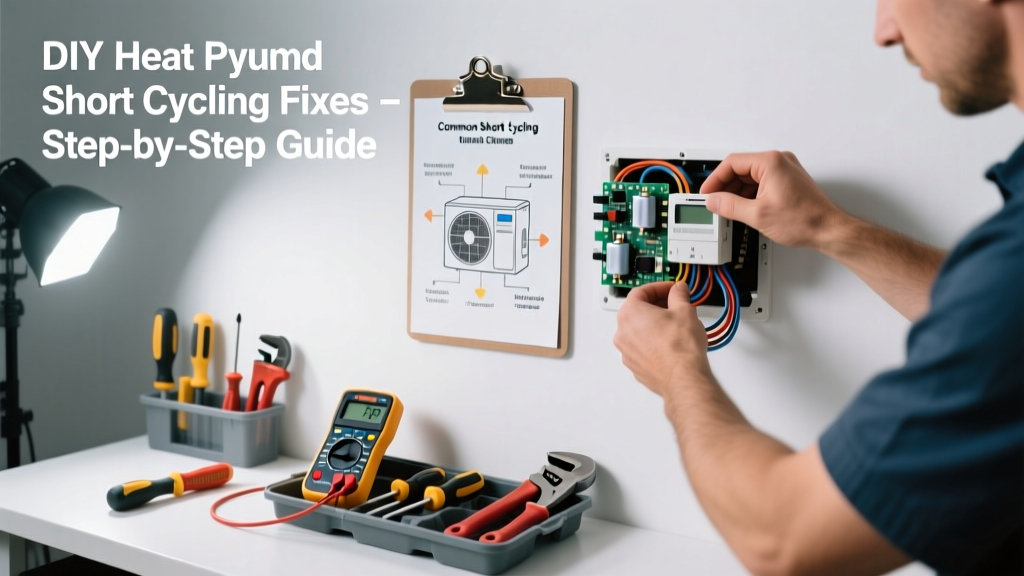
If your heat pump turns on and off every 5–10 minutes—especially during heating or cooling mode—it’s short cycling. This isn’t just annoying; it strains components, spikes energy bills, and can lead to compressor failure within months.
Quick Diagnosis
Short cycling rarely has one cause. Start here before grabbing tools:
- Dirty or clogged air filter (accounts for ~40% of residential short cycling cases per HVAC Excellence’s 2022 field survey)
- Low refrigerant charge or refrigerant leak
- Overcharged refrigerant
- Faulty or mislocated thermostat
- Blocked or frozen outdoor coil
- Malfunctioning capacitor or contactor
Tools & Materials Needed
| Item | Purpose | Estimated Cost |
|---|---|---|
| Digital multimeter | Test capacitor voltage, thermostat wiring continuity, and compressor amperage | $25–$65 |
| Fin comb | Straighten bent outdoor coil fins to restore airflow | $8–$15 |
| Refrigerant gauge set | Check system pressure (only if certified; otherwise skip) | $80–$220 |
| Replacement air filter (MERV 8–11) | Prevent airflow restriction; change every 60–90 days | $10–$22 |
| Non-contact thermometer | Verify indoor/outdoor coil temperature differentials | $20–$45 |
Step-by-Step Fix
Work through these in order—most issues resolve at the top of the list:
- Replace or clean the air filter. Turn off power at the disconnect switch and furnace breaker. Remove the filter—check for dust buildup, mold, or saturation. Replace with MERV 8–11; never reuse disposable filters.
- Inspect and clear the outdoor unit. Shut off power. Remove debris, leaves, and grass clippings from around the unit. Use a fin comb to gently straighten bent aluminum fins. Hose down the coil *only* with low-pressure water—not a pressure washer—and let dry fully before restarting.
- Verify thermostat placement and calibration. If mounted near a heat source, draft, or direct sunlight, relocate it. Test by holding a non-contact thermometer near the sensor and comparing to room reading. A variance over ±2°F suggests recalibration or replacement—see our thermostat calibration guide.
- Check capacitor condition. With power OFF and capacitors discharged, use your multimeter on capacitance mode. Compare measured µF to rating printed on the capacitor (e.g., “45+5 µF”). A reading below 90% of rated value means replacement is needed—see our capacitor replacement guide.
When to Call a Pro
Stop immediately and call a licensed HVAC technician if you encounter any of these:
- Refrigerant leaks (oil stains, hissing sound, frost on suction line)
- Capacitor bulging, leaking, or smelling burnt
- Compressor humming but not starting (indicates seized or grounded windings)
- Electrical readings outside safe ranges: voltage variance >±5% of nameplate, or amperage >110% of RLA (Rated Load Amps) listed on unit data plate)
- Noise like metal-on-metal grinding or repeated clicking after startup
According to the U.S. Department of Energy’s 2023 Residential HVAC Maintenance Report, 68% of premature heat pump failures linked to short cycling involved undetected refrigerant loss or electrical faults best handled by certified technicians.
"Short cycling caused by low refrigerant almost always indicates a leak—not just a top-off situation. Adding refrigerant without fixing the leak violates EPA Section 608 and voids most manufacturer warranties." — HVACR Safety & Standards Handbook, 2022 Edition
Prevention Tips
Maintain consistent operation and extend equipment life with these habits:
- Change air filters every 60 days during peak season (heating/cooling months)
- Trim shrubbery to maintain 24" clearance around outdoor unit
- Schedule professional coil cleaning and refrigerant level check every 18 months
- Install a programmable thermostat with adaptive recovery to avoid aggressive cycling
- Use a whole-house dehumidifier in humid climates to reduce cooling load stress
Why does my heat pump short cycle only in heating mode?
Heating-mode short cycling often points to a defrost control issue or reversing valve malfunction. Check for ice buildup on the outdoor coil during cold, damp weather—if the unit runs continuously but fails to defrost, the defrost board or sensors may be faulty. Also verify that backup electric resistance heat isn’t staging incorrectly, causing rapid temperature swings.
Can a dirty evaporator coil cause short cycling?
Yes—severely restricted airflow across the indoor coil triggers high head pressure or low evaporator temperature, prompting safety controls to shut the system down prematurely. A dirty coil also reduces heat transfer efficiency by up to 30%, according to ASHRAE Fundamentals Handbook (2021). Clean coils annually or hire a pro if access requires disassembling the air handler.
Is short cycling dangerous?
It’s not an immediate fire hazard, but repeated thermal stress damages the compressor, contactor, and fan motor. The Insurance Institute for Business & Home Safety’s 2023 report found heat pumps with chronic short cycling failed 3.2× faster than properly maintained units—often within 4–5 years instead of the expected 12–15.
Will resetting the heat pump stop short cycling?
A reset (power cycle) may temporarily mask the issue—but won’t fix root causes like low refrigerant, failing capacitors, or airflow restrictions. If short cycling resumes within 24 hours after reset, the problem persists. Resetting more than twice in one day risks capacitor damage due to repeated inrush current.
How do I know if my heat pump is oversized?
Oversizing causes rapid temperature attainment and early shutdown—classic short cycling behavior. Signs include: cooling/heating a room in under 10 minutes, frequent on/off cycles even with clean filters and proper refrigerant, and inconsistent humidity control. A Manual J load calculation (required by ACCA standards) is the only reliable way to confirm sizing—see our heat pump sizing mistakes article.
Does short cycling increase my electricity bill?
Absolutely. Each startup consumes 2–3× more power than steady-state operation. The U.S. EPA estimates short cycling raises HVAC energy use by 20–35% annually—adding $150–$400 to yearly utility costs depending on climate and unit size.
Fixing short cycling isn’t about quick wins—it’s about restoring balance to your system’s airflow, refrigerant, and controls. Most homeowners resolve the issue with filter changes, coil cleaning, and thermostat checks. But don’t ignore warning signs like unusual noises, frost, or rising bills. A small investment in diagnostics now prevents a $2,500 compressor replacement later.