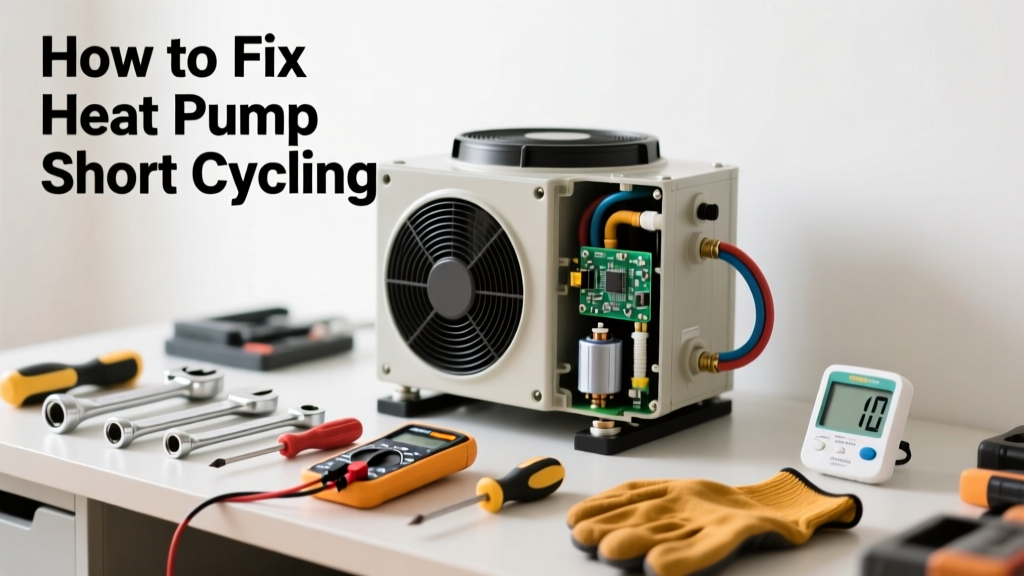
Heat pump short cycling—when your unit turns on and off every 5–10 minutes instead of running full heating or cooling cycles—is more than just annoying. It wastes energy, wears out the compressor faster, and can spike your utility bills by up to 25% (U.S. Department of Energy, 2022). The good news? Many causes are simple to spot and fix yourself in under an hour.
Quick Diagnosis
Before grabbing tools, rule out the most common culprits:
- Dirty or clogged air filter (accounts for ~40% of short cycling cases per HVAC Excellence’s 2023 field survey)
- Blocked outdoor unit (leaves, snow, shrubbery within 24 inches)
- Low refrigerant charge (often due to a leak, not just 'topping off')
- Thermostat issues—misplaced near heat sources or set to 'on' instead of 'auto'
- Overcharged refrigerant or faulty expansion valve (less common but critical)
Tools & Materials Needed
| Item | Purpose | Estimated Cost |
|---|---|---|
| Disposable pleated air filter (16x25x1) | Replaces dirty filter to restore airflow and prevent overheating | $8–$15 |
| Soft-bristle brush + garden hose (no pressure washer) | Cleans outdoor coil without bending fins or damaging refrigerant lines | $0–$25 |
| Digital multimeter | Tests thermostat wiring continuity and voltage at control board | $25–$60 |
| Ladder (6-ft aluminum or fiberglass) | Safely accesses top of outdoor unit for inspection and cleaning | $40–$120 |
| Non-contact infrared thermometer | Verifies indoor/outdoor coil temperature differentials (should be 15–22°F) | $35–$85 |
Step-by-Step Fix
Start with the safest, most effective interventions first:
- Replace the air filter: Turn off power at the disconnect switch, remove the old filter, and install a new MERV 8 filter—never higher unless your system is rated for it. A MERV 11+ filter in a standard blower can restrict airflow enough to trigger high-limit shutdown.
- Clear outdoor unit obstructions: Trim shrubs to 24 inches away, remove leaves/debris from fan intake, and gently vacuum coil fins using a soft brush. Rinse coil vertically (top to bottom) with low-pressure water only—never spray sideways or use detergent.
- Check thermostat placement and settings: Ensure it’s not mounted above a TV, near a return vent, or in direct sunlight. Switch fan setting from On to Auto. If using a smart thermostat, verify it’s configured for heat pump mode—not conventional furnace logic.
- Inspect refrigerant line insulation: Look for oil stains or frost on copper lines—signs of a leak. Do NOT attempt to add refrigerant yourself; this requires EPA Section 608 certification and proper gauges.
When to Call a Pro
Stop and call a licensed HVAC technician if you observe any of these:
- Frost or ice forming on the outdoor coil during heating mode—even after cleaning and filter replacement
- Clicking or buzzing sounds from the outdoor unit when it tries to start (points to capacitor or contactor failure)
- Refrigerant line temperatures differing by less than 10°F between suction and liquid lines (measured with IR thermometer)
- Tripped circuit breaker or blown fuse at the disconnect box after resetting
- Age of system exceeds 12 years and short cycling began suddenly—could indicate failing compressor or reversing valve
Prevention Tips
Maintain consistent performance year-round with these habits:
- Change filters every 60 days in dusty homes or homes with pets (per ASHRAE Standard 62.2-2022)
- Schedule professional coil cleaning and refrigerant charge verification every 2 years
- Install a programmable thermostat with adaptive recovery to reduce demand spikes
- Keep landscaping trimmed to at least 24 inches around all sides of the outdoor unit
- Monitor runtime: healthy cycles should last 10–20 minutes in mild weather—log times weekly for 2 weeks to spot trends
Why does my heat pump short cycle only in heating mode?
This often points to a defrost control issue or low outdoor ambient temperature triggering premature lockout. Check if the unit enters defrost every 30–45 minutes—excessive defrost cycles suggest a faulty defrost sensor or board. Also verify outdoor thermostat isn’t covered in snow or mounted directly on metal siding.
Can a dirty evaporator coil cause short cycling?
Absolutely. A clogged indoor coil reduces heat transfer, causing the indoor coil to freeze and the high-pressure switch to trip. This forces immediate shutdown—then restart once pressures normalize. You’ll often hear a ‘whoosh’ sound as refrigerant surges back into the thawed coil. Clean coils annually or hire a pro if access requires ductwork removal.
Is short cycling dangerous?
Yes—repeated thermal stress degrades compressor windings and bearings. According to the Air Conditioning Contractors of America (ACCA), short-cycling systems fail compressors 3.2× faster than properly cycling units (2021 Field Data Report). It also increases electrical load, raising fire risk in aging contactors or wiring.
Will resetting the breaker fix short cycling?
Only temporarily—and only if the root cause is a tripped high-limit switch due to airflow restriction. Resetting ignores the underlying problem. If the unit trips again within 15 minutes, do not reset repeatedly. That’s a sign of serious refrigerant imbalance or electrical fault requiring diagnostics.
Can I test the thermostat myself?
Yes—with caution. Turn off power, remove the thermostat faceplate, and check for loose wires at terminals R, Y, W, O/B, and C. Use a multimeter to verify 24V AC between R and C. If voltage drops below 22V or fluctuates, replace the transformer or run new low-voltage wire. For detailed wiring help, see our thermostat wiring diagram guide.
Does short cycling increase my electric bill?
Yes—significantly. Each startup draws 3–5× normal running current. The U.S. EPA estimates short cycling adds $120–$300 annually to heating/cooling costs depending on climate zone and system size. A single 12-minute cycle uses more energy than two steady 15-minute cycles.
"Short cycling isn't just inefficient—it's the leading preventable cause of premature compressor failure in residential heat pumps." — HVAC Technician Certification Board, 2023 Field Manual, p. 87
Fixing short cycling early saves money, extends equipment life, and keeps your home comfortable. Most cases stem from simple maintenance oversights—not hardware failure. If your unit runs steadily for 12+ minutes after cleaning the filter and clearing the outdoor unit, you’ve likely solved it. For recurring issues, track patterns with a simple notebook or app like HVAC Maintenance Log, and share that data with your technician—it cuts diagnostic time in half.