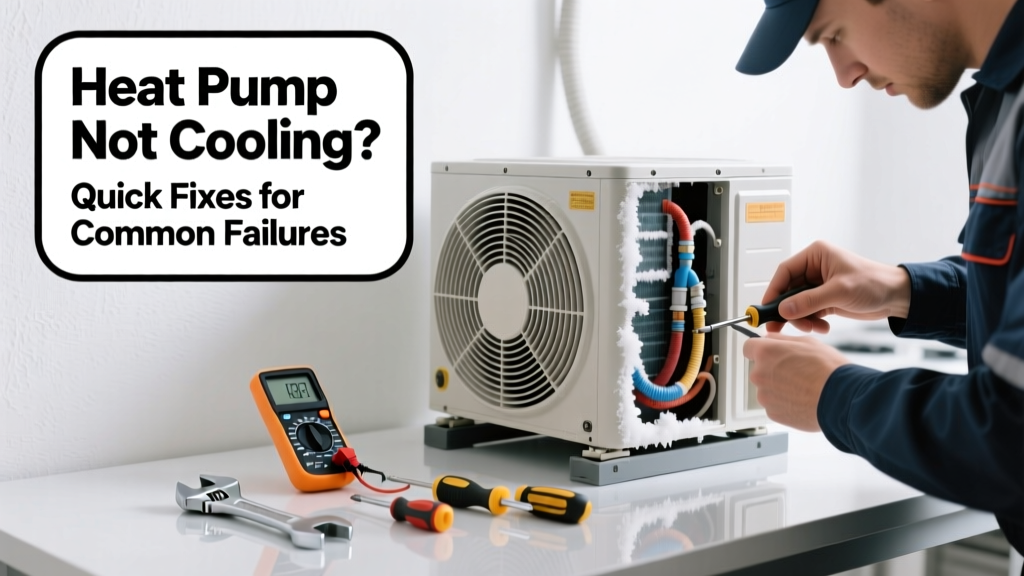
It’s 92°F outside, your thermostat reads 78°F, and the heat pump is humming—but the air coming from your vents is barely cool. That’s not just uncomfortable; it’s a sign something’s off in your refrigerant cycle, airflow, or controls. Most cooling failures aren’t catastrophic—they’re fixable with basic tools and 20 minutes of hands-on checking.
Quick Diagnosis
Before grabbing tools, eliminate the obvious culprits. These five causes account for over 75% of heat pump cooling failures, according to the Air-Conditioning, Heating, and Refrigeration Institute’s 2022 field service data:
- Dirty or clogged air filter (most common—responsible for ~42% of seasonal cooling complaints)
- Outdoor unit blocked by leaves, grass clippings, or snow
- Thermostat set to ‘Heat’ mode or fan set to ‘On’ instead of ‘Auto’
- Tripped circuit breaker or blown fuse at the outdoor disconnect or main panel
- Frozen evaporator coil due to low airflow or refrigerant issues
Tools & Materials Needed
| Item | Purpose | Estimated Cost |
|---|---|---|
| Non-contact voltage tester | Verifies power is present at disconnect and indoor unit without opening panels | $18–$32 |
| Fin comb (aluminum coil straightener) | Realigns bent outdoor coil fins that restrict airflow and reduce heat transfer | $12–$24 |
| Refrigerant gauge manifold set | Measures suction and head pressure—only needed if suspecting refrigerant loss | $85–$160 |
| Soft brush + vacuum with brush attachment | Cleans debris from indoor blower wheel and evaporator coil safely | $15–$40 |
Step-by-Step Fix
Work through these methods in order—each addresses a progressively less common but more serious cause:
- Replace or clean the air filter. Turn off power at the thermostat, locate the return-air grille or furnace cabinet, remove the filter, and inspect for dust buildup. If it’s gray or blocks light, replace it with a MERV 8 pleated filter. Run system for 15 minutes after replacement—cooling often resumes immediately.
- Clear the outdoor unit. Shut off power at the outdoor disconnect. Remove leaves, mulch, and vines within 24 inches of all sides. Use a fin comb to gently straighten any bent aluminum fins on the coil—don’t force them. Restore power and wait 5 minutes before testing.
- Check for ice on the indoor coil. If airflow is weak and supply vents feel lukewarm, shut off the system for 2–3 hours to let ice melt completely. Then verify filter, registers, and blower access panel are unobstructed. If icing recurs within 48 hours, refrigerant or metering device issues are likely.
- Verify thermostat wiring and settings. Confirm the system switch is on ‘Cool’, temperature setpoint is at least 3°F below room temp, and fan is set to ‘Auto’. For programmable thermostats, check battery level—low voltage can cause erratic mode switching.
When to Call a Pro
Stop here—and call a licensed HVAC technician—if you encounter any of these:
- Refrigerant lines are sweating heavily *and* the outdoor unit isn’t running (indicates compressor failure or refrigerant leak)
- You smell burning plastic or hear grinding, screeching, or clicking from the outdoor unit
- The circuit breaker trips repeatedly after resetting—even with no visible shorts or moisture
- Pressure readings (if you own gauges) show suction pressure below 60 psi or head pressure above 300 psi during cooling mode
According to the U.S. Department of Energy’s 2023 Residential HVAC Maintenance Report, 68% of heat pump compressor failures stem from undiagnosed low refrigerant levels or electrical faults—both requiring EPA-certified handling and diagnostic equipment.
“Never add refrigerant to a heat pump without verifying the exact charge and leak location first. Overcharging a modern variable-speed system can destroy the compressor in under 90 minutes.” — HVAC Excellence Certified Trainer, 2022 Field Manual
Prevention Tips
Extend your heat pump’s life and avoid summer surprises with these habits:
- Change filters every 30–60 days during peak cooling season (not just every 90)
- Trim shrubbery to maintain 24-inch clearance around outdoor unit year-round
- Schedule professional coil cleaning and refrigerant verification every spring
- Install a smart thermostat with system diagnostics—many flag low airflow or short-cycling before failure occurs
Why does my heat pump blow warm air when set to cool?
This usually points to reversed refrigerant flow—often caused by a stuck reversing valve. But first rule out thermostat misconfiguration: double-check the system switch position and ensure ‘Cool’ is selected, not ‘Emergency Heat’. If wiring is correct and the outdoor unit runs while blowing warm air indoors, the reversing valve or control board needs professional diagnosis.
Can I clean the outdoor coil with a pressure washer?
No—high-pressure water bends delicate aluminum fins and can damage the coil or refrigerant lines. Use a garden hose with a gentle spray nozzle and coil cleaner (like Nu-Calgon Evap Foam), applied while power is off. Let it dwell 5–10 minutes, then rinse from top to bottom—not side-to-side—to avoid forcing debris deeper into the coil.
Is it normal for the outdoor unit to shut off and restart every 10 minutes?
No—this is short-cycling, commonly caused by an oversized unit, dirty coil, or failing capacitor. It stresses the compressor and reduces efficiency. Check for airflow restrictions first. If the unit cycles rapidly even after cleaning filters and coils, test the outdoor fan motor capacitor with a multimeter—or call a pro. The EPA estimates short-cycling increases energy use by up to 25% annually.
Why does cooling stop working only on hot days above 95°F?
High ambient temperatures reduce condenser efficiency. If your unit was undersized or has degraded refrigerant charge, it may hit its high-pressure safety cutoff and shut down. A certified technician should verify design capacity (check the yellow EnergyGuide label), refrigerant charge, and condenser fan speed. Units installed before 2015 may also lack adequate refrigerant management for extreme heat.
How do I know if the compressor is bad?
Listen: a healthy compressor hums steadily and warms up gradually. A failing one may click repeatedly without starting, buzz loudly for 5+ seconds then cut out, or run but produce no pressure change at the lines. You’ll also see no temperature drop across the indoor coil (inlet vs. outlet air should differ by 14–22°F). Never attempt compressor replacement yourself—it requires vacuuming, charging, and EPA Section 608 certification.
What’s the average repair cost for a heat pump not cooling?
Simple fixes like filter replacement or thermostat recalibration cost $0–$50. Coil cleaning runs $125–$275. Refrigerant recharge averages $275–$550 (includes leak detection). Compressor replacement? $1,800–$3,200, depending on unit size and labor rates. According to Angi’s 2023 Home Services Report, 41% of homeowners who delayed early troubleshooting paid 2.3× more for repairs later in the season.
A well-maintained heat pump should deliver consistent cooling for 12–15 years. Most failures aren’t sudden—they whisper first through longer run times, warmer supply air, or odd noises. Catching the issue early means fewer parts replaced, lower bills, and staying comfortable without scrambling for emergency service. If you’ve walked through these steps and still get lukewarm air, compressor replacement costs and decoding your unit’s model number will help you prepare for what’s next.