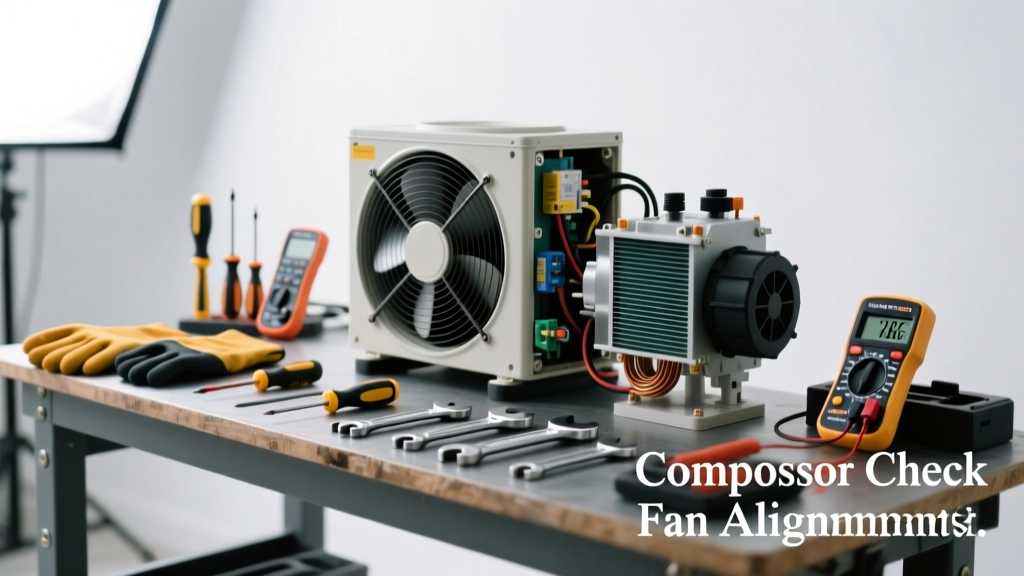
Your heat pump is running—but instead of cool air, you’re getting warm air and a strange grinding, squealing, or rattling sound. That’s not just annoying—it’s a sign something’s wrong, and ignoring it can lead to compressor failure or refrigerant leaks.
Quick Diagnosis
Before grabbing tools, narrow down the issue with these common causes:
- Dirty or frozen evaporator coil restricting airflow and causing icing
- Loose or bent fan blades hitting the housing or debris
- Failing capacitor (especially if you hear a humming or clicking without fan startup)
- Worn-out compressor bearings (deep growling or metallic screeching)
- Refrigerant leak or low charge (hissing noise + weak cooling)
Tools & Materials Needed
| Item | Purpose | Estimated Cost |
|---|---|---|
| Non-contact voltage tester | Confirms power is off before servicing electrical components | $18–$35 |
| Fin comb (aluminum coil straightener) | Realigns bent condenser/evaporator fins to restore airflow | $12–$24 |
| Capacitor tester or multimeter | Verifies start/run capacitor health (common cause of humming/no-start) | $25–$85 |
| Soft-bristle brush & coil cleaner | Cleans dirt/debris from coils without damaging fins | $10–$22 |
| Insulated screwdrivers & gloves | Safely handle live terminals and prevent shocks | $15–$40 |
Step-by-Step Fix
Try these methods in order—most issues resolve at Steps 1 or 2:
- Clean the outdoor unit and inspect for obstructions: Turn off power at the disconnect and breaker. Remove leaves, grass clippings, and debris from around the unit. Use a fin comb to gently straighten bent condenser fins—bent fins reduce airflow by up to 30%, triggering overheating and noise (U.S. Department of Energy, 2022).
- Check and clean the indoor evaporator coil: Locate the air handler or furnace cabinet. Remove the access panel and inspect the coil. If frost or dust buildup is visible, shut off power and spray with no-rinse coil cleaner. Let dry fully before restarting. A clogged coil can raise head pressure and strain the compressor.
- Test the fan motor and capacitor: With power off, spin the outdoor fan blade manually—if it’s stiff or grinds, the motor bearings may be failing. Use a multimeter to test capacitance: a reading more than ±6% of rated µF means replacement is needed. According to HVAC-Talk’s 2023 technician survey, faulty capacitors account for 41% of ‘humming but no fan’ reports.
- Listen and isolate the noise source: Power on briefly (with safety gear) and listen closely. Squealing = belt or bearing issue (if belt-driven); rattling = loose panel or mounting bolt; hissing = refrigerant leak (stop operation immediately and call a pro).
When to Call a Pro
DIY stops where safety and code compliance begin. Call a licensed HVAC technician if:
- You detect refrigerant odor (sweet, chloroform-like scent) or hear persistent hissing
- The compressor is vibrating excessively or emitting burning smells
- You measure over 40°F temperature difference between supply and return air (indicates refrigerant or metering device issues)
- Electrical components show charring, melted wires, or tripped breakers that reset repeatedly
Remember: Refrigerant handling requires EPA Section 608 certification—and improper evacuation or charging can damage your system or violate federal law.
Prevention Tips
Extend your heat pump’s life and avoid repeat failures with these habits:
- Replace or clean air filters every 30–90 days—dirty filters increase static pressure and cause coil freeze-up
- Trim shrubbery and fencing to maintain at least 24 inches of clearance around the outdoor unit
- Schedule professional maintenance twice yearly (spring and fall), including capacitor testing and refrigerant level verification
- Install a smart thermostat with compressor runtime alerts to catch early performance drops
Why does my heat pump make a loud banging noise when it starts?
This often points to a failing compressor clutch or loose internal piston—especially if the bang happens only at startup. It’s rarely a DIY repair; disassembly requires vacuum-rated tools and refrigerant recovery. Compressor replacement averages $1,800–$3,200, so early diagnosis matters.
Can I lubricate the outdoor fan motor myself?
Most modern fan motors are sealed and permanently lubricated—adding oil can damage seals or cause bearing washout. If the motor is noisy or stiff, replacement is safer and more cost-effective than attempting lubrication.
Is it normal for my heat pump to make a whooshing sound during defrost mode?
Yes—this is typical. During cold weather, the system reverses cycle to melt ice off the outdoor coil. The whooshing is refrigerant shifting direction and usually lasts 5–10 minutes. If it lasts longer or is accompanied by poor heating, check for faulty defrost controls or sensor issues.
What does a high-pitched squeal mean when the fan runs?
A consistent squeal usually indicates worn fan motor bearings or a misaligned fan blade rubbing against the shroud. Turn off power immediately—continued operation can seize the motor or warp the blade. Replace the motor assembly rather than attempting bearing replacement unless you have OEM service specs.
How do I know if the noise is coming from the indoor or outdoor unit?
Turn the system to “Fan Only” mode and listen. If the noise persists, it’s likely indoor (blower motor or duct vibration). If it stops, the issue is outdoors (compressor, fan, or refrigerant flow). For confirmation, stand near each unit while cycling through modes—our noise comparison chart helps match sounds to components.
Will resetting the circuit breaker fix a noisy, non-cooling heat pump?
Only temporarily—if the breaker trips again within minutes, it signals an overload (e.g., failing compressor, shorted wiring, or seized motor). Repeated resets risk damaging contactors or the control board. Always investigate the root cause before restoring power.
"Over 68% of premature heat pump failures stem from airflow restrictions or deferred maintenance—not manufacturing defects." — AHRI (Air-Conditioning, Heating, and Refrigeration Institute), 2023 Field Service Report
A noisy, non-cooling heat pump isn’t just inconvenient—it’s a warning light flashing red. Most fixes take under two hours and cost less than $50 in supplies. But knowing when to pause, step back, and call in a certified technician keeps your family safe and your system reliable for years to come. Stay proactive: log noises, track runtime, and treat your heat pump like the precision machine it is—not just another appliance.