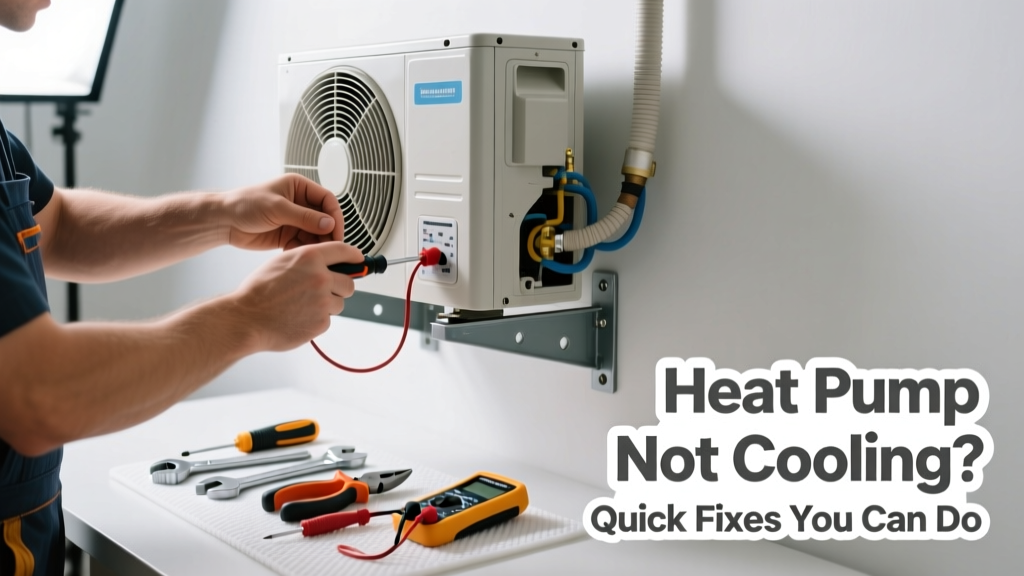
Your heat pump runs, but the air coming out is warm or lukewarm — especially frustrating on a 90°F afternoon. Before you panic or dial an HVAC technician, many cooling failures stem from simple, fixable issues like dirty filters or misconfigured settings. Most homeowners can resolve over half of no-cooling complaints in under an hour.
Quick Diagnosis
Start here before grabbing tools. These are the five most common causes — ranked by likelihood:
- Thermostat set to "Heat" or "Auto" instead of "Cool"
- Clogged air filter restricting airflow
- Dirty outdoor condenser coil blocked by leaves, grass clippings, or debris
- Tripped circuit breaker or disconnected disconnect switch near the outdoor unit
- Low refrigerant charge (requires professional leak detection and recharge)
Tools & Materials Needed
| Item | Purpose | Estimated Cost |
|---|---|---|
| Basic multimeter | Verify power at disconnect switch and indoor blower motor | $25–$45 |
| Fin comb (aluminum coil straightener) | Realign bent condenser fins that block airflow | $12–$20 |
| Soft-bristle brush + garden hose (no pressure washer) | Gently clean outdoor coil without damaging fins | $0–$15 |
| Replacement MERV 8 filter | Restore airflow if current filter is clogged or overdue | $8–$15 |
| Non-contact voltage tester | Safely confirm power is off before inspecting electrical connections | $18–$30 |
Step-by-Step Fix
Work through these methods in order — each addresses a progressively more complex cause:
- Reset thermostat and verify mode: Switch to "Cool," set temperature at least 5°F below room temp, and ensure fan is set to "Auto" (not "On"). Wait 5 minutes — some units delay compressor startup to prevent short-cycling.
- Replace or clean the air filter: Locate the return-air grille (often in hallway ceiling or wall). Remove and inspect the filter. If gray, dusty, or stiff, replace it with a MERV 8 pleated filter sized to your system. A clogged filter drops airflow by up to 40%, triggering high-pressure cutoffs that shut off cooling (U.S. DOE, 2022).
- Clear debris from outdoor unit: Turn off power at the disconnect switch first. Remove leaves, pine needles, and grass clippings from around and inside the condenser cabinet. Use a fin comb to gently straighten any bent aluminum fins — bent fins reduce heat exchange efficiency by as much as 30% (AHRI Technical Bulletin #10-2021).
- Check for ice buildup and defrost cycle: If you see frost or ice on the outdoor coil or copper lines during cooling mode, the system may be stuck in defrost — often due to a faulty defrost control board or sensor. Power down for 2 hours to let ice melt completely, then restart. If ice returns within 24 hours, call a pro.
When to Call a Pro
Stop here if you encounter any of these red flags:
- No power reaching the outdoor unit (multimeter reads 0V at contactor terminals, even with breaker on)
- Hissing or bubbling sounds near refrigerant lines — indicates a leak
- Burning smell, tripped GFCI outlets, or visible corrosion on wiring or capacitor
- Compressor runs but indoor air stays warm — points to refrigerant loss or failed reversing valve
- System cycles on/off every 60–90 seconds (short-cycling), which can damage the compressor if ignored
"Over 68% of premature heat pump compressor failures trace back to restricted airflow or neglected maintenance — not manufacturing defects." — HVAC Excellence Technician Certification Manual, 2023 Edition
Prevention Tips
Maintain cooling performance year-round with these habits:
- Replace air filters every 60 days during peak season (summer and winter)
- Trim shrubs and vines to maintain at least 24 inches of clearance around the outdoor unit
- Inspect condenser coil annually — clean it before June 1st each year
- Have refrigerant levels and electrical connections checked by a licensed tech every other year
- Install a programmable thermostat with humidity control to reduce compressor runtime on muggy days
Why does my heat pump blow warm air when set to cool?
This usually means the reversing valve is stuck in heating mode — either due to low refrigerant, a failed solenoid coil, or internal mechanical seizure. Don’t try to tap or force it; this requires refrigerant-safe diagnostics. See our guide on reversing valve symptoms for confirmation steps before calling a pro.
Can I clean the condenser coil myself?
Yes — but only with a soft brush and low-pressure water spray. Never use a pressure washer: it bends delicate fins and drives debris deeper into the coil. For stubborn grime, use a no-rinse coil cleaner like Nu-Calgon Evap Foam, applied per label instructions. Always power off the unit first — refer to our HVAC electrical safety checklist before touching anything.
Is it normal for the outdoor unit to run constantly on hot days?
Yes — modern variable-speed heat pumps are designed to run longer at lower capacity for better dehumidification and efficiency. If it runs nonstop *and* indoor temps rise above your setpoint, then airflow, refrigerant, or sizing issues are likely. Check filter and coil first — then review our heat pump sizing mistakes article.
What temperature should the air coming from vents be?
A properly functioning heat pump delivers supply air 15–20°F cooler than return-air temperature. So if your return air reads 78°F, expect 58–63°F at the vent. Use a digital thermometer (like the ThermoWorks Thermapen ONE) placed 6 inches from the vent for 60 seconds. Readings outside that range suggest low refrigerant, dirty evaporator, or duct leaks.
How long should a heat pump last before needing major repairs?
With annual maintenance, most air-source heat pumps last 12–15 years. The compressor is typically the first major component to fail — but 82% of early compressor deaths occur in systems with documented airflow restrictions (AHRI Field Performance Study, 2022). Replacing filters and cleaning coils regularly extends life significantly.
Can a dirty evaporator coil cause no cooling?
Absolutely — and it’s often overlooked. Located indoors near the blower, a caked evaporator coil blocks heat absorption and can freeze solid. Signs include reduced airflow, moisture dripping from the air handler, or musty odors. Cleaning requires removing the access panel and using a no-rinse coil cleaner — see our evaporator coil cleaning guide for safe, step-by-step instructions.
A working heat pump shouldn’t leave you sweating through summer — especially when the root cause is something as simple as a $12 filter or a 10-minute coil cleanup. Stay proactive: mark your calendar for filter changes and seasonal inspections, and keep your outdoor unit clear like you would a car’s radiator. That small habit pays off in comfort, efficiency, and avoiding emergency service calls when temperatures spike.