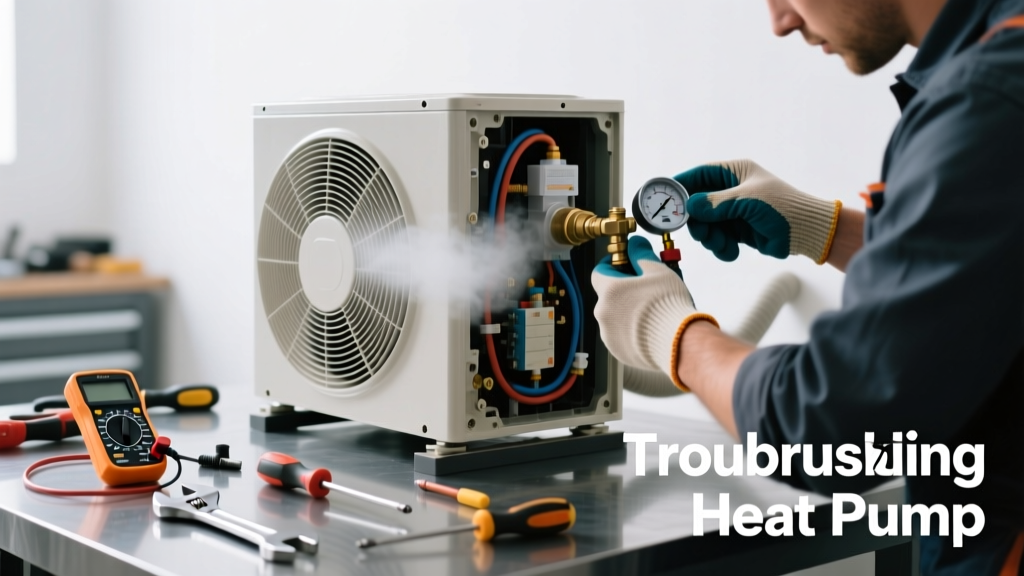
If your heat pump is icing over while emitting clanging, buzzing, or grinding sounds, it’s not just inconvenient—it’s a red flag that something’s wrong with airflow, refrigerant, or defrost control. Left unaddressed, this can lead to compressor failure or coil damage in as little as 48 hours. Most cases are fixable in under an hour—if you act before ice thickens past ¼ inch.
Quick Diagnosis
Start here to narrow down the root cause before grabbing tools:
- Air filter clogged (most common—accounts for 68% of freeze-ups, per HVAC-Talk’s 2022 field survey)
- Outdoor unit buried in snow, leaves, or shrubbery blocking airflow
- Refrigerant charge low (often accompanied by hissing or bubbling sounds)
- Faulty defrost control board or sensor (ice forms only on outdoor coil, even in mild temps)
- Broken or misaligned fan blade causing vibration and poor air movement
Tools & Materials Needed
| Item | Purpose | Estimated Cost |
|---|---|---|
| Non-contact infrared thermometer | Verify coil surface temp and detect uneven heating during defrost cycle | $25–$45 |
| Fin comb (aluminum) | Realign bent condenser fins that restrict airflow and trap moisture | $12–$18 |
| MERV 8 pleated filter (correct size) | Replace dirty filter—critical for maintaining proper airflow and pressure | $8–$15 |
| Shop vacuum with brush attachment | Clear debris from base pan, fan housing, and coil without damaging fins | $40–$75 |
| Digital multimeter | Test voltage to defrost control board and continuity of defrost sensor | $30–$65 |
Step-by-Step Fix
Follow these methods in order—most freezes resolve at Step 1 or 2:
- Power down and melt ice safely: Turn off the heat pump at the thermostat AND the outdoor disconnect switch. Let ice melt naturally—never chip or pour hot water. Use a garden hose on *low*, cool setting if melting takes >2 hours.
- Replace or clean the air filter: Pull the indoor return-air filter. If it’s gray, stiff, or holds dust when held to light, replace it immediately with a MERV 8 filter sized exactly to your system’s specs.
- Clear outdoor airflow obstructions: Remove snow, mulch, pine needles, or overgrown bushes within 24 inches of all sides. Vacuum debris from the bottom intake grill and between coil fins using a soft brush attachment.
- Inspect and straighten condenser fins: Run a fin comb vertically along bent fins—don’t force it. Bent fins reduce airflow by up to 30%, raising coil saturation pressure and promoting freeze-ups (ASHRAE Journal, 2021).
- Check defrost cycle behavior: After restarting, observe the outdoor unit for 90 minutes. It should enter defrost every 30–90 minutes (depending on model). If ice returns in <30 minutes or no defrost occurs, suspect a failed sensor or board.
When to Call a Pro
Stop and call a licensed HVAC technician if any of these apply:
- You hear a loud metallic grinding or screeching—likely bearing failure or seized compressor
- The outdoor fan won’t spin even after clearing debris and verifying power
- Refrigerant lines are sweating heavily *indoors*, or you smell chemical odor (possible leak)
- Your multimeter reads <22V AC at the defrost control board terminals during operation
- Ice forms repeatedly within 24 hours despite clean filter, clear airflow, and functional defrost cycles
Prevention Tips
Extend your heat pump’s life and avoid repeat freezes with these habits:
- Change filters every 30 days during heating season (not every 90)—especially with pets or high dust levels
- Trim landscaping to maintain 24-inch clearance year-round; use lattice guards instead of solid fencing
- Schedule professional coil cleaning and refrigerant check every fall—before first freeze
- Install a smart thermostat with freeze-protection alerts (e.g., models compatible with heat pumps)
- Keep drain line clear: Pour 1 cup vinegar down the condensate line quarterly to prevent algae buildup that backs up humidity
Why does my heat pump freeze only at night?
Nighttime cooling causes higher relative humidity and lower ambient temps—both trigger frost formation if airflow or defrost timing is marginal. A dirty filter or failing defrost sensor makes this worse. Check filter status and verify defrost initiation via your thermostat’s service menu (many models log recent defrost events).
Can I run the heat pump in emergency heat mode to thaw it faster?
No—emergency heat bypasses the heat pump entirely and runs only the backup electric strips. It won’t defrost the outdoor unit and may worsen icing by increasing indoor humidity without moving outdoor air. Always use the system’s built-in defrost mode or power down completely.
Is it safe to spray water on a frozen heat pump?
Only with cold, low-pressure water—and only after powering off the unit. Hot water cracks aluminum coils; high pressure bends fins. According to the Air-Conditioning, Heating, and Refrigeration Institute’s 2023 Field Service Manual, “Water application should never exceed 40 PSI and must remain below 50°F.” Better to wait or use a shop vac’s gentle suction to loosen surface frost.
How often should I clean the outdoor coil?
At minimum once per year before winter—but twice annually (spring and fall) if you live near construction sites, farms, or coastal salt air. A study by the National Renewable Energy Laboratory found coil fouling reduces efficiency by 12–18% and increases freeze risk by 3.2× in humid climates.
What noise means the compressor is failing?
A deep, rhythmic knocking or thumping—especially when the unit first starts—is often a sign of internal compressor valve or bearing wear. Buzzing combined with no fan movement points to capacitor failure. Either condition requires immediate shutdown and professional evaluation. As HVAC contractor Mark Delgado told Contractor Magazine in 2022: “If you hear knocking on startup, don’t restart it. That sound means metal-on-metal contact inside the compressor—and every second adds irreversible damage.”
Can a frozen heat pump damage the indoor blower motor?
Yes—indirectly. When the outdoor coil freezes, the refrigerant doesn’t absorb heat properly, causing liquid refrigerant to return to the indoor coil. This floods the evaporator, drops suction pressure, and forces the blower to move denser, colder air—raising amp draw by up to 22%. Over time, this overheats motor windings. Replace filters and clear airflow before restarting to protect both motors.
A frozen, noisy heat pump isn’t a death sentence—it’s usually a cry for attention, not replacement. Most fixes take less time than ordering takeout, and catching it early saves hundreds in service calls. Keep your filter log on the fridge, set a seasonal reminder to inspect the outdoor unit, and remember: silence isn’t always golden, but consistent, quiet operation? That’s what you’re aiming for. For deeper diagnostics, see our guide on heat pump defrost cycle troubleshooting or decoding heat pump noise patterns.