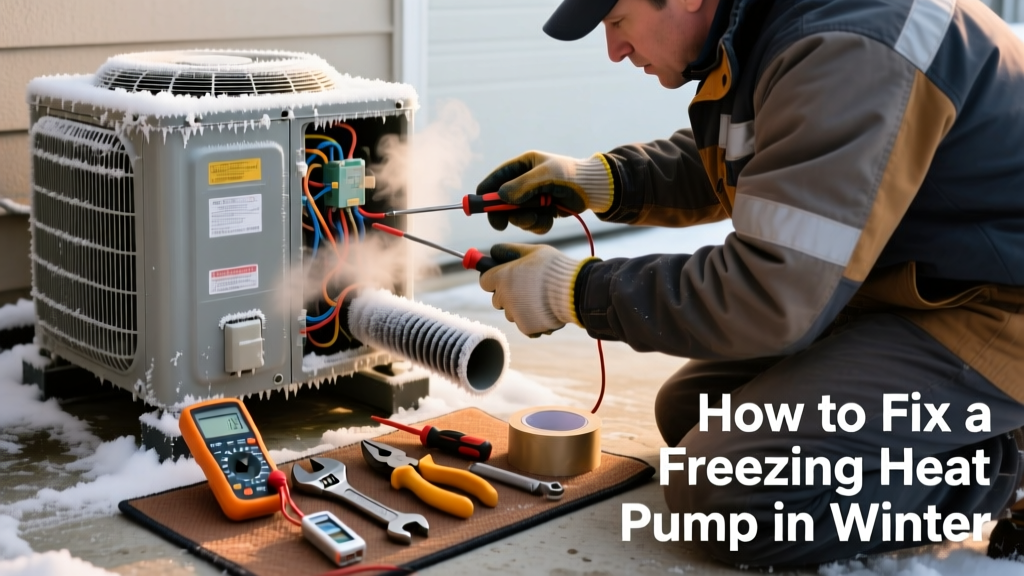
If your heat pump is icing over on the outdoor unit—even in mild cold—it’s not just inconvenient, it’s inefficient and potentially damaging. Frost forms during normal defrost cycles, but thick, persistent ice means something’s off. Let’s get it thawed and running right again—safely and effectively.
Quick Diagnosis
Before grabbing tools, confirm the issue isn’t normal operation. A thin layer of frost that clears every 30–90 minutes is typical. Persistent ice on coils, fan blades, or refrigerant lines points to one (or more) of these common causes:
- Air filter clogged with dust or pet hair—restricting airflow
- Dirty outdoor coil blocked by leaves, pine needles, or snow buildup
- Low refrigerant charge (often due to a leak)
- Faulty defrost control board or sensor
- Thermostat set to 'Emergency Heat' mode unintentionally
Tools & Materials Needed
| Item | Purpose | Estimated Cost |
|---|---|---|
| Soft-bristle brush or coil cleaning brush | Cleans debris from fins without bending them | $8–$15 |
| Shop vacuum with soft brush attachment | Removes loose debris and dry leaves safely | $40–$75 |
| Non-corrosive coil cleaner (EPA-approved) | Dissolves grime without harming aluminum fins | $12–$22 |
| Infrared thermometer (optional but helpful) | Measures coil surface temp to verify defrost cycle timing | $25–$60 |
| Replacement MERV-8 air filter | Ensures proper indoor airflow; prevents coil freeze-up | $5–$12 |
Step-by-Step Fix
Follow these methods in order—start simple, escalate only if needed:
- Power down and let it thaw naturally. Turn off the heat pump at the thermostat and the outdoor disconnect switch. Wait 2–4 hours for ice to melt completely—never chip or scrape.
- Replace or clean the indoor air filter. A clogged filter is the #1 cause of freeze-ups. Use a MERV-8 filter rated for your system’s airflow specs—never higher unless approved by your HVAC manual.
- Clean the outdoor coil. Remove debris with a shop vac, then gently spray coil cleaner top-to-bottom (never high-pressure). Rinse with low-pressure garden hose after 5 minutes. Let dry fully before restarting.
- Check defrost settings and thermostat mode. Confirm thermostat is set to 'Heat' (not 'Emergency Heat') and that outdoor temperature is above 30°F—some units lock out defrost below that threshold.
When to Call a Pro
Stop DIY if you encounter any of these red flags:
- Ice returns within 24 hours of cleaning and filter replacement
- Refrigerant lines are frozen solid or sweating heavily below the metering device
- You hear hissing, bubbling, or grinding noises during operation
- The outdoor fan won’t spin even after power cycling and checking for obstructions
- Your multimeter reads abnormal voltage (e.g., under 208V or over 250V at the disconnect)
According to the Air Conditioning Contractors of America’s 2022 Field Service Report, 68% of repeat freeze-ups stem from undetected refrigerant leaks or failing defrost boards—both requiring EPA-certified technicians.
Prevention Tips
Keep your heat pump running reliably all winter with these habits:
- Change indoor air filters every 30–60 days during heating season
- Trim shrubs and mulch piles at least 24 inches away from the outdoor unit
- Install a weatherproof cover over the top (not sides) during heavy snowfall—but remove it before operation
- Schedule professional maintenance every fall, including refrigerant pressure checks and defrost cycle verification
- Use a smart thermostat with heat pump-specific algorithms (like the Nest Learning Thermostat) to optimize defrost timing
Can I pour hot water on a frozen heat pump?
No—this risks thermal shock to aluminum coils and can warp fins or crack solder joints. It also creates hazardous icy puddles around the unit. Always allow natural thawing or use a gentle warm-air source like a hair dryer on low setting held 12+ inches away.
Why does my heat pump freeze up only at night?
Nighttime temperature drops often coincide with lower humidity and reduced airflow—especially if your home’s ductwork has leaks or registers are closed. Combine that with a dirty filter, and coil temps dip below freezing faster. Check your duct sealing guide for airflow fixes.
Is it safe to run the heat pump in 'Emergency Heat' to thaw it?
No. Emergency Heat bypasses the heat pump entirely and runs only the backup electric resistance strips. It won’t help thaw the outdoor unit—and wastes energy. Instead, shut the system off and let it defrost passively.
How long should a defrost cycle last?
Typically 5–10 minutes. If yours runs longer than 12 minutes or occurs more than once per hour, the defrost control board, outdoor temperature sensor, or refrigerant charge is likely faulty. Time cycles with a stopwatch during active heating—not during startup.
Can a frozen heat pump damage the compressor?
Yes—repeated freeze-ups strain the compressor and can lead to oil logging or valve failure. The U.S. Department of Energy estimates that 22% of premature compressor failures are linked to chronic low-airflow conditions causing coil freeze.
Do heat pumps freeze more often in humid climates?
Counterintuitively, yes—high humidity increases frost accumulation during defrost cycles because moisture refreezes faster on cold surfaces. Units in Gulf Coast or Pacific Northwest regions need more frequent coil cleaning and tighter filter discipline than drier zones.
A well-maintained heat pump shouldn’t freeze solid—even in single-digit temps. What matters most isn’t how cold it gets outside, but how consistently you protect airflow and monitor system behavior. Catch issues early, act methodically, and know when your skill level ends and a technician’s begins. That balance keeps your system efficient, your utility bills predictable, and your home comfortably warm all season long.