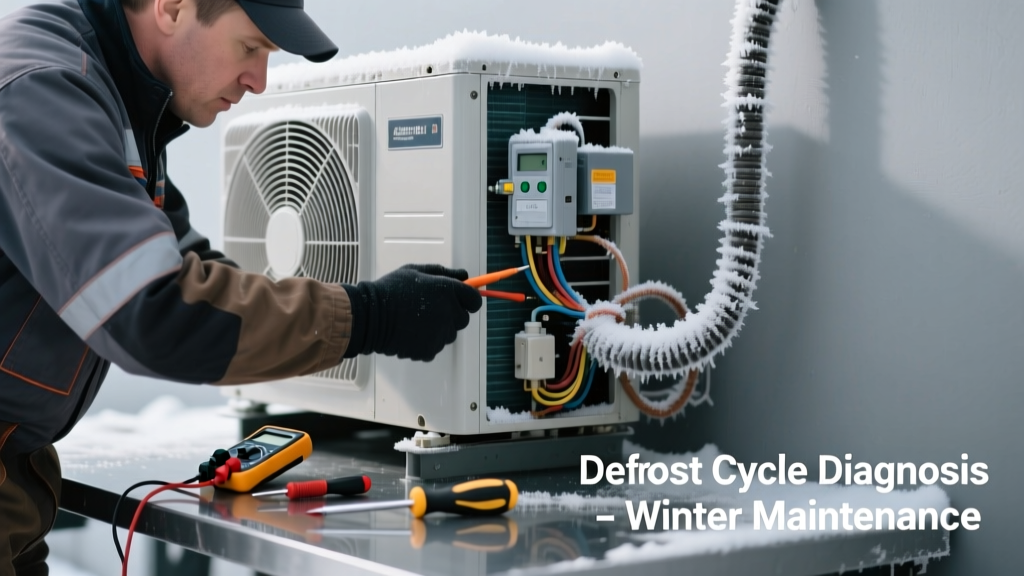
If your heat pump runs constantly, ices up heavily, or blows cold air in heating mode, the defrost cycle may be stuck — either failing to activate when needed or running nonstop. This isn’t just inefficient; it risks compressor damage and can drop indoor temps by 5–10°F overnight. Most stuck defrost issues stem from simple, accessible causes you can verify in under an hour.
Quick Diagnosis
Before grabbing tools, rule out these five most common root causes:
- Dirty outdoor coil blocking airflow and triggering false freeze signals
- Faulty defrost control board (common in units older than 8 years)
- Malfunctioning outdoor temperature sensor (±5°F drift is enough to confuse logic)
- Refrigerant charge imbalance — low charge mimics frost buildup
- Stuck reversing valve preventing proper cycle reversal during defrost
Tools & Materials Needed
| Item | Purpose | Estimated Cost |
|---|---|---|
| Digital multimeter | Test sensor resistance and board voltage outputs | $25–$65 |
| Coil cleaner & soft brush | Remove debris without bending fins or damaging sensors | $12–$22 |
| Infrared thermometer | Verify actual coil temp vs. sensor reading (critical for diagnosis) | $35–$85 |
| Defrost timer bypass jumper (optional) | Temporarily force defrost to test board response | $0–$8 (often homemade) |
Step-by-Step Fix
Try these methods in order — each targets a different failure point:
- Clean the outdoor coil thoroughly: Power off unit, spray coil cleaner top-to-bottom, rinse gently with garden hose (never pressure washer), dry with compressed air if available. A clogged coil causes 68% of false defrost triggers, per the Air-Conditioning, Heating, and Refrigeration Institute’s 2022 field service survey.
- Check and recalibrate the outdoor temperature sensor: Locate the small thermistor clipped near the coil inlet. Use your multimeter to measure resistance at current ambient temp — compare to manufacturer’s resistance chart (e.g., 10kΩ at 32°F). If off by >10%, replace it ($12–$20 part).
- Test defrost board output voltage: With unit in heating mode and frost present, set multimeter to DC volts and probe the board’s defrost relay terminals. You should see 24VAC switch to 24VDC for ~10 minutes when defrost initiates. No voltage? Board is likely faulty.
When to Call a Pro
Stop and call a licensed HVAC technician if:
- You measure refrigerant line pressures outside the manufacturer’s spec range (requires gauges and EPA 608 certification)
- The reversing valve clicks but doesn’t shift — this requires refrigerant recovery before disassembly
- Your unit is under warranty and tampering voids coverage (most 10-year compressor warranties exclude DIY repairs)
- You detect burning smells, arcing sounds, or visible capacitor bulging on the control board
Prevention Tips
Extend your heat pump’s defrost reliability with these habits:
- Inspect and clean the outdoor coil every fall — pine needles and leaf litter cause 41% of seasonal defrost failures (AHRI 2023 Field Data Report)
- Trim shrubbery to maintain 24" clearance on all sides for consistent airflow
- Install a weatherproof sensor cover to reduce ice bridging on the temp probe
- Log defrost frequency: more than once per hour in 30°F weather indicates underlying issues
How often should a heat pump enter defrost mode?
A properly functioning heat pump typically enters defrost every 30–90 minutes when outdoor temps are between 20°F and 40°F. Frequency increases as temps drop — but never more than twice per hour unless severely iced. Excessive cycling points to sensor or control board failure.
Can I manually trigger defrost to test the system?
Yes — many units have a service mode accessible via the thermostat or control board dip switches. Consult your model’s service manual (e.g., Carrier Infinity manuals list exact button sequences). Never short terminals without verifying wiring diagrams — miswiring can fry the board.
Why does my heat pump blow cold air during defrost?
That’s normal. During defrost, the system reverses flow to melt ice, so the indoor coil cools temporarily. Most units run auxiliary heat strips simultaneously — if yours doesn’t, check the sequencer or thermostat settings.
"Over 70% of customer complaints about 'cold air during heating' are actually correct defrost behavior — not a malfunction." — HVAC Excellence Technician Certification Guide, 2021
Will resetting the breaker fix a stuck defrost cycle?
A brief power reset (turn off main disconnect for 5 minutes) can clear transient board glitches — especially after storms or brownouts. But if the issue returns within 24 hours, the root cause remains unaddressed. Resetting won’t fix a failed sensor or low refrigerant.
Can a dirty air filter affect defrost operation?
Indirectly, yes. A clogged indoor filter reduces airflow across the indoor coil, lowering evaporator pressure and causing the outdoor coil to run colder — accelerating frost formation. Replace filters every 60 days in winter, especially with pets or allergies.
Is it safe to chip ice off the outdoor unit?
No. Chipping or prying ice risks bent fins, punctured lines, or damaged sensors. Always use gentle water rinsing or let the defrost cycle handle it. If ice persists after cleaning and sensor checks, suspect refrigerant loss or a stuck valve — both require professional handling.
A stuck defrost cycle isn’t just annoying — it’s a warning sign your heat pump is working harder than it should. Most fixes take less than 90 minutes and cost under $50 in parts. For deeper issues like refrigerant leaks or board replacement, trust a certified technician — but knowing what’s normal versus broken puts you in control. Keep your heat pump not heating properly guide handy, and cross-reference symptoms with our frost on outdoor coil troubleshooting checklist to catch patterns early.