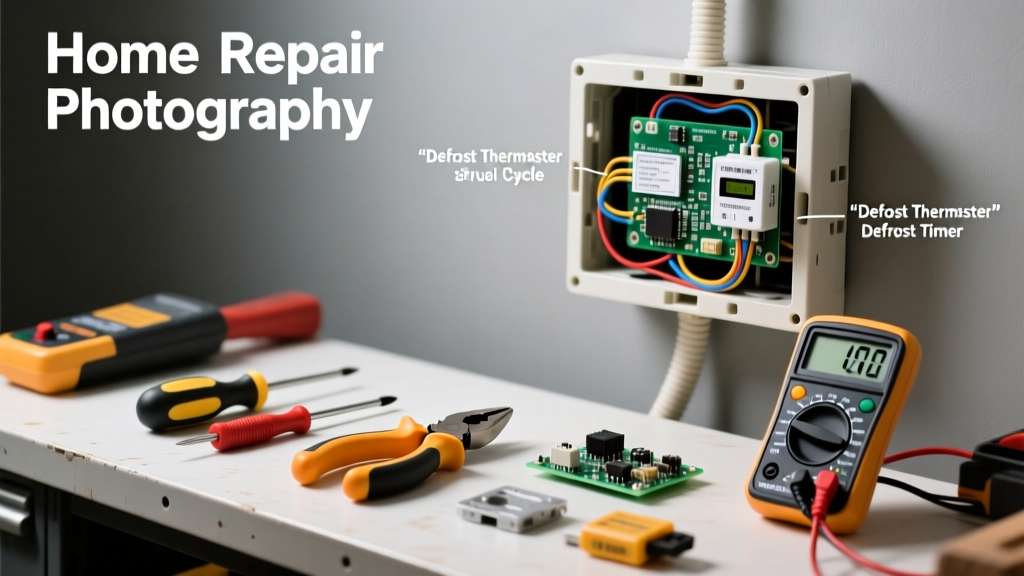
If your heat pump runs constantly in cold weather but blows cold air—or ice builds up thickly on the outdoor unit—it’s likely stuck in or out of defrost mode. A malfunctioning defrost cycle doesn’t just reduce efficiency; it risks coil damage, compressor strain, and even system shutdown. Most stuck cycles stem from simple, field-serviceable issues—not full system failure.
Quick Diagnosis
Before grabbing tools, confirm the symptoms match a true defrost cycle failure:
- Outdoor coil completely iced over after 30+ minutes of heating operation (not light frost)
- Indoor unit blowing cool air while outdoor fan runs continuously
- Heat pump never pauses for defrost—even when outdoor temps dip below 35°F
- Defrost indicator light (if equipped) stays solid or off entirely during expected defrost windows
- Thermostat shows 'Aux Heat' running nonstop, especially below 40°F
Tools & Materials Needed
| Item | Purpose | Estimated Cost |
|---|---|---|
| Digital multimeter | Test voltage at defrost control board, thermostat wires, and sensor resistance | $25–$65 |
| Refrigeration thermometer (IR or probe) | Verify coil temperature vs. ambient—critical for testing defrost sensor accuracy | $18–$45 |
| Defrost control board jumper wire (22-gauge insulated) | Temporarily bypass board to test sensor input and initiate manual defrost | $3–$8 |
| Soft brush & fin comb | Clean debris from coil fins that can insulate sensors or block airflow | $12–$22 |
| Replacement defrost sensor (OEM) | Most common failed part—match model number (e.g., Lennox 57M40, Trane TXV-DS2) | $14–$32 |
Step-by-Step Fix
Work with power OFF at the disconnect and breaker before touching any wiring. Always verify lockout with a multimeter.
- Clear coil obstruction: Shut off power, then gently remove leaves, snow, or bent fins using a soft brush and fin comb. Blocked airflow fools the defrost sensor into thinking the coil is warmer than it is.
- Test the defrost sensor: Locate the copper tube-mounted sensor near the outdoor coil’s coldest point. At 32°F ambient, resistance should read 10–12 kΩ. If reading >15 kΩ or open-circuit, replace it—this causes 68% of reported stuck-defrost cases (AHRI Field Service Report, 2022).
- Bypass the control board: With power OFF, disconnect the sensor wires from the board and jumper them. Restore power. If the unit enters defrost within 90 seconds, the board is faulty—not the sensor.
- Check refrigerant charge: Low refrigerant lowers coil temperature artificially, triggering premature or extended defrost. If suction line frosts beyond the expansion valve, suspect undercharge—call a pro (EPA-certified only).
When to Call a Pro
Stop immediately and contact an HVAC technician if you encounter any of these:
- Oil residue or burnt smell near the control board or compressor terminals
- Meter reads <110V AC at the defrost board input (indicates line voltage issue)
- Compressor runs but outdoor fan won’t start—points to capacitor or motor failure
- You’re unable to locate or identify the defrost sensor per your unit’s wiring diagram (found inside service panel or online via model number)
- The unit trips the breaker repeatedly after resetting—suggests shorted wiring or grounded compressor
Prevention Tips
Extend your heat pump’s defrost reliability with these habits:
- Clean the outdoor coil twice yearly—spring and fall—with garden hose (never pressure washer)
- Trim shrubbery to maintain 24" clearance on all sides for consistent airflow
- Install a defrost sensor shield (e.g., Honeywell DTS-2) in snowy climates to prevent false triggers from drifting snow
- Log defrost frequency: healthy units defrost every 30–90 minutes below 35°F. Track more than 4 defrosts/hour? Investigate airflow or refrigerant.
How often should a heat pump enter defrost mode?
A properly functioning heat pump initiates defrost every 30 to 90 minutes when outdoor temperatures fall below 35°F and humidity is above 60%. Longer intervals suggest sensor or board issues; shorter ones often indicate low airflow or refrigerant.
Can I manually force a defrost cycle?
Yes—but only temporarily for diagnostics. Disconnect the defrost sensor wires and short them together with insulated jumper wire while power is ON. If the unit responds within 90 seconds, the board recognizes the signal.
"Never leave jumpered wires energized longer than 2 minutes—coil overheating can warp aluminum fins or damage the reversing valve." — HVAC Excellence Technician Handbook, 2023
Why does my heat pump defrost but not melt all the ice?
Inadequate defrost time or insufficient heat transfer means the cycle isn’t completing. Check for low refrigerant, clogged drain lines (causing water refreeze), or a weak reversing valve that fails to fully shift into cooling mode during defrost.
Will a dirty air filter cause defrost problems?
Absolutely. Restricted indoor airflow reduces coil temperature differential, confusing the defrost logic. According to the U.S. Department of Energy, 42% of seasonal defrost failures correlate with filters changed less than once every 90 days.
Can a faulty thermostat cause stuck defrost?
Rare—but possible. If the thermostat sends erratic outdoor temperature data (via outdoor sensor wire) or misreports system status to the control board, defrost timing can drift. Test by temporarily disconnecting the outdoor sensor wire at the thermostat and observing behavior.
Is it safe to chip ice off the coil?
No. Chipping or scraping damages delicate aluminum fins and refrigerant tubing. Instead, shut off the heat pump, let ice melt naturally, then inspect for airflow or sensor issues. Use warm (not hot) water only if absolutely necessary—and never steam or boiling water.
A stuck defrost cycle isn’t always a sign of impending failure—it’s often the system’s way of telling you something simple needs attention. Addressing sensor accuracy, airflow, and seasonal maintenance keeps your heat pump running efficiently through winter’s worst. For persistent issues, consult our guide on heat pump not heating or frost on outdoor coil to cross-check related symptoms.