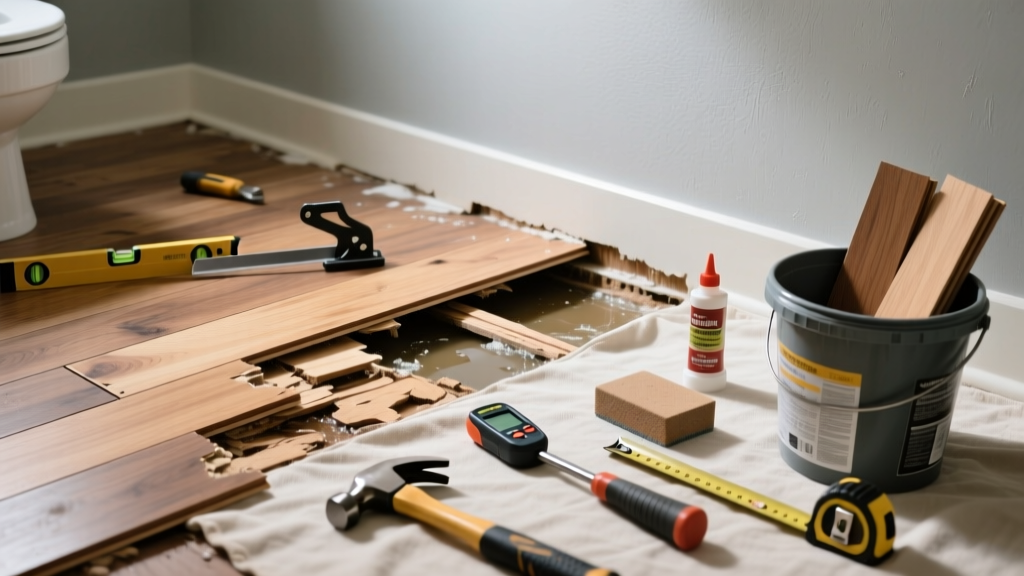
Hardwood floors in bathrooms are beautiful—but they’re also high-risk zones for water damage. A single unnoticed leak under the sink or a cracked caulk line can swell boards, lift finishes, or invite mold beneath the surface within 48 hours.
Quick Diagnosis
Before grabbing tools, pinpoint the source—most bathroom hardwood water damage stems from one of these:
- Failed caulk around tub, shower base, or vanity perimeter
- Loose or corroded supply line connections (especially at shutoff valves)
- Clogged floor drain or overflow pan under the toilet
- Leaking faucet aerator or sprayer hose that drips directly onto seams
- Improperly sealed subfloor transitions between bathroom and adjacent rooms
Tools & Materials Needed
| Item | Purpose | Estimated Cost |
|---|---|---|
| Moisture meter (pin-type) | Measures wood moisture content; confirms active saturation vs. surface dampness | $85–$140 |
| Utility knife with fresh blades | Cuts damaged board edges cleanly and removes old caulk without gouging subfloor | $8–$15 |
| 100-grit and 220-grit sandpaper (orbital sander pads) | Smooths cupped boards and preps for refinish; avoids over-sanding thin wear layers | $12–$20 |
| Waterproof polyurethane (oil-based) | Re-seals repaired area with superior moisture resistance vs. water-based alternatives | $32–$48 |
| 100% silicone caulk (mold-resistant) | Seals perimeter joints where hardwood meets tub/shower—critical for long-term protection | $5–$9 |
Step-by-Step Fix
Choose your method based on severity. Start with the least invasive:
- Surface drying + localized refinishing: If moisture content is below 12% (per meter), sand only cupped or discolored boards with 100-grit, then 220-grit. Apply two coats of oil-based polyurethane, extending 2 inches beyond damaged zone.
- Board replacement: For buckled or soft boards, cut out the affected plank using a flush-cut saw. Use a chisel to remove tongue/groove remnants, dry subfloor with fans for 72+ hours, then glue and clamp a matching replacement board.
- Subfloor mitigation: If moisture reading exceeds 18%, pull up 3–4 rows of flooring near the wettest zone. Inspect OSB or plywood for soft spots; replace any rotted sections before reinstalling hardwood.
When to Call a Pro
DIY stops where structural integrity or health risks begin. Call a certified flooring contractor if:
- You detect musty odors or visible mold growth under flooring or behind baseboards
- More than 3 consecutive boards are warped or feel spongy when stepped on
- The subfloor has delaminated or shows black staining (a sign of prolonged saturation)
- Your home was built before 1980 and asbestos-containing mastic may be present under flooring
According to the Insurance Institute for Business & Home Safety's 2023 report, 68% of hardwood floor water claims involve delayed response beyond 72 hours—making early intervention the biggest factor in salvageability.
Prevention Tips
Hardwood in bathrooms demands proactive defense—not just reactive repair:
- Re-caulk all perimeter joints every 12–18 months using 100% silicone rated for wet areas
- Install a water leak detector like the Moen Smart Water Detector under the vanity and near the toilet base
- Use bath mats with non-slip rubber backing—and launder them weekly to prevent trapped moisture
- Check supply line hoses annually; replace braided stainless steel lines every 5 years per the Plumbing-Heating-Cooling Contractors Association (PHCC) 2022 guidelines
Can I use bleach on this?
No. Bleach does not kill mold growing deep in wood pores and damages tannins in hardwood, causing discoloration and finish breakdown. Instead, use a mixture of 1 part white vinegar to 3 parts water for surface cleaning—or consult an IICRC-certified restoration technician for confirmed mold.
How long does it take to dry a wet hardwood floor?
Air-drying alone rarely works: most engineered or solid hardwood floors need forced air circulation (not just fans) and dehumidification to drop subfloor moisture below 15% in under 5 days. The U.S. EPA estimates that 14% of household water usage is from leaks—so persistent dampness often means an undetected source remains active.
Will my insurance cover hardwood water damage in the bathroom?
Most standard homeowners policies cover sudden, accidental leaks (e.g., burst supply line), but exclude gradual damage from neglected maintenance—like cracked caulk or corroded fittings. Document everything with timestamps and moisture meter readings before filing a claim.
Can I install hardwood in the bathroom at all?
Yes—but only with strict safeguards: use engineered hardwood with ≥4mm wear layer, install over a vapor barrier, ensure RH stays below 60% year-round, and avoid placing it directly under showers or tubs. The National Wood Flooring Association (NWFA) advises against solid hardwood in full-bathrooms unless climate-controlled with HVAC and dehumidification.
Do I need to replace the entire floor if one board is damaged?
Not usually. Modern click-lock and nail-down systems allow targeted board replacement. But if moisture has wicked more than 12 inches into adjacent planks (confirmed with a pin-type meter), replacing a 3-board section ensures uniform appearance and prevents future separation.
What’s the best sealer for bathroom hardwood floors?
Oil-based polyurethane with aluminum oxide additives—like Bona Traffic HD or Varathane Premium—offers the highest abrasion and moisture resistance. Avoid water-based sealers here: they form a less dense film and degrade faster in high-humidity environments.
Hardwood in the bathroom isn’t forbidden—it’s just unforgiving. Every repair you do correctly buys years of resilience, but skipping moisture verification or rushing resealing invites repeat damage. Pair each fix with a habit: monthly caulk checks, quarterly supply line inspections, and always running the exhaust fan for 20 minutes post-shower. That’s how pros keep bathroom hardwood looking tight for a decade or more.