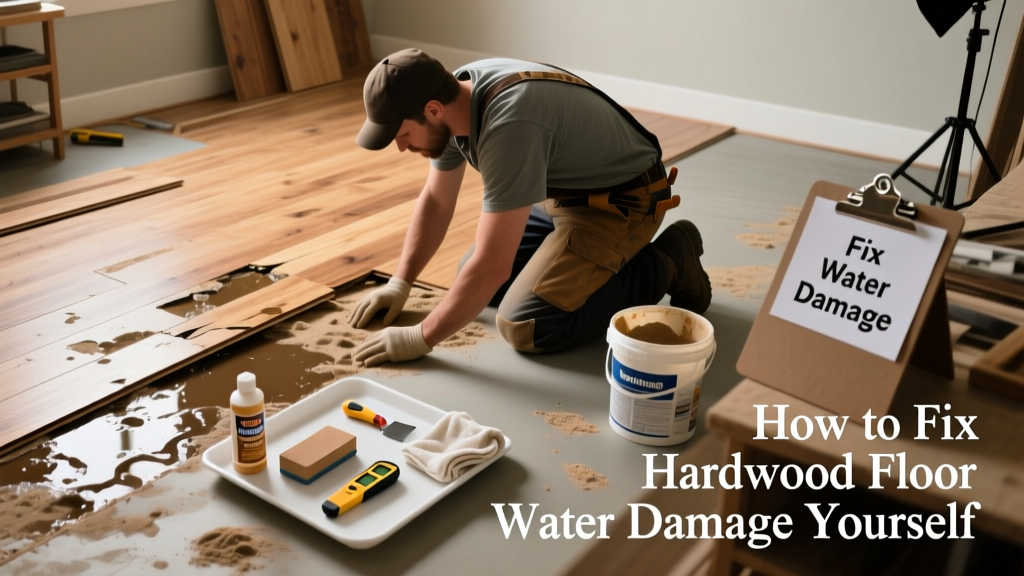
Water on hardwood isn’t just a puddle—it’s a ticking clock. Within 24–48 hours, moisture can warp boards, loosen adhesives, and invite mold beneath the surface. The faster you act, the more flooring you’ll save—and the less you’ll pay in replacement costs.
Quick Diagnosis
Before grabbing tools, identify the source and extent of damage. Most hardwood water issues stem from one of these:
- Leaking dishwasher or refrigerator supply line (accounts for 31% of kitchen-related floor damage per kitchen appliance leaks reports)
- Overflowing bathroom sink or tub, especially near baseboards
- Roof or window seal failure during heavy rain
- Condensation buildup under poorly ventilated area rugs
- Unnoticed HVAC condensate pan overflow
Tools & Materials Needed
| Item | Purpose | Estimated Cost |
|---|---|---|
| Moisture meter (pin-type) | Measures wood moisture content—critical for confirming dryness before refinishing | $85–$140 |
| Shop vacuum with wet/dry capability | Extracts standing water and damp subfloor moisture | $60–$120 |
| Dehumidifier (70-pint capacity) | Lowers ambient humidity to accelerate drying; required for >10 sq ft affected | $220–$350 |
| Plastic sheeting (6-mil) | Covers adjacent unaffected areas during sanding/refinishing | $12–$25 |
| Orbital sander + 80/120/220-grit pads | Removes surface finish and minor cupping; avoids aggressive gouging | $110–$190 rental/day |
Step-by-Step Fix
Not all water damage is equal. Use this tiered approach based on severity:
- Surface Dampness (0–24 hrs): Blot with microfiber cloths, run fans *across* (not down onto) the floor, and monitor with a moisture meter until readings drop below 12% MC.
- Cupping or Gapping (24–72 hrs): Place dehumidifier at center of room, set to 35–40% RH, and run continuously for 5–7 days. Avoid walking on affected planks.
- Loose or Lifting Boards: Carefully pry up damaged sections using a stiff putty knife, inspect subfloor for rot, replace rotted plywood, then re-nail or glue new matching boards with Bostik Ultra-Set.
- Discoloration or Staining: Light stains respond to oxalic acid solution (1 tbsp per quart warm water); apply with soft brush, rinse, and dry fully before recoating with Bona Traffic HD.
When to Call a Pro
DIY stops where structural integrity or health risks begin. Call a certified hardwood installer or IICRC-certified water restoration technician if:
- You detect musty odors or visible mold growth under baseboards or in crawlspaces
- Moisture meter readings exceed 18% MC in three or more adjacent boards
- Damage spans more than 20 linear feet or crosses two rooms
- The floor was installed over concrete without a vapor barrier (common in basements built pre-2005)
"Hardwood floors exposed to Category 2 (gray) water—like from a leaking washing machine—require professional drying within 48 hours to avoid irreversible fiber swelling." — Institute of Inspection, Cleaning and Restoration Certification (IICRC), S500 Standard, 2022
Prevention Tips
Stop future damage before it starts:
- Install leak detectors ($25–$45) under sinks, behind toilets, and near water heaters—learn which models integrate with smart home systems
- Re-caulk tub/shower surrounds and window sills every 18 months
- Use felt pads under furniture legs and avoid rubber-backed rugs (they trap moisture)
- Check HVAC condensate drain lines monthly—clogs cause slow overflow into ceiling joists and floors below
Can I use bleach on this?
No. Bleach damages lignin in wood fibers, accelerating graying and brittleness. It also fails to penetrate deep enough to kill mold roots in porous wood. Use diluted vinegar (1:1 with water) for surface mildew, or EPA-registered mold inhibitors like Concrobium Mold Control for persistent cases.
How long does drying take?
Minimum 3–5 days for surface dampness with airflow and dehumidification; 7–14 days for cupped or gapped boards. Never rush refinishing—applying polyurethane to wood above 12% moisture content causes blisters and peeling. Always verify with a pin-type meter, not just touch or appearance.
Will insurance cover hardwood water damage?
Most standard homeowners policies cover sudden, accidental leaks (e.g., burst pipe) but exclude long-term seepage or maintenance-related failures (e.g., worn washer hose). Document everything with timestamped photos and keep receipts for drying equipment rentals—file claims within 72 hours for fastest processing.
Can I sand out water stains?
Only if the stain hasn’t penetrated past the top 1/32″ of the wear layer. Solid 3/4″ oak can typically withstand 2–3 light sandings; engineered floors with 2mm veneer may be ruined after one pass. Test in an inconspicuous corner first—stop if you hit raw wood or see glue layers.
Do I need to replace the entire board?
Not always. For isolated warping or staining, skilled installers can perform board-level replacement using a plunge router and spline joinery. But if moisture has compromised the tongue-and-groove fit across 3+ boards, full-row replacement ensures stability and avoids creaking later.
What’s the best finish to use after repair?
Bona Traffic HD is the current industry benchmark for residential durability—its aluminum oxide reinforcement resists scuffs better than oil-based polyurethane and dries in 2–4 hours. Avoid satin finishes in high-traffic zones; semi-gloss offers better stain resistance without glare.
Fixing water-damaged hardwood isn’t about erasing the past—it’s about restoring function, safety, and value with informed choices. Even small interventions done correctly buy years of service life. And when the job stretches beyond your tools or tolerance, knowing when to pause and call in backup is the mark of a seasoned homeowner—not a shortcut, but sound strategy.