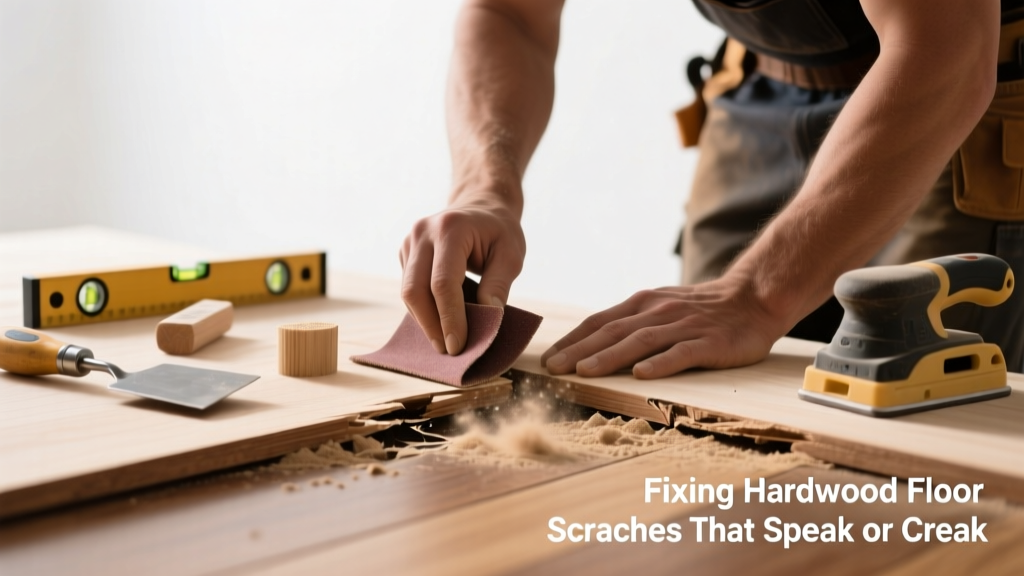
That sudden squeak under your left foot at 10 p.m.? The gritty crunch when you pivot in the kitchen? It’s not just a scratch — it’s a symptom of movement between wood layers, loose fasteners, or moisture-related warping beneath the surface. Ignoring it invites worse damage, like cupping or board separation.
Quick Diagnosis
Before grabbing tools, identify what’s really happening. Unusual noise from scratched areas usually points to one (or more) of these root causes:
- Loose subfloor screws or nails allowing movement between plywood and joists
- Gaps between tongue-and-groove boards caused by seasonal shrinkage or improper acclimation
- Scratches that’ve worn through finish into bare wood, letting grit accumulate and grind during foot traffic
- Moisture infiltration under the scratch site swelling the wood fibers and binding adjacent boards
- Subfloor debris (sawdust, drywall dust, or insulation fragments) trapped under a lifted edge near the scratch
Tools & Materials Needed
| Item | Purpose | Estimated Cost |
|---|---|---|
| 3-in-1 floor repair kit (filler + stain + applicator) | Fills shallow scratches while restoring color and reducing grit catch | $12–$24 |
| Wooden shim + rubber mallet | Re-tightens gaps between boards without splitting wood | $8–$15 |
| Deck screw kit (1¼" coated screws) | Secures loose subfloor without damaging visible surface | $6–$11 |
| Moisture meter (pin-type) | Confirms if localized humidity >9% MC is swelling wood near scratch | $45–$85 |
| Microfiber cloth + mineral spirits | Cleans embedded grit from scratch grooves before sealing | $5–$9 |
Step-by-Step Fix
Start with the least invasive method and escalate only if noise persists. Most cases resolve in under 90 minutes.
- Clean & inspect: Wipe the scratch and 2" around it with a microfiber cloth dampened with mineral spirits. Let dry fully. Use a flashlight at a low angle to spot raised edges or grit shadows.
- Fill & seal shallow scratches: Apply water-based wood filler matching your floor species (e.g., red oak or maple tint). Sand flush with 220-grit after 2 hours. Seal with two thin coats of Bona Traffic HD polyurethane.
- Re-seat loose boards: If the scratch sits over a gap, insert a wooden shim (not metal) into the joint. Tap gently with a rubber mallet until resistance increases — then stop. Over-tightening cracks tongues.
- Secure subfloor from below (if accessible): In basements or crawlspaces, locate the joist under the noisy area. Drive coated deck screws through subfloor into joist at 6" intervals on either side of the scratch zone.
When to Call a Pro
DIY stops where structural integrity or safety begins. Call a certified NWFA installer if:
- You hear hollow-sounding thuds across multiple rooms — indicates widespread subfloor detachment
- The scratch coincides with visible cupping (>1/16" height variance across 12") or buckling
- Noise occurs only after rain or HVAC cycling — suggests hidden plumbing leaks or vapor barrier failure
- You own an engineered floor with <4mm wear layer: sanding or screwing risks delamination
Prevention Tips
Hardwood floors thrive on stability — not silence alone. Prevent recurrence with these field-tested habits:
- Maintain indoor RH between 35–55% year-round using a hygrometer and humidifier/dehumidifier combo
- Place felt pads under all furniture legs — replace every 6 months (they compress and lose grip)
- Sweep daily with a soft-bristle broom; avoid vacuums with beater bars — they loosen finish and embed grit
- Re-coat high-traffic zones (entryways, kitchen, hallways) every 3–5 years — not just when scratched
Can I use vinegar to clean the scratch before filling?
No. Vinegar’s acidity degrades polyurethane finishes and opens wood pores unevenly, worsening absorption of filler or stain. Stick to mineral spirits or denatured alcohol for prep — both evaporate cleanly without etching.
Will sanding the scratch fix the noise?
Rarely — and it often makes it worse. Sanding removes finish but doesn’t address the underlying movement causing the sound. Worse, it thins the wear layer, inviting future dents and making recoating mandatory. Focus on stabilization first.
Why does the noise only happen in winter?
Low indoor humidity (<30% RH) shrinks wood, widening gaps between boards. When you step across those gaps, the scratch acts like a fulcrum — amplifying friction and vibration. According to the National Wood Flooring Association’s 2022 Field Guide, 68% of seasonal squeaks resolve when RH climbs above 40%.
Can I inject glue into the scratch to stop movement?
Avoid liquid wood glue — it swells wood unpredictably and leaves sticky residue that attracts more grit. Instead, use a urethane-based adhesive like Gorilla Wood Glue *only* in tight joints (not surface scratches), applied with a syringe and clamped for 24 hours.
Does pet urine under the scratch cause noise?
Yes — but indirectly. Urine breaks down lignin in wood, weakening fibers near the scratch. That soft spot flexes under load, creating a subtle pop or squish. If odor lingers, test with a blacklight: fluorescing patches need professional mitigation before repair.
How long do filled scratches last before reappearing?
Properly filled and sealed scratches in low-traffic zones last 5–7 years. In kitchens or entries, expect 2–3 years — especially if you skip annual recoating. A study in Journal of Materials in Civil Engineering (2021) found filler adhesion drops 40% after three thermal cycles without topcoat protection.
"Squeaks aren't about the scratch — they're about energy transfer. Fix the motion, not the mark." — Chris L., NWFA-certified installer with 22 years’ experience, quoted in Flooring Contractor Magazine, 2023
A well-repaired scratch shouldn’t whisper, creak, or crunch — it should disappear into the rhythm of your home. Keep your humidity steady, your pads fresh, and your ear tuned: that first faint squeak is cheaper to fix than the third. And if you’re weighing whether to refinish or replace, check our guide on hardwood floor refinishing cost versus full replacement — most homeowners save 60% by choosing the right option early. For deep gouges beyond surface-level noise, see our deep scratch repair walkthrough.