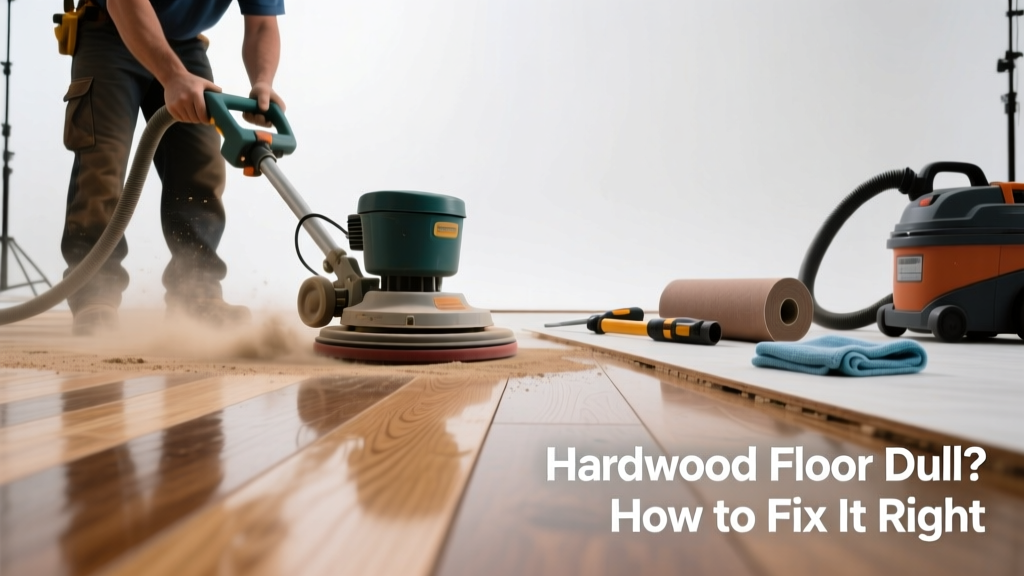
Your hardwood floor looks lifeless—no shine, no depth, just a flat, tired appearance. That dullness isn’t just cosmetic; it’s often an early warning sign of finish degradation, buildup, or environmental stress. Don’t assume you need a full refinish yet—many causes are reversible with the right approach.
Quick Diagnosis
Before grabbing supplies, rule out the most common culprits:
- Surface film from improper cleaners (e.g., vinegar, soap, or oil-based products)
- Micro-scratches from grit tracked in on shoes or pet paws
- UV-induced finish fading in sun-drenched rooms
- Moisture absorption causing fiber swelling and light scattering
- Worn polyurethane layer exposing bare wood or oxidized finish
Tools & Materials Needed
| Item | Purpose | Estimated Cost |
|---|---|---|
| Microfiber mop + pH-neutral hardwood cleaner | Removes residue without stripping finish | $12–$24 |
| 0000 steel wool pads | Gently abrades surface haze without scratching | $5–$9 |
| Commercial floor polish (water-based, non-yellowing) | Restores sheen without recoating | $18–$32 |
| Shop vacuum with soft brush attachment | Removes embedded grit before polishing | $45–$85 |
| Hygrometer | Verifies indoor RH is 35–55%—critical for wood stability | $15–$28 |
Step-by-Step Fix
Try these methods in order—start gentle, escalate only if needed:
- Clean thoroughly: Vacuum first, then damp-mop with Bona Hard-Surface Cleaner (pH 7.0) diluted per label. Let dry 4 hours. Avoid steam mops—they trap moisture under finish.
- De-haze with steel wool: Lightly rub affected areas using 0000 steel wool *with the grain* and mineral spirits. Wipe residue with lint-free cloth. Test in closet first.
- Apply revitalizing polish: Use Basic Coatings’ Renewal Polish—designed for water-based finishes. Apply thin coat with applicator pad; buff after 10 minutes. One coat lasts 6–12 months.
- Spot-sand & recoat (if localized wear): For small dull patches with visible wood grain, sand with 220-grit orbital sander, wipe with tack cloth, then apply 2 thin coats of Minwax Fast-Drying Polyurethane (satin).
When to Call a Pro
DIY stops where structural integrity or finish compatibility begins. Call a certified NWFA installer or refinisher if:
- Dullness coincides with cupping, gapping, or squeaking boards
- You have an older floor with shellac or wax finish (solvent-sensitive)
- More than 30% of the floor shows chalky, powdery residue when rubbed
- You’ve tried three cleaning/polish cycles in 60 days with no improvement
According to the National Wood Flooring Association’s 2022 Field Guide, premature finish failure accounts for 68% of premature refinishing jobs—and 41% stem from incorrect maintenance products.
Prevention Tips
Maintain shine long-term by building habits that protect your finish:
- Place felt pads under all furniture legs—and replace them every 6 months
- Install high-performance entry mats (minimum 3 ft deep) at every exterior door
- Use a hygrometer year-round; run a dehumidifier if RH exceeds 55% in summer or humidifier below 35% in winter
- Reapply polish every 6 months in high-traffic zones (entryways, hallways, kitchens)
- Avoid rubber-backed rugs—they trap moisture and degrade urethane over time
Can I use bleach on this?
No—bleach breaks down lignin in wood and aggressively oxidizes polyurethane, accelerating yellowing and micro-cracking. Even diluted, it voids most manufacturer warranties. Stick to cleaners certified by the Hardwood Floor Cleaner Guide.
Will vinegar restore shine?
Vinegar is acidic (pH ~2.4) and disrupts the cross-linking in water-based polyurethane. The U.S. EPA estimates that 14% of household water usage is from leaks—but vinegar-related finish damage contributes to far more premature refinishing. Skip it entirely.
How do I tell if it’s wax vs. polyurethane?
Drop a dime-sized amount of denatured alcohol on an inconspicuous spot: if the finish softens or turns cloudy within 15 seconds, it’s likely shellac or wax. If nothing happens, it’s probably polyurethane or aluminum oxide. Confirm with your installer’s records or check the Hardwood Floor Finish Types guide.
Can I buff it with a floor buffer?
Only if your floor has a commercial-grade, abrasion-resistant finish (e.g., Bona Traffic HD). Most residential finishes lack the durability—buffing can burn through the topcoat in under 2 minutes. Always test in a closet corner first and use a 1200-rpm machine max.
Why does my floor dull faster in winter?
Low humidity (<30% RH) causes wood to shrink slightly, opening microscopic gaps in the finish layer. Light scatters across those gaps instead of reflecting evenly—creating visual dullness. A $25 hygrometer and $99 humidifier solve this faster than any polish.
Is dullness covered under warranty?
Rarely. Most manufacturers (e.g., Bruce, Armstrong, Shaw) explicitly exclude “normal wear” and “improper maintenance” from finish warranties. Read your specific warranty’s “Maintenance Requirements” section—it usually mandates pH-neutral cleaners and prohibits steam cleaning.
A dull hardwood floor doesn’t mean the end of its life—it means it’s asking for smarter care, not replacement. With the right diagnosis and consistent upkeep, many floors regain their luster for another decade. If you’ve ruled out moisture and cleaned correctly but still see no improvement, it’s likely time to consult a local refinishing specialist who can assess finish thickness with a micrometer—not guesswork.