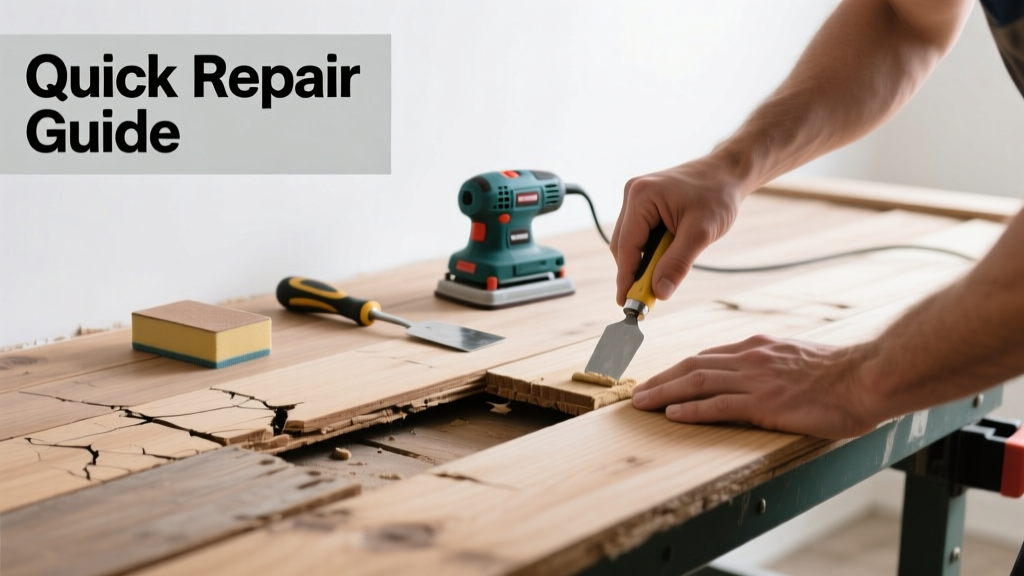
That dull sheen and sudden squeak underfoot? It’s not just annoying—it’s a warning sign your hardwood floor is losing structural integrity or surface protection. Ignoring it risks permanent finish damage, subfloor movement, or even moisture intrusion beneath the planks.
Quick Diagnosis
Start here before grabbing tools. Most dull + noisy floors stem from one (or more) of these culprits:
- Finish wear exposing bare wood, causing friction and light absorption loss
- Loose fasteners (nails or staples) letting boards shift and rub
- Gaps between boards or between board and subfloor allowing air movement and vibration
- Subfloor sagging or joist deflection due to undersized framing or moisture damage
- Excessive humidity swings causing seasonal wood expansion/contraction stress
Tools & Materials Needed
| Item | Purpose | Estimated Cost |
|---|---|---|
| 3-in-1 floor nailer & pull bar | Drives nails at angle without surface damage; pulls loose boards tight | $85–$120 |
| Wood filler (water-based, stainable) | Fills gaps and minor gouges without yellowing or cracking | $12–$22 |
| Mineral spirits & lint-free cloths | Cleans residue before refinishing; safe for existing polyurethane | $6–$10 |
| 0000 steel wool & Bona Hardwood Floor Polish | Restores luster without full sanding; removes light haze | $14–$24 |
| Moisture meter (pin-type) | Confirms subfloor moisture content—critical before any repair | $45–$95 |
Step-by-Step Fix
Choose the method that matches your diagnosis. Most homeowners resolve 70% of cases with Method 1 or 2:
- Surface Refresh (for dullness only): Clean with Bona Cleaner, lightly buff with 0000 steel wool, then apply two thin coats of Bona Polish. Let dry 2 hours between coats.
- Nail-and-Plug (for localized creaks): Locate squeak source, drive 1⅝" ring-shank finish nails at 15° angle through board into joist. Fill hole with matching wood putty. Sand flush once dry.
- Subfloor Reinforcement (for widespread noise): Access from basement or crawl space. Screw ¾" plywood strips across joists where gaps exist, then inject construction adhesive into voids between subfloor and joists.
- Gap Filling (for seasonal gaps + dust/draft issues): Use flexible, stainable acrylic filler (e.g., Timbermate) in gaps >1/16". Apply with putty knife, wipe excess with damp cloth before drying.
When to Call a Pro
DIY stops where safety or structural risk begins. Call a certified hardwood flooring contractor if you observe any of these:
- Joist deflection exceeding 1/360 span (e.g., >1/4" sag over 12' span)—measured with straightedge and feeler gauge
- Moisture readings above 12% in subfloor or >9% in hardwood (per National Wood Flooring Association moisture guidelines)
- Visible cupping, buckling, or mold odor beneath baseboards—signs of chronic water intrusion
- More than 30% of floor area exhibiting noise, especially near load-bearing walls or stair landings
According to the National Wood Flooring Association’s 2022 Installation Guidelines, "floors with over 20% loose fasteners require full re-securing—not spot repairs—to prevent progressive failure."
Prevention Tips
Maintain stability year-round to protect both finish and structure:
- Keep indoor relative humidity between 35–55% using a hygrometer and whole-house humidifier/dehumidifier
- Vacuum weekly with soft-bristle attachment; avoid steam mops—they trap moisture under finishes
- Use felt pads on all furniture legs and replace them every 6 months
- Inspect baseboard gaps annually for new cracks—early sign of subfloor movement
Can I use vinegar and water to clean my dull hardwood floor?
No. Vinegar’s acidity degrades polyurethane over time, accelerating dullness and increasing susceptibility to scratches. Stick with pH-neutral cleaners like Bona or Bruce Hardwood Floor Cleaner.
Why does my floor only squeak in winter?
Dry winter air shrinks wood, widening gaps between boards and loosening fasteners. This allows lateral movement when stepped on—creating friction noise. A $40 digital hygrometer helps track seasonal shifts before damage occurs.
Will refinishing stop the squeaking?
Refinishing alone won’t fix noise—it only restores appearance. Squeaks originate below the surface. If you refinish without addressing loose boards or subfloor gaps, the noise returns within months. Always diagnose and stabilize first.
Can I inject lubricant into the gap to stop squeaking?
Not recommended. Graphite or talc powder may temporarily quiet friction but attracts dust, hardens into abrasive sludge, and offers zero structural benefit. It also interferes with future adhesives or finishes. Mechanical fastening is safer and longer-lasting.
How long does a proper nail-and-plug repair last?
When done correctly—using ring-shank nails driven into solid joist material and sealed with stain-matched filler—the repair lasts 10–15 years. The NWFA notes that properly angled nails reduce pull-out risk by 68% versus vertical nailing (NWFA Technical Bulletin #17, 2021).
Do area rugs make squeaks worse?
Yes—if placed over loose boards. Rugs add weight and pressure that amplify flexing, turning faint creaks into loud groans. Instead, place small rugs only over stable areas and inspect underlying floor condition first.
A dull, noisy floor isn’t just cosmetic—it’s your home’s way of signaling stress beneath the surface. Address it early with the right tools and timing, and you’ll extend your floor’s life by a decade or more. And remember: consistent humidity control does more for longevity than any polish or product ever could.