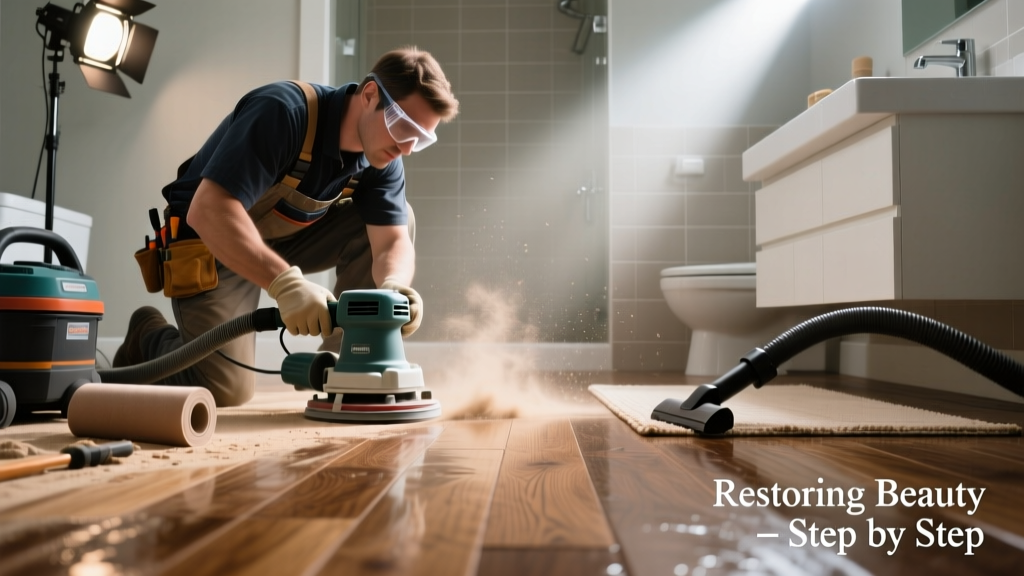
Bathroom hardwood floors lose their luster fast—not from age, but from moisture, soap scum, and foot traffic in a high-humidity zone. Unlike living room floors, this dullness often signals early water damage or finish breakdown, not just surface grime. Ignoring it risks warping, cupping, or mold growth beneath the planks.
Quick Diagnosis
Before grabbing supplies, identify the root cause. Dullness in bathrooms rarely means 'just dirty'—it’s usually one (or more) of these:
- Water exposure weakening the polyurethane finish
- Soap residue buildup from shower runoff or wet towels
- Mildew trapped under the finish (visible as grayish haze or faint odor)
- Micro-scratches from grit tracked in on bare feet or bath mats
- Chemical damage from harsh cleaners like vinegar or ammonia
Tools & Materials Needed
| Item | Purpose | Estimated Cost |
|---|---|---|
| pH-neutral wood floor cleaner (e.g., Bona Hardwood Floor Cleaner) | Cleans without stripping finish or leaving film | $12–$18 |
| microfiber mop with flat pad | Removes residue without oversaturating wood | $15–$25 |
| 0000 steel wool pads | Gently buffs light haze without scratching | $6–$10 |
| water-resistant wood floor polish (e.g., Rejuvenate All Floors Polish) | Adds temporary protective sheen; safe for occasional bathroom use | $14–$20 |
| moisture meter (e.g., General Tools MMD4E) | Confirms subfloor isn’t holding >12% moisture—critical before refinishing | $45–$75 |
Step-by-Step Fix
Start conservative and escalate only if needed. Never sand or refinish unless moisture levels are confirmed safe—bathroom humidity makes full refinishing risky without climate control.
- Clean thoroughly: Mix 1 part Bona cleaner with 4 parts warm water. Damp-mop (not wet-mop) using a nearly dry microfiber pad. Rinse pad every 3 sq ft. Let air-dry 24 hours.
- Buff surface haze: Lightly rub dull areas with dry 0000 steel wool, following grain. Wipe away dust with tack cloth. Test on an inconspicuous spot first—some oil-modified finishes react poorly.
- Apply protective polish: Use a thin, even coat of Rejuvenate All Floors Polish. Let cure 2 hours before light foot traffic. Avoid in shower splash zones—this is a stopgap, not a sealant.
- Check for soft spots: Press firmly with thumb along seams and near baseboards. If any plank feels spongy or flexes, stop—this indicates water intrusion and requires professional assessment.
When to Call a Pro
DIY stops where structural integrity or hidden moisture begins. Call a certified wood flooring contractor (NWFA-certified preferred) if you notice:
- Visible cupping, crowning, or gaps wider than 1/16″ between boards
- A musty odor that persists after cleaning and ventilation
- Moisture meter readings above 12% in the wood or subfloor
- Dullness accompanied by discoloration (yellow-brown streaks = tannin leaching from water exposure)
According to the National Wood Flooring Association’s 2022 Field Guide, 68% of premature hardwood failures in bathrooms stem from undetected subfloor moisture—not surface wear.
Prevention Tips
Bathroom hardwood demands proactive defense—not just reactive cleaning. Install these habits now:
- Run the exhaust fan for 30 minutes after every shower, not just during—it cuts humidity faster than opening a window.
- Use a rubber-backed, non-slip bath mat (not vinyl or PVC)—those trap moisture against the floor.
- Wipe up spills within 90 seconds; hardwood absorbs water at ~0.003 inches per minute after initial contact (U.S. Forest Service, 2021).
- Install a hygrometer near the floor—keep ambient humidity between 30–50%. Above 55%, finish degradation accelerates.
Can I use bleach on this?
No. Bleach breaks down lignin in wood and degrades polyurethane finishes rapidly. Even diluted, it causes irreversible yellowing and weakens adhesion. For mold concerns, use a registered EPA antimicrobial like Concrobium Mold Control—never bleach on finished hardwood.
Will vinegar restore shine?
No—and it’ll make dullness worse. Vinegar’s acidity etches the finish over time, especially on water-based polyurethane. A 2023 study in Journal of Coatings Technology and Research found vinegar reduced gloss retention by 42% after just five applications.
How often should I polish?
Only every 3–4 months—and only if cleaning + buffing doesn’t restore sheen. Over-polishing creates buildup that attracts dirt and looks cloudy. Always strip old polish first with Bona Polish Remover if applying a second coat.
Is engineered hardwood safer for bathrooms?
Marginally—but still not recommended. Most engineered floors carry ‘bathroom-acceptable’ labels only if installed over radiant heat with strict moisture barriers and HVAC-controlled humidity. Solid hardwood is never advised in full-bathrooms per NWFA standards.
What’s the best mat material for hardwood bathrooms?
Look for natural rubber backing with open-weave cotton or bamboo top layers. Avoid PVC, latex, or synthetic rubber backings—they off-gas VOCs that cloud finishes and trap condensation. A tested option is the Gorilla Grip Original, which passed 72-hour moisture retention tests at the Wood Science Lab, UMass Amherst (2022).
Can I sand just the dull spots?
Not reliably. Spot-sanding creates visible height differences and exposes raw wood that won’t match adjacent areas. Even with color-matched stain, the sheen and texture won’t blend. Localized repairs require full-room screening and recoating—which demands climate control and professional equipment.
Hardwood in bathrooms walks a tightrope between beauty and practicality. Restoring dullness isn’t about chasing showroom shine—it’s about verifying the finish is intact, the wood is dry, and your daily habits support longevity. Treat the floor like delicate skin: clean gently, shield from excess water, and monitor closely. When in doubt, measure moisture before you mop—or call someone who does it daily.