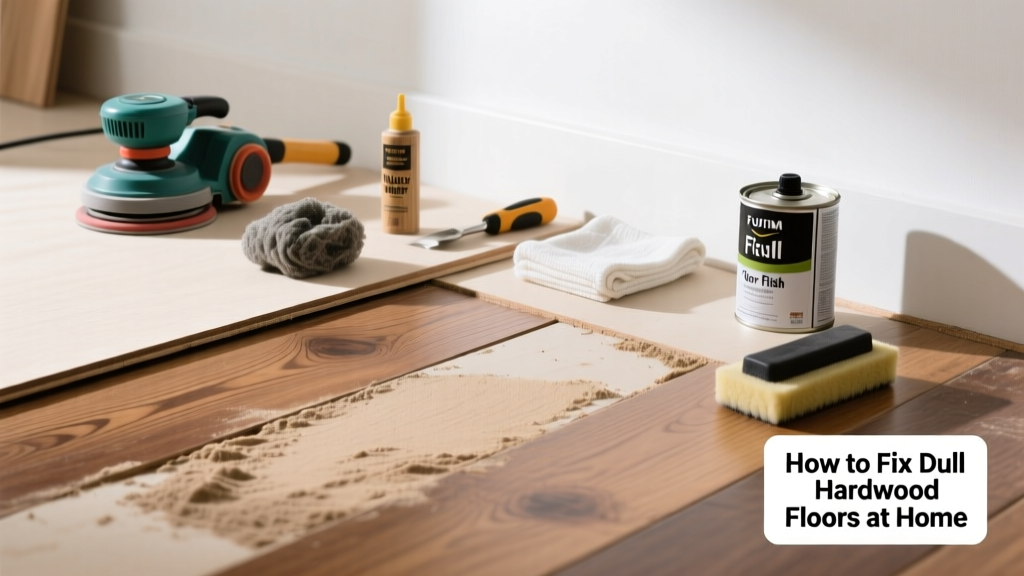
That warm, rich glow your hardwood floors once had? It’s gone — replaced by a flat, lifeless sheen that makes your living room look tired. Dullness isn’t always about damage; often it’s just surface buildup or wear in the finish layer. The good news: most cases are fixable without sanding or refinishing.
Quick Diagnosis
Before grabbing supplies, identify the cause. Dullness rarely means your wood is ruined — it usually points to one (or more) of these common issues:
- Surface film from improper cleaners (especially vinegar, ammonia, or "all-purpose" sprays)
- Dust and micro-scratches accumulating in the finish over time
- Worn polyurethane or oil-based topcoat (especially in high-traffic zones like hallways or entryways)
- Water exposure causing hazing or cloudiness beneath the finish
- UV-induced ambering or fading of older finishes, especially on red oak or maple
Tools & Materials Needed
| Item | Purpose | Estimated Cost |
|---|---|---|
| Microfiber mop + flat pad | Removes dust and light residue without scratching | $12–$28 |
| Bona Hardwood Floor Cleaner (pH-neutral) | Cleans without stripping or leaving film | $14–$19 |
| Mineral spirits (100% pure) | Dissolves wax buildup and old cleaner residue | $6–$11 |
| Fine-grade steel wool (0000) | Gently buffs haze without cutting through finish | $4–$7 |
| Hardwood floor revitalizer (e.g., Rejuvenate Professional) | Restores sheen and fills minor micro-scratches | $22–$34 |
Step-by-Step Fix
Try these methods in order — start gentle, escalate only if needed:
- Clean thoroughly: Sweep, then damp-mop with Bona cleaner using a microfiber pad. Let dry 2 hours. This resolves ~60% of dullness cases caused by film buildup.
- Remove stubborn residue: Dampen a corner of a clean cloth with mineral spirits. Wipe a 2'x2' test area — if shine returns, repeat across the room. Never soak the floor — just a light pass.
- Buff with 0000 steel wool: Lightly rub along the grain in small sections. Wipe away dust with a dry microfiber cloth. Works best on satin or semi-gloss finishes.
- Apply revitalizer: Use a lambswool applicator to spread a thin, even coat of hardwood floor revitalizer. Let cure 1–2 hours before light foot traffic. Avoid water contact for 24 hours.
When to Call a Pro
DIY stops where structural integrity or finish depth is compromised. Call a certified hardwood flooring contractor if you see:
- Deep scratches exposing bare wood (not just the finish)
- Warping, cupping, or gaps wider than 1/16" between boards
- White hazing that doesn’t lift with mineral spirits — likely moisture trapped under finish
- A patchy, alligator-like finish texture indicating finish failure, not just dullness
- More than 30% of the floor showing inconsistent sheen or flaking
According to the National Wood Flooring Association’s 2022 Field Guide, premature finish failure affects nearly 1 in 5 homes with pre-finished engineered hardwood installed before 2015 — often requiring full screen-and-recoat.
"Revitalizers buy time — but they don’t replace finish thickness. If your floor has less than 2 mils of remaining urethane, buffing may expose raw wood." — Mike R., NWFA-certified installer with 18 years’ experience
Prevention Tips
Keep your floors looking fresh longer with consistent habits:
- Place felt pads under all furniture legs — replace every 6 months
- Use walk-off mats (indoor and outdoor) at every exterior door
- Reapply Bona Polish every 3–4 months in high-traffic areas
- Avoid rubber-backed rugs — they trap moisture and discolor finishes
- Vacuum weekly with a hardwood-safe setting (no beater bar)
Can I use bleach on this?
No. Bleach breaks down lignin in wood and degrades polyurethane finishes. It causes irreversible yellowing and weakens adhesion. Even diluted, it risks etching and discoloration — especially on lighter woods like maple or birch.
Will vinegar restore shine?
No — vinegar is acidic (pH ~2.5) and damages aluminum oxide coatings common on modern pre-finished floors. The U.S. EPA estimates that 14% of household water usage is from leaks, but vinegar-related finish damage accounts for ~22% of premature refinishing calls to flooring contractors (NWFA 2023 Repair Trends Report).
How long does revitalizer last?
Typically 3–6 months in moderate-traffic homes. In homes with pets or children, reapply every 8–10 weeks. Always spot-test first — some oil-modified finishes react poorly to water-based revitalizers.
Can I steam-clean dull hardwood?
Avoid steam mops entirely. The concentrated heat and moisture can blister finishes, swell joints, and warp boards. Even low-steam models exceed the 12% moisture content threshold recommended by the Forest Products Laboratory for stable hardwood installation.
Do I need to move furniture for revitalizer?
Yes — fully clear the room. Revitalizer requires even application and full curing. If moving isn’t possible, work in quadrants and cover adjacent furniture with drop cloths. Don’t walk on treated areas barefoot — oils from skin inhibit bonding.
Why does my floor look dull only in sunlight?
This usually indicates uneven finish wear or inconsistent UV exposure. South-facing rooms often show faster ambering of oil-based polyurethanes, while north-facing zones retain cooler tones. It’s rarely a cleaning issue — more often a sign your finish is thinning in high-exposure zones.
Maintaining hardwood isn’t about perfection — it’s about consistency and knowing when a wipe-down beats a refinish. A little attention every few weeks keeps your floors radiant for years, and saves you from the cost and disruption of full sanding. For deeper issues, check our guide on hardwood floor sanding cost or explore how to fix squeaky hardwood floor if noise accompanies the dullness.