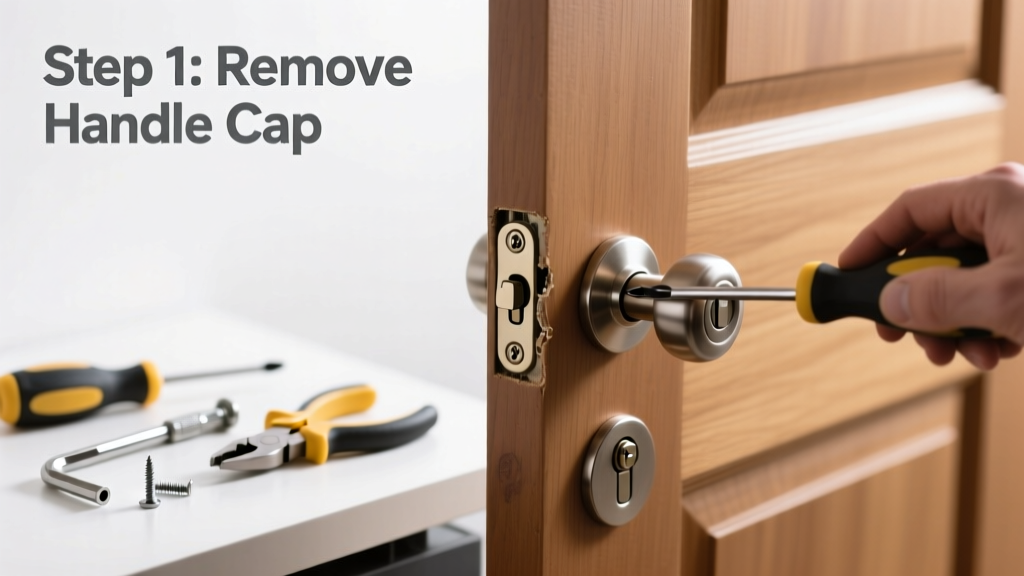
A loose door handle isn’t just annoying—it’s a sign of wear, stripped screws, or failing internal hardware. Left unaddressed, it can lead to misaligned latches, broken mechanisms, or even compromised security on exterior doors.
Quick Diagnosis
Before grabbing tools, identify the root cause. Most loose handles fall into one of these categories:
- Screws in the rosette or baseplate have backed out or stripped
- The spindle (square rod connecting interior and exterior handles) is bent or worn
- The latch assembly or strike plate has shifted, causing binding and stress on the handle
- Internal mounting plate inside the door is cracked or warped—common in hollow-core or older doors
- Threaded holes in the door edge or face are stripped from repeated tightening
Tools & Materials Needed
| Item | Purpose | Estimated Cost |
|---|---|---|
| Phillips #2 screwdriver | Tightens standard handle mounting screws without cam-out | $3–$8 |
| 1/8" hex key (Allen wrench) | Adjusts set screws on many lever-style handles | $2–$5 |
| Wood toothpicks + wood glue | Fills stripped screw holes for temporary reinforcement | $1–$4 |
| 3/4" #6 or #8 wood screws (optional) | Replaces original screws for deeper grip in solid-core doors | $2–$6 |
| Drill with 1/8" bit (optional) | Pre-drills pilot holes for new screws or dowel inserts | $15–$40 (if not owned) |
Step-by-Step Fix
Try these methods in order—start simple, escalate only if needed:
- Tighten visible screws: Remove decorative rosette (often snaps off or unscrews), then tighten all mounting screws—especially those anchoring the interior plate to the door edge. Don’t overtighten; stop when resistance increases sharply.
- Check and tighten the set screw: On lever handles, locate the small hex screw (usually on the side or underside of the lever). Tighten it firmly with a 1/8" Allen key—this secures the lever to the spindle.
- Reinforce stripped holes: If screws spin freely, remove them, insert 2–3 wooden toothpicks dipped in wood glue into each hole, snap off flush, let dry 30 minutes, then reinsert screws.
- Replace with longer screws: For solid-core doors, swap original 3/4" screws with 1" #8 screws—just be sure they won’t penetrate the opposite side. Pre-drill pilot holes first.
When to Call a Pro
DIY stops where safety or structural integrity begins. Call a licensed door technician if:
- The handle wobbles even after all screws are tight and the spindle feels loose inside the mechanism
- You hear grinding or see metal shavings when operating the lock—indicating gear or cam failure
- The door is an exterior entry with a Grade 1 deadbolt system (e.g., Schlage FE595 or Kwikset 910); improper repair voids UL certification
- The door core is damaged or delaminating—visible gaps between veneer layers or soft spots near the latch bore
According to the National Association of Home Builders’ Residential Construction Performance Guidelines (2022), over 68% of door handle failures linked to premature wear stem from incorrect installation—not part failure—making professional reinstallation often more cost-effective than repeated DIY fixes.
Prevention Tips
Maintain your handles before they loosen:
- Tighten mounting screws every 6 months—especially on high-traffic interior doors
- Avoid slamming doors; impact stress accelerates spindle wear and screw loosening
- Use silicone-based lubricant (not WD-40) on the latch bolt and spindle annually to reduce friction-induced wear
- For rental properties or multi-family units, replace standard screws with stainless steel Torx-head screws—they resist tampering and stripping better than Phillips
Can I use super glue instead of wood glue for stripped screw holes?
No—super glue (cyanoacrylate) bonds poorly to porous wood and creates brittle, non-load-bearing fills. Wood glue swells slightly as it cures, gripping wood fibers and allowing screw threads to bite. Superglue may hold temporarily but fails under torque within weeks.
Why does my handle loosen every few weeks?
Recurring looseness usually points to vibration fatigue in thin or hollow-core doors—or a mismatched spindle length causing constant lateral pressure. Measure your spindle: standard is 2 1/8", but some European or commercial handles require 2 3/8". A too-short spindle lets the lever rock; too-long binds and stresses mounting points.
Do I need to remove the entire handle to fix this?
Not usually. Most adjustments happen from the interior side—remove the rosette or trim plate, access screws, and tighten. Full removal is only needed if replacing the spindle, upgrading the latch, or repairing internal housing damage. See our guide on door handle replacement for full disassembly steps.
Is a loose bathroom handle a safety risk?
Yes—especially in homes with seniors or young children. A suddenly detached lever can become a pinch hazard, and inconsistent latch engagement may leave the door unlocked unintentionally. The U.S. Consumer Product Safety Commission logged 2,100+ door-related injuries in 2023 tied to failed hardware, including 17% involving loose or detached handles (CPSC Injury Prevention Report, 2024).
Can I tighten the handle without removing the door?
Absolutely—you never need to remove the door. All repairs happen at the hardware level. Just ensure the door is fully open and supported (e.g., wedged with a towel at the hinge side) to prevent sagging while working. For heavy solid-core doors, enlist a helper to stabilize if the latch mechanism feels stiff during adjustment.
What’s the difference between a loose handle and a loose latch?
A loose handle wobbles laterally or rotates loosely around the spindle; a loose latch shows play at the bolt itself—visible movement when pushing the door closed, or rattling when the door is shut. Latch issues require adjusting the strike plate or replacing the entire latch assembly—see our fix loose latch guide for details.
Fixing a loose handle takes under 15 minutes once you know what’s wrong—and most of the time, it’s just a matter of re-torquing two screws. But knowing when that simple fix isn’t enough saves you from bigger headaches down the line. Keep a small kit in your utility drawer: a Phillips #2, a 1/8" Allen key, and a tube of wood glue. You’ll use them more often than you think—and your doors will thank you.