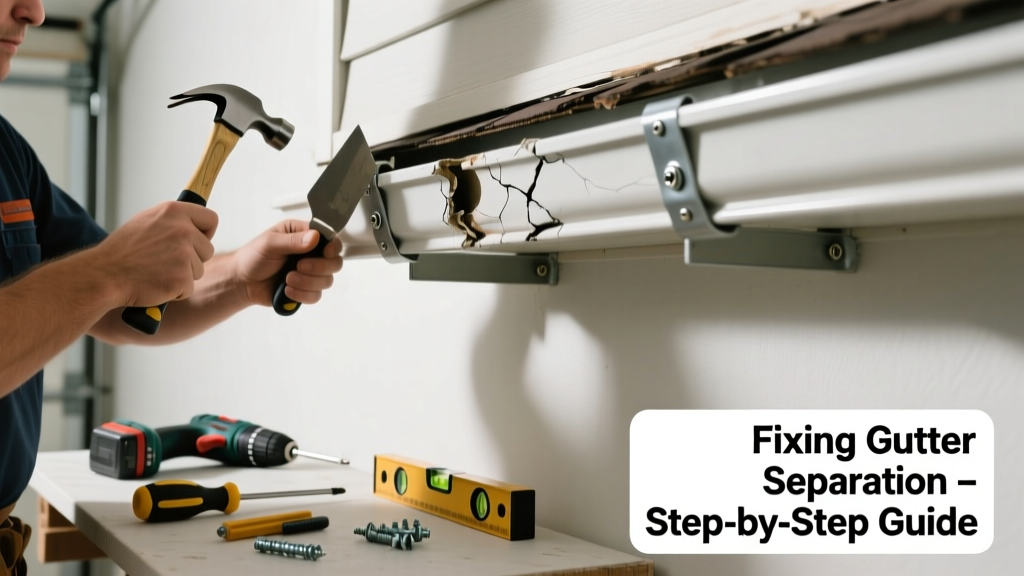
Gutters pulling away from your fascia aren’t just an eyesore—they’re a red flag for water damage, rotting wood, and foundation issues. Left unaddressed, even a small gap can lead to $500–$2,000 in siding or soffit repairs, according to the National Association of Home Builders’ 2022 Remodeling Cost Report. Catch it early, and you’ll likely spend under $40 and an hour of your time.
Quick Diagnosis
Before grabbing tools, identify the root cause. Most gutter pull-away issues stem from one (or more) of these:
- Loose, rusted, or missing hangers or spikes
- Sagging due to clogged gutters or ice dam weight
- Rotted or deteriorated fascia board behind the gutter
- Improper pitch—gutters sloping away from downspouts instead of toward them
- Over-tightened screws that stripped the wood or bent the gutter lip
Tools & Materials Needed
| Item | Purpose | Estimated Cost |
|---|---|---|
| Ladder (20-ft extension or A-frame) | Safe access to high gutters without overreaching | $80–$250 |
| Gutter hanger kit (hidden or strap-style) | Re-secures gutter to fascia with better load distribution than spikes | $12–$35 |
| Drill with Phillips and drill bits | Drives screws and pre-drills pilot holes to prevent splitting | $45–$120 |
| Level and pencil | Ensures proper gutter slope (¼" drop per 10 ft) during reattachment | $8–$22 |
| Heavy-duty stainless steel screws (2½") | Resists corrosion and holds deeper into solid wood than nails | $6–$15 |
Step-by-Step Fix
Choose the method based on severity and fascia condition. Start with Method 1 for minor sag; skip to Method 3 if wood is soft or crumbling.
- Clear debris and inspect: Remove leaves, nests, and sludge. Check for cracks, rust, or separation at seams—and tap the fascia board with a screwdriver handle. A hollow or mushy sound means rot.
- Reset existing hangers: Tighten loose screws. Replace bent or corroded hangers. Add one new hanger every 24 inches where gaps exceed ¼ inch.
- Install hidden hangers (recommended): Drill pilot holes through the gutter’s back flange and into solid fascia. Use 2½" stainless screws—not nails—to secure each hanger. Space hangers no more than 32 inches apart.
- Re-establish pitch: Use a level and string line to confirm ¼" drop per 10 feet toward the downspout. Shim or adjust hangers as needed—never bend the gutter itself.
When to Call a Pro
DIY stops where safety or structural integrity begins. Call a licensed gutter contractor if:
- The fascia board feels spongy, crumbles under light pressure, or shows visible mold or black streaks
- More than 3 linear feet of gutter detaches—or multiple sections sag across different roof planes
- You spot interior water stains on ceilings or walls beneath the gutter line
- Your roof has steep pitches (>8:12), slate or tile shingles, or lacks safe ladder anchor points
According to the Insurance Institute for Business & Home Safety’s 2023 report, 68% of homes with untreated rotted fascia required full soffit and fascia replacement within 18 months.
"Hidden hangers carry up to 4x the load of spike-and-ferrule systems—and they eliminate the 'pop-out' failure common with old-fashioned spikes." — Gutter Installation Standards Manual, NAHB Research Center, 2021
Prevention Tips
Fixing once isn’t enough. Keep gutters securely attached year after year with these habits:
- Clean gutters twice yearly—spring and late fall—to prevent ice dams and debris buildup
- Inspect hangers every spring for rust, bending, or loosening
- Trim overhanging branches to reduce leaf accumulation and physical stress from wind sway
- Install leaf guards rated for your local rainfall (e.g., micro-mesh for heavy downpours)
- Check attic ventilation—poor airflow contributes to ice dam formation and freeze-thaw stress on gutters
Can I reuse old gutter hangers?
No—especially if they’re bent, rusted, or show signs of fatigue. Reusing compromised hardware risks immediate re-failure. Hidden hangers are inexpensive and designed for long-term performance. If your current hangers are spike-and-ferrule style, replace them entirely; they’re obsolete for modern gutter loads.
Do I need to replace the entire gutter section if it’s bent?
Not always. Minor bends (less than 15°) can often be gently coaxed back with padded pliers and resecured. But if the aluminum is kinked, cracked, or the seam is split, replacement is safer. A damaged section creates weak points that accelerate future pull-away—even with new hangers.
What’s the best screw length for vinyl gutters?
Use 2½" stainless steel screws with coarse threads—never drywall screws. Vinyl gutters mount to wood fascia, not the vinyl itself. The screw must penetrate at least 1½" into solid, dry wood. Pre-drill to avoid cracking the vinyl flange.
Why do gutters pull away after winter?
Ice dams add 3–5x the normal weight load, and repeated freeze-thaw cycles work loose fasteners. According to the U.S. EPA, 1 cubic foot of ice weighs 57 pounds—so a 5-ft section of ice-clogged gutter may carry over 300 lbs. That stress overwhelms undersized or aged hangers.
Can I fix this in the rain?
Avoid it. Wet wood doesn’t hold screws well, and slippery ladders increase fall risk. Wait for a dry, calm day with temperatures above 40°F—cold metal becomes brittle, and adhesives (like sealants used in some repairs) won’t cure properly below that threshold.
Should I caulk the gutter-to-fascia seam?
No. Gutters need thermal expansion space. Caulking traps moisture between the gutter and fascia, accelerating rot. Instead, use a butyl-based gutter sealant only at end caps and downspout connections—never along the mounting flange.
A properly secured gutter does more than channel rainwater—it protects your home’s envelope, preserves fascia integrity, and saves thousands in deferred repairs. Do the fix right the first time, and revisit your system twice a year. For related help, see our guides on gutter leak repair and fascia rot repair.