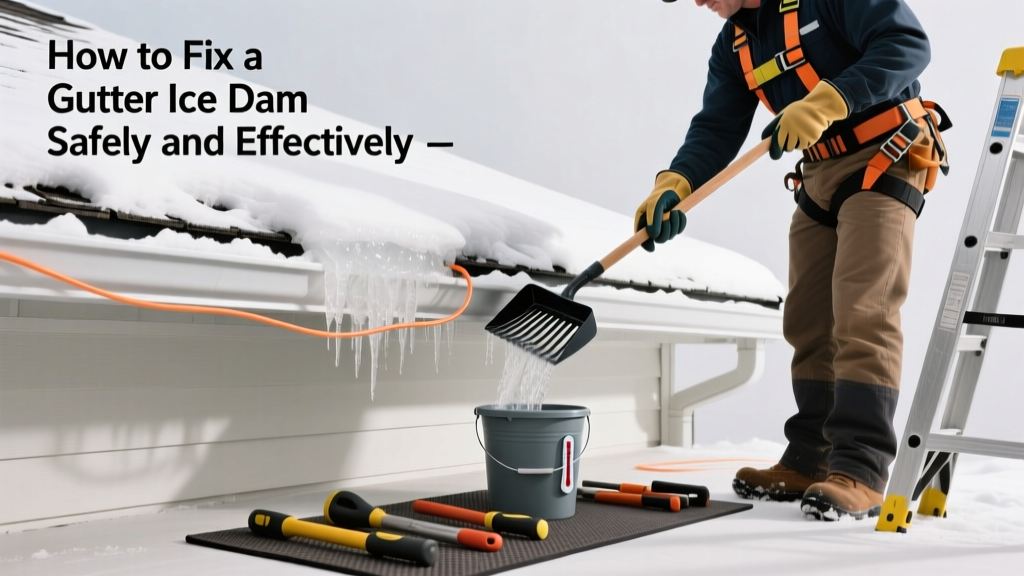
Ice dams in gutters aren’t just ugly—they’re dangerous. They trap meltwater behind frozen barriers, forcing water under shingles and into your attic or walls. Left unchecked, they cause rot, mold, and thousands in repair bills.
Quick Diagnosis
Before grabbing tools, confirm what you’re dealing with. True ice dams form at the roof’s edge where heat loss meets cold air—gutters are just part of the symptom. Here are the most common root causes:
- Inadequate attic insulation (R-38 minimum recommended by the U.S. Department of Energy, 2022)
- Poor attic ventilation—less than 1:300 net free vent area ratio
- Heat escaping from recessed lights, ductwork, or unsealed top plates
- Gutters clogged with leaves or debris, trapping snow and slowing melt runoff
- Roof pitch under 4:12, which slows natural snow shedding
Tools & Materials Needed
| Item | Purpose | Estimated Cost |
|---|---|---|
| Rooftop ladder with standoff arms | Safe access without crushing gutters or shingles | $180–$320 |
| Plastic ice melt socks (calcium chloride) | Melt channels through ice without damaging gutters or landscaping | $12–$25 |
| Roof rake with extension pole (18–24 ft) | Remove snow before it melts and refreezes at eaves | $45–$85 |
| Infrared thermometer | Identify hot spots on roof surface indicating insulation gaps | $35–$70 |
| Attic hatch weatherstripping kit | Seal air leaks around pull-down stairs—source of 30% of attic heat loss (Building Science Corporation, 2021) | $8–$16 |
Step-by-Step Fix
Don’t wait for spring thaw. Act while the dam is still forming—or after a storm, but before interior damage begins. Use one or more of these methods based on severity and safety:
- Clear snow first: Use a roof rake from ground level to remove snow within 3–4 feet of the eaves. Never stand on the roof unless properly trained and anchored.
- Create melt channels: Lay calcium chloride-filled ice melt socks vertically across the dam every 3 feet. They’ll carve drainage paths without corroding aluminum gutters like rock salt does.
- Steam off stubborn ice: Hire a pro or rent a low-pressure steam machine (not pressure washer!) to gently lift ice from shingles. DIY steam units start at $220/day—never use open flame or blowtorches.
- Improve attic airflow: Install continuous soffit vents and ridge vents if missing; add baffles to keep insulation from blocking intake air.
When to Call a Pro
Some ice dams require expert intervention—not because they’re inconvenient, but because they’re structurally risky or symptomatically severe:
- You see water stains on ceilings or walls inside the home (indicates active leakage)
- The ice dam exceeds 2 inches thick and extends more than 18 inches up the roof slope
- Roof decking feels spongy or flexes when stepped on—even from the attic side
- You lack fall protection gear or experience working on pitched roofs
- Your home has slate, tile, or wood shake roofing (easily damaged by improper removal)
"Over 60% of ice dam-related insurance claims involve secondary water damage that could’ve been prevented with early attic sealing and ventilation upgrades." — Insurance Institute for Business & Home Safety, 2023 Residential Roofing Report
Prevention Tips
Fixing an ice dam is reactive. Prevention is cheaper, safer, and lasts years. Focus on stopping the heat leak—not fighting the symptom:
- Add R-60 cellulose insulation over existing attic floor (not just R-38—older homes often have R-11 or less)
- Seal all attic penetrations: plumbing stacks, wiring chases, recessed can lights, and whole-house fan openings
- Install rigid foam baffles between rafters before adding insulation to preserve soffit airflow
- Clean gutters twice yearly—especially after autumn leaf drop—to avoid snow-trapping debris buildup
- Use a smart thermostat to lower attic-adjacent room temps overnight during freeze-thaw cycles
Can I use rock salt instead of calcium chloride?
No. Sodium chloride (rock salt) corrodes aluminum gutters, downspouts, and fasteners—and harms nearby shrubs and concrete. Calcium chloride works at lower temps (down to -25°F) and is far less corrosive. Always use products labeled “roof-safe” or “gutter-safe.”
Will heating cables solve my ice dam problem?
They’re a bandage—not a cure. Heat cables may prevent new dams but won’t fix underlying insulation or ventilation flaws. The U.S. EPA estimates 14% of household water usage is from leaks—including those caused by ignored ice dams—so addressing root causes saves more long-term.
How do I know if my attic insulation is adequate?
Check depth: For fiberglass batts, you need at least 12 inches (R-38); for blown-in cellulose, aim for 15–17 inches (R-60). If you see ceiling joists, insulation is definitely insufficient. An infrared thermometer scan reveals cold spots where heat escapes—often around light fixtures or attic hatches.
Can I chip away the ice myself with a hammer?
Absolutely not. Chipping risks puncturing shingles, cracking gutters, dislodging flashing, and sending ice shards onto people or property below. It also creates uneven surfaces that trap more water next time. Use melt socks or steam—not brute force.
Do gutter guards prevent ice dams?
No—they can make them worse. Solid-top guards trap snow against the roof edge, delaying melt and increasing refreeze potential. Mesh guards don’t stop fine snow infiltration and still allow ice buildup behind the guard. Clean gutters matter more than covers.
Should I insulate my attic hatch door?
Yes—and it’s one of the highest-ROI fixes. A standard pull-down attic stair has an R-value of ~1. A weatherstripped, insulated cover (R-10 or higher) cuts heat loss by up to 90%. Pair it with a magnetic latch seal and you’ve plugged a major thermal bypass point.
Ice dams don’t happen overnight—but neither do lasting solutions. Every inch of added insulation, every sealed crack, every cleared gutter adds resilience against the next freeze-thaw cycle. Start small: seal your attic hatch today, then tackle ventilation next season. You’ll spend less on repairs and more on peace of mind—and your roof will thank you when January rolls around again. For deeper work like reroofing with ice-and-water shield or installing powered attic ventilators, check our attic ventilation repair guide or roof insulation upgrade steps.