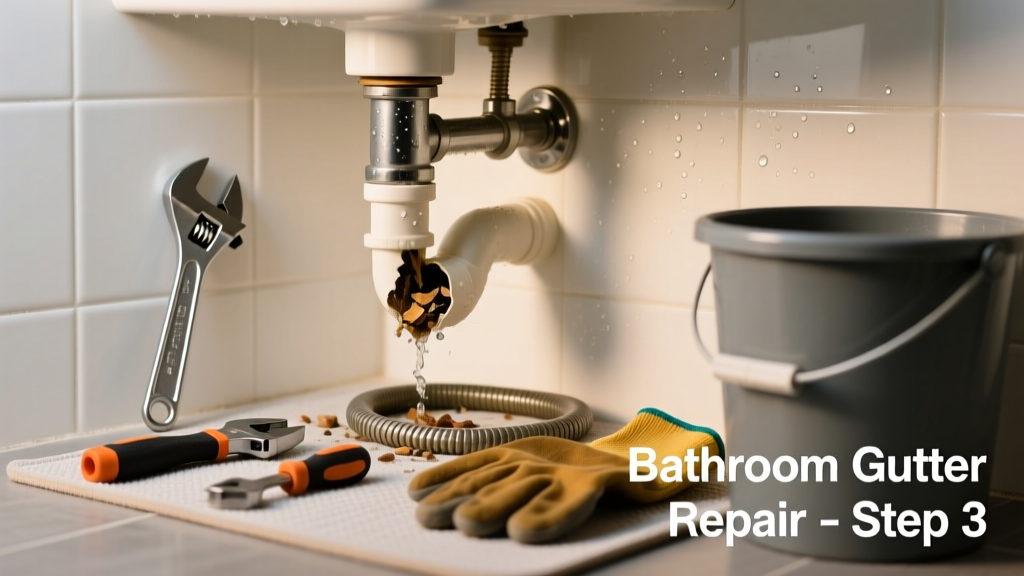
If you're hearing gurgling from your bathroom sink or noticing slow drainage—and you've confirmed it's not the P-trap or vent—your gutter downspout may be improperly tied into the plumbing system. This dangerous, code-violating setup can flood your bathroom with roof runoff during storms. It’s rare but serious, and requires immediate correction.
Quick Diagnosis
Before assuming it’s a standard drain clog, rule out these telltale signs of a gutter downspout intrusion:
- Water backing up only during or shortly after rainfall
- Foul odor resembling wet leaves or mildew—not sewage
- Visible downspout pipe entering the bathroom wall, floor, or vanity cabinet
- Drain water that’s cloudy, discolored, or contains grit/debris typical of roof runoff
- No backup in other fixtures on the same branch line (e.g., toilet flushes fine)
Tools & Materials Needed
| Item | Purpose | Estimated Cost |
|---|---|---|
| Adjustable wrench | Tightens or removes corroded fittings at illegal downspout-to-drain junctions | $12–$25 |
| Heavy-duty shop vacuum (wet/dry) | Extracts standing water and debris from accessible downspout stubs inside walls | $40–$90 |
| PVC cutter or hacksaw | Cuts misconnected downspout pipe embedded behind drywall or under flooring | $8–$22 |
| ABS/PVC solvent cement & primer | Seals new, code-compliant connections when rerouting | $6–$14 |
| Roof flashing kit (aluminum) | Re-seals roof penetration after downspout is re-terminated properly | $18–$35 |
Step-by-Step Fix
Do NOT attempt chemical drain cleaners—they won’t resolve structural misconnections and may damage PVC or create hazardous fumes. Follow these methods in order:
- Locate the illegal tie-in: Shut off main water and power to bathroom. Remove vanity baseboard or access panel. Trace any visible downspout pipe—it often connects to a cleanout, laundry standpipe, or even a floor drain. Confirm with a camera snake if needed.
- Isolate and cap the downspout: Use a PVC cutter to remove the section feeding into plumbing. Cap the interior end with a threaded ABS plug and silicone sealant. Do not just tape or glue over it—this is a temporary fix only.
- Reroute the downspout outdoors: Extend the pipe through an exterior wall or foundation using a proper sleeve and flashing. Maintain minimum 1% slope away from the house per the International Residential Code (IRC R1003.2, 2021 edition).
- Test and inspect: Run a garden hose into the gutter for 5 minutes while checking for leaks at joints and inside the bathroom. Confirm no water enters drains or walls.
When to Call a Pro
Stop work immediately and contact a licensed plumber or roofing contractor if:
- You discover cast iron or lead piping connected to the downspout—corrosion risk and lead exposure potential
- The downspout penetrates a load-bearing wall or basement ceiling without structural reinforcement
- There’s evidence of mold growth behind drywall or subfloor (visible staining, musty smell, or >3 sq ft coverage)
- Your home was built before 1975 and you suspect asbestos-wrapped pipes near the connection point
"Roughly 1 in 12 older homes in humid climates has at least one illegal stormwater-to-sanitary connection—most commonly in bathrooms or laundry rooms," according to the American Society of Home Inspectors' 2022 Infrastructure Survey.
Prevention Tips
Once corrected, prevent recurrence with these proactive steps:
- Label all downspout terminations with weatherproof tags: "Storm Only – Not Connected to Plumbing"
- Schedule annual gutter inspection—especially after windstorms or heavy leaf fall
- Install leaf guards on gutters to reduce debris volume and pressure surges
- Verify permits were pulled for any past roof or bathroom remodels—illegal connections often originate from unpermitted work
Can I use bleach on this?
No. Bleach does nothing to clear a physical misconnection and will corrode metal fasteners, degrade PVC seals, and react dangerously with organic debris to produce chlorine gas. It also violates EPA guidelines for stormwater discharge when flushed into municipal systems.
Will a plumber’s snake fix it?
Not reliably. A snake may temporarily clear sediment in the pipe—but it won’t address the root cause: a downspout illegally tied into sanitary drainage. Snaking could even puncture thin-walled downspout material or force debris deeper into the system.
Is this covered by homeowner’s insurance?
Typically no. Most policies exclude damage from gradual deterioration or code violations—even if the misconnection was pre-existing. However, sudden water damage from a storm-event overflow *may* be covered if you document prior inspections and maintenance. Contact your carrier with photos and a licensed contractor’s report.
Can I just disconnect it myself and leave the pipe open?
Absolutely not. An open downspout stub inside a wall or floor creates a major entry point for pests, mold spores, and moisture migration. It also violates local plumbing codes and could result in failed home inspections or liability issues if discovered later.
How long does the full repair usually take?
Most DIYers complete identification, isolation, and rerouting in 4–6 hours across two days (allowing 24 hours for solvent cement curing). If drywall repair or roof flashing is needed, add 1–2 additional days. Licensed pros typically finish in one 6-hour visit.
What’s the biggest safety risk I should watch for?
Electrocution. Many bathroom downspout misconnections run alongside electrical conduit behind vanities. Always shut off the circuit breaker for the bathroom *and* verify with a non-contact voltage tester before cutting or drilling. Also wear N95 masks when disturbing old insulation or drywall near suspected mold.
Fixing a gutter downspout clogged in the bathroom isn’t about unclogging—it’s about correcting a critical infrastructure error. Once the downspout is properly redirected outside and sealed, your bathroom drains will behave normally again, and you’ll eliminate a hidden source of water damage, mold risk, and code violations. For related help, see our guides on bathroom drain gurgling and roof leak into bathroom ceiling.