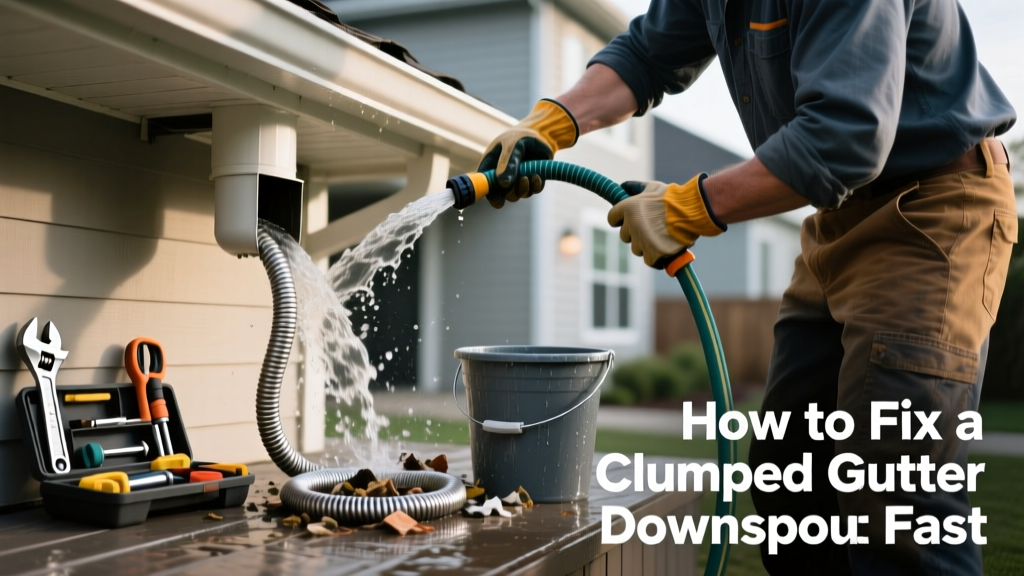
Water spilling over your gutters during light rain? A damp basement or eroded soil near your foundation? These are classic signs of a clogged downspout—and ignoring it can lead to $5,000+ in water damage repairs, according to the Insurance Institute for Business & Home Safety's 2023 report.
Quick Diagnosis
Before grabbing tools, confirm the blockage location and cause. Most clogs happen at three points: the top opening (where leaves enter), the elbow joint (where debris catches), or inside the vertical pipe (where mud and pine needles harden).
- Leaves, twigs, and pine needles—especially after fall storms
- Nesting material from squirrels, wasps, or birds
- Mud and silt buildup from roof granules washing down
- Frozen ice dams in winter (common in northern climates)
- Collapsed or crushed aluminum downspouts due to ladder contact or snow load
Tools & Materials Needed
| Item | Purpose | Estimated Cost |
|---|---|---|
| Garden hose with spray nozzle | Flushes debris from top or bottom; adjustable pressure helps dislodge stubborn clogs | $12–$25 |
| Plumber’s snake (¼" x 25 ft) | Reaches deep bends and clears compacted sludge without damaging vinyl or aluminum | $18–$32 |
| Downspout cleaning brush (rigid nylon) | Scrubbing action loosens biofilm and root-like organic buildup | $9–$16 |
| Work gloves (cut-resistant) | Protects hands from sharp edges, rust, and hidden wasp nests | $14–$28 |
| Ladder (6–8 ft, Type IA duty rating) | Stable access to downspout inlet and elbows; never use step ladders on uneven ground | $85–$220 |
Step-by-Step Fix
Try these methods in order—start simple, escalate only if needed.
- Flush from the top: Remove the downspout’s top strainer or hanger bracket. Insert the hose nozzle fully into the opening and blast water at full pressure for 30 seconds. Watch the bottom outlet—if water surges out, you’re done.
- Snake from the bottom: Feed a plumber’s snake upward from the discharge end. Rotate slowly while advancing. When resistance eases, pull back 6 inches and rotate again—this breaks up clumps instead of pushing them deeper.
- Clean the elbow: Unscrew the two screws holding the 90° elbow (usually near grade level). Use the downspout brush to scrub interior walls and rinse with hose. Reassemble with silicone sealant on threads to prevent leaks.
- Vacuum assist (for dry debris): Use a wet/dry vac with a rigid extension wand sealed over the bottom outlet. Set to suction-only mode—creates negative pressure that pulls loose leaves upward.
When to Call a Pro
Some clogs aren’t just inconvenient—they’re hazardous or structurally embedded. Don’t risk injury or further damage if you see any of these:
- Downspout is bent, kinked, or separated from the gutter by more than ½ inch
- Water backs up into soffit vents or drips behind fascia boards (sign of internal gutter corrosion)
- You hear scratching or buzzing inside the pipe—indicating active animal nesting
- Multiple downspouts clog repeatedly within one season (points to undersized system or improper pitch)
- The home has three stories or steep roof pitches exceeding 8:12—ladder safety becomes non-negotiable
For complex cases, licensed gutter contractors charge $125–$275 per service call—but many include a free inspection. Check local reviews for providers who offer gutter inspection checklist services before quoting.
Prevention Tips
Fixing a clog takes 20 minutes. Preventing one takes 5 minutes twice a year—and saves hundreds in long-term repair costs.
- Install leaf guards on all gutter sections—not just the front edge. The U.S. EPA estimates 14% of household water usage is from leaks caused by poor drainage.
- Trim overhanging branches to within 6 feet of the roofline—reduces leaf volume by up to 70%, per University of Minnesota Extension (2022).
- Check downspout extensions every spring: they should direct water at least 5 feet from the foundation.
- After heavy storms, run a hose through each downspout—even if no overflow is visible.
Can I use bleach on this?
No. Bleach corrodes aluminum and vinyl downspouts, degrades rubber gaskets, and kills beneficial microbes in your yard’s soil. It also reacts dangerously with organic debris to produce chlorine gas. Stick to water pressure and mechanical removal.
Will a pressure washer work?
Only at low PSI (under 1,200 PSI) and with a wide-angle tip. High-pressure streams can blow apart seams, crack PVC joints, and force water behind fascia. A garden hose with a turbo nozzle is safer and more effective for most residential clogs.
What if water pools at the bottom but won’t drain?
This usually means the underground leader line (if present) is blocked or collapsed—or the discharge point is below grade. Dig carefully around the exit to inspect for crushed corrugated pipe or sediment buildup. If the line runs under a driveway or patio, call a plumber with a sewer camera.
How often should I clean downspouts?
Twice yearly minimum—late spring (after pollen season) and early fall (before leaf drop). Homes under mature oaks or pines may need quarterly checks. Track it using a simple seasonal home maintenance schedule.
Why does my downspout clog even with gutter guards?
Most guards don’t stop fine debris like shingle grit, moss fragments, or seed pods. Also, guards installed on warped or sagging gutters create gaps where debris bypasses the screen. Inspect guard seals annually and re-level gutters if pitch drops below ¼ inch per 10 feet.
Can frozen downspouts cause permanent damage?
Yes. Ice expansion can split PVC, buckle aluminum, and separate joints—leading to leaks that worsen in summer. Never pour boiling water or use heat guns: thermal shock cracks materials. Instead, wrap pipes with self-regulating heat tape rated for outdoor use (UL-listed, 120V).
"Over 60% of foundation water intrusion starts with a single neglected downspout clog—most homeowners don’t notice until drywall bubbles or floor tiles lift." — National Association of Home Builders, Residential Construction Performance Guidelines (2021)
A clogged downspout isn’t just an eyesore—it’s a slow leak with a deadline. Address it promptly, protect your home’s envelope, and invest in prevention before the next storm hits. If you’ve tackled one clog successfully, try pairing it with a quick how to replace gutter hangers to keep your entire system aligned and functional.