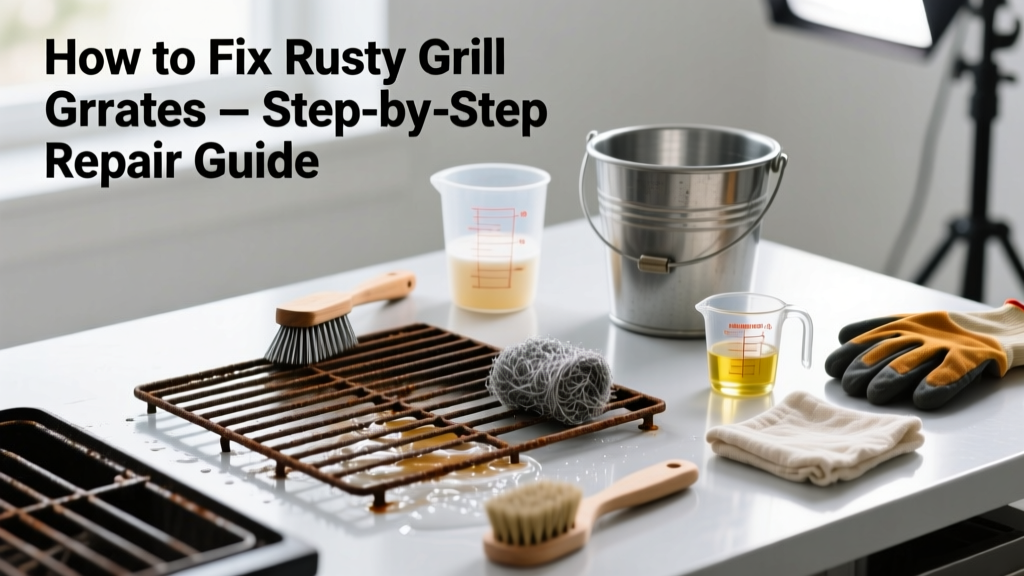
Rusty grill grates aren’t just unsightly—they’re a food safety hazard and can ruin perfectly seared steaks. If you’ve noticed flaking orange spots or gritty residue sticking to your burgers, it’s time for action. The good news? Most rust is surface-level and fixable in under an hour with common tools.
Quick Diagnosis
Rust on grill grates usually stems from one or more of these causes:
- Exposure to rain or high humidity without proper cover
- Leaving food residue (especially acidic marinades) overnight
- Using steel wool or abrasive pads that scratch protective seasoning
- Grill grates made from low-grade coated steel instead of stainless or porcelain-enameled cast iron
- Infrequent cleaning—especially after high-heat searing sessions
Tools & Materials Needed
| Item | Purpose | Estimated Cost |
|---|---|---|
| Wire brush (stiff-bristled, stainless steel) | Removes loose rust and old carbon buildup | $8–$15 |
| Naval jelly or rust converter gel | Chemically neutralizes rust without scrubbing | $12–$22 |
| High-heat grill-safe oil (e.g., avocado or grapeseed) | Re-seasons grates to prevent future corrosion | $6–$14 |
| Oven mitts + heat-resistant gloves | Protects hands during hot cleaning and re-seasoning | $10–$25 |
| Aluminum foil ball (DIY) | Acts as a gentle abrasive for stubborn spots while avoiding scratches | $0 (reused household item) |
Step-by-Step Fix
Choose the method based on rust severity. For light surface rust, start with Method 1. For pitting or flaking, use Method 3.
- Heat-and-scrape method: Fire up the grill to 500°F for 15 minutes, then use a stiff wire brush to scrub while hot. Wipe with a damp cloth, dry thoroughly, and oil immediately.
- Vinegar soak (for removable grates): Soak in white vinegar for 2–4 hours, scrub with aluminum foil ball, rinse, dry completely, then bake at 400°F for 30 minutes with oil applied.
- Rust converter + re-season: Apply naval jelly per label instructions, wait 12–24 hours, rinse, dry, then coat with oil and bake at 450°F for 1 hour. Repeat oil-bake cycle twice.
When to Call a Pro
DIY isn’t safe or effective in these cases:
- Grates have deep pits or holes visible to the naked eye—structural integrity is compromised
- Rust has spread to gas burners, ignition systems, or the grill’s internal frame
- You own a built-in grill with stainless steel components requiring weld-repair certification
- The grate is part of a commercial-grade unit covered under warranty with strict service requirements
According to the National Fire Protection Association’s 2022 Home Grill Safety Report, 17% of grill-related fires involved corroded components that impaired heat distribution or caused flare-ups—never ignore rust near gas lines or control valves.
Prevention Tips
Rust prevention is simpler—and cheaper—than repair. Make these habits routine:
- Cover your grill with a fitted, breathable cover after every use—even in dry weather
- Scrub grates with a brass-bristle brush (softer than steel, safer for coatings) while still warm post-cook
- Apply a thin layer of high-smoke-point oil after every 3–4 uses—not just after cleaning
- Store removable grates indoors during winter months in humid climates
- Check for coating chips annually; touch up porcelain-enameled grates with grill-safe enamel paint
Can I use bleach on this?
No. Bleach accelerates rust formation on ferrous metals and degrades seasoning oils. It also produces toxic chlorine gas when mixed with grill cleaners or residual grease. Stick to vinegar, baking soda paste, or rust-specific converters.
Will sandblasting fix heavy rust?
Sandblasting works—but only if done off-site by a certified metal shop. Doing it yourself risks embedding abrasive grit into pores, creating new corrosion sites. It also removes all protective coating, requiring full re-seasoning or recoating. Not recommended for home use.
How often should I re-season grill grates?
Every 5–10 cooking sessions for cast iron; every 15–20 for porcelain-enameled steel. If food sticks or you see grayish dullness instead of glossy black, it’s time. Re-seasoning takes 45 minutes but adds 2+ years to grate life—see our full seasoning guide.
Is rust on grill grates dangerous to eat off?
Small amounts of rust (iron oxide) aren’t acutely toxic, but the FDA warns against ingestion of flaking rust particles, which can irritate the digestive tract. More critically, rust harbors bacteria and compromises non-stick performance—increasing the chance of undercooked meat contact. Replace or fully restore before next cook.
Can I use a pressure washer?
Avoid it. High-pressure water forces moisture into microscopic cracks and crevices, accelerating hidden rust. It also strips seasoning and may warp thin-gauge steel. Use a garden hose with spray nozzle only after scrubbing—and always dry thoroughly with compressed air or heat.
What’s the best oil for re-seasoning?
Avocado oil (smoke point 520°F) or refined grapeseed oil (420°F) outperform vegetable or olive oil. According to the USDA’s Food Safety Guidelines for Outdoor Cooking (2023), oils with smoke points above 400°F polymerize most effectively into durable, non-stick layers. Skip butter or unrefined oils—they burn and gunk up grates.
A well-maintained grate lasts 8–12 years—even in coastal or snowy regions—if you treat rust like a warning light, not just a cosmetic flaw. The key isn’t perfection—it’s consistency: clean while warm, oil while cool, cover every night. Your next ribeye will thank you.