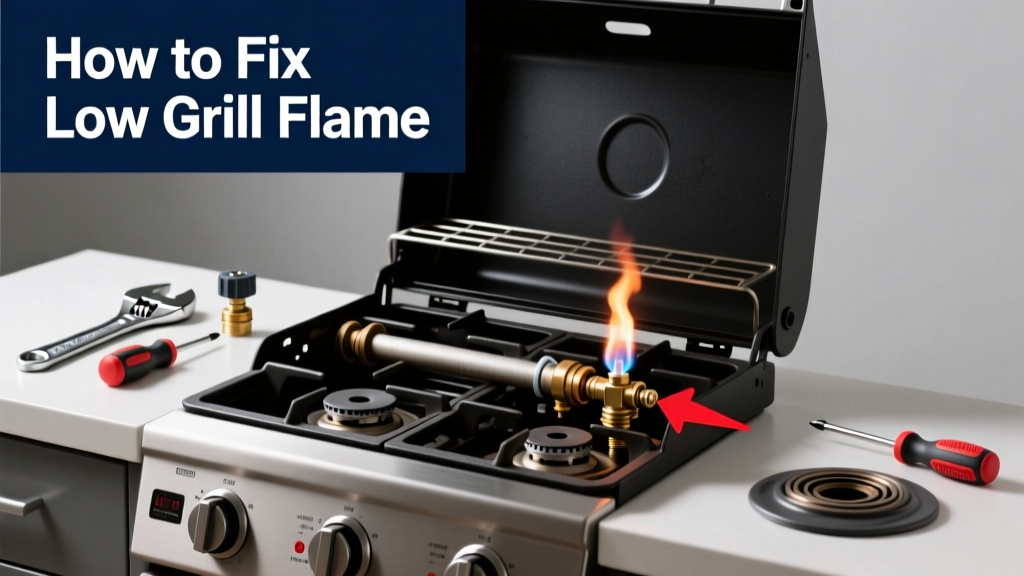
Nothing kills a backyard cookout faster than weak, yellow-tipped flames that barely warm the grates. A low grill flame isn’t just frustrating—it’s a sign of inefficient combustion, potential gas leaks, or clogged components that could lead to carbon monoxide buildup or fire hazards.
Quick Diagnosis
Before grabbing tools, rule out the obvious culprits. Most low-flame issues trace back to one (or more) of these five causes:
- Clogged burner ports or venturi tubes
- Faulty or improperly seated regulator
- Partially closed or corroded LP tank valve
- Kinked, cracked, or aged rubber gas hose
- Blocked or dirty orifice—especially after seasonal storage
Tools & Materials Needed
| Item | Purpose | Estimated Cost |
|---|---|---|
| Wire brush (brass or stainless) | Cleans burner ports without damaging metal | $8–$15 |
| Orifice cleaning tool or #71 drill bit | Clears debris from tiny gas orifices | $4–$12 |
| Soapy water solution (dish soap + water) | Leak detection at connections and hoses | $0 (household item) |
| Adjustable wrench | Tightens regulator, hose, and valve fittings | $12–$25 |
| Replacement regulator (if faulty) | Restores proper gas pressure (11 in. WC for LP) | $22–$45 |
Step-by-Step Fix
Work methodically—start simple, then escalate. Always shut off the tank and disconnect the hose before touching gas components.
- Check regulator function: Disconnect the hose from the tank, wait 30 seconds, then reconnect firmly. Open the tank valve slowly—not all the way at once—to reset the excess flow valve. This resolves ~40% of low-flame cases, per the Propane Education & Research Council’s 2022 troubleshooting data.
- Inspect and clean burner tubes: Remove grates and flavorizer bars. Use a brass wire brush to scrub burner ports. Then insert an orifice tool or straightened paperclip into each port—do not use steel pins or nails, which can widen the hole and cause over-gassing.
- Test for hose damage: Soak the entire rubber hose in soapy water while gas is on (with burners off). Bubbles indicate a leak. Replace any hose older than 5 years—even if it looks fine. The U.S. Consumer Product Safety Commission reports that 62% of grill-related fires involve degraded or improperly connected hoses (2023 Fire Incident Report).
- Verify tank level and valve operation: A near-empty tank drops pressure; shake the tank to estimate remaining fuel. Also, ensure the valve handle is fully open—some users mistake the "off" position for "low" due to worn valve stops.
When to Call a Pro
DIY ends where gas integrity and code compliance begin. Call a certified gas technician if you encounter:
- A hissing sound you can’t isolate—even after tightening all connections
- Black soot buildup on burners or inside the firebox (indicates incomplete combustion)
- Flames lifting off burners or burning with large yellow tips despite cleaning
- Any sign of corrosion on the manifold, valves, or gas lines—especially aluminum or rust-pitted steel
"Never attempt to modify or bypass a regulator or pressure relief device. These are engineered safety components—not tuning knobs." — National Fire Protection Association (NFPA 58, 2023 Edition)
Prevention Tips
Extend your grill’s life and prevent repeat flame issues with these habits:
- Cover your grill year-round—even in mild climates—to reduce moisture-driven corrosion
- Run burners on high for 10 minutes after every 3rd use to burn off grease residue
- Replace rubber gas hoses every 5 years, regardless of appearance
- Store propane tanks upright and outdoors—never in garages or basements
- After winter storage, inspect all orifices and venturi tubes before first ignition
Can I use compressed air to clear burner ports?
No—compressed air can force debris deeper into the venturi tube or damage delicate orifice seats. Stick to mechanical cleaning with appropriately sized tools. If you suspect internal blockage, replace the burner assembly rather than risk misalignment.
Why does my flame get lower when I turn on multiple burners?
This points to insufficient gas supply volume—often caused by an undersized regulator, kinked hose, or partially blocked main line. It’s rarely a burner issue alone. Test with one burner first; if strong, add others one at a time while watching flame height drop-off.
Is it safe to clean burners with vinegar or oven cleaner?
Vinegar is safe for light mineral deposits but won’t dissolve carbonized grease. Oven cleaner is not safe—it contains lye that corrodes aluminum burners and leaves toxic residue. Use only grill-specific degreaser or hot soapy water, followed by thorough rinsing and drying. See our guide on how to clean grill burners safely.
My electric igniter works but flames stay low—does that mean the gas valve is bad?
Not necessarily. The igniter only sparks—it doesn’t control flow. Low flame with working ignition usually means restricted gas delivery upstream: regulator, hose, or orifice. Confirm with a manometer reading if possible, or test with a known-good regulator.
Can a dirty grease tray affect flame height?
Indirectly—yes. Overflowing grease traps heat, warping nearby components and causing thermal expansion issues in gas lines. More critically, accumulated grease near burners creates flammable vapor pockets that disrupt airflow and combustion stability. Empty the tray every 8–10 grilling sessions. For details, see our grease tray maintenance checklist.
Should I replace all burners if only one has low flame?
Only if inspection reveals pitting, warping, or inconsistent port sizing across units. Most often, single-burner issues stem from localized clogs or misalignment—not aging. Clean and test individually first. Replacing mismatched burners can throw off air-to-fuel ratios across the whole cooking surface.
A steady, blue-flamed grill isn’t luck—it’s the result of consistent maintenance and knowing when a small fix saves you from bigger trouble. Keep your regulator tight, your ports clear, and your hose fresh, and you’ll avoid most flame issues before they spoil dinner. And if uncertainty creeps in, remember: gas isn’t something to guess at—when in doubt, call a licensed technician. Your safety—and your steaks—are worth it.