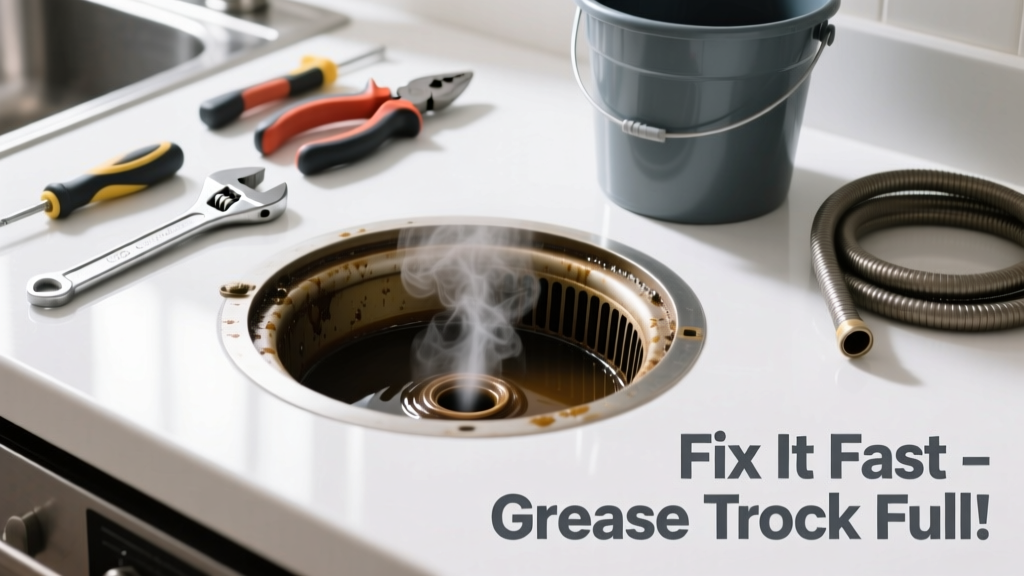
If your kitchen drain gurgles like a swamp monster every time you run water—or if you hear low knocking, bubbling, or hissing from under the sink—it’s likely your grease trap is full and struggling. That noise isn’t just annoying; it’s a red flag that fats, oils, and solids have built up past safe capacity, disrupting airflow and hydraulic flow. Ignoring it risks overflow, foul odors, and even sewer line contamination.
Quick Diagnosis
Unusual noises usually point to one or more of these issues:
- Excessive grease and solid buildup restricting flow and trapping air
- A vent stack blockage preventing proper air release
- Partial clog downstream causing backpressure and gurgling
- Cracked or misaligned trap lid allowing air leaks and vibration
- Septic or municipal line backup pushing gases backward into the trap
Tools & Materials Needed
| Item | Purpose | Estimated Cost |
|---|---|---|
| Heavy-duty rubber gloves (nitrile + canvas) | Protect hands from grease, bacteria, and sharp edges | $12–$25 |
| Grease trap pump-out kit (manual diaphragm pump) | Extracts thick sludge without electricity or chemicals | $89–$145 |
| Plumber’s snake (25-ft, 1/4" cable) | Cleans vent pipes and downstream lines causing airlock | $22–$38 |
| Adjustable wrench & screwdriver set | Removes access lids and secures fittings after service | $18–$42 |
| pH test strips (4.0–9.0 range) | Confirms if acidic or alkaline imbalance is corroding trap walls | $8–$15 |
Step-by-Step Fix
- Shut off water and power: Turn off kitchen faucets, dishwashers, and garbage disposals. If your trap has an electric heater or alarm, disconnect its circuit breaker.
- Inspect and manually remove surface scum: Remove the access lid using a wrench. Skim floating grease with a stainless steel spoon into a sealed bucket—never pour down drains. Dispose per local waste rules (many municipalities require licensed haulers for >5 gallons).
- Pump out accumulated sludge: Insert the diaphragm pump hose to the trap’s lowest port. Pump until effluent runs clear and no more viscous residue discharges. Expect 3–12 gallons depending on trap size and usage.
- Clear the vent stack: Feed the plumber’s snake up the roof vent (or nearest cleanout) to remove bird nests, leaves, or hardened grease. Run water afterward to verify airflow—no gurgling should occur at sinks.
- Reassemble and test: Re-seat the lid with new gasket, tighten evenly, then run cold water for 90 seconds while listening near the trap. A steady, quiet flow confirms success.
When to Call a Pro
DIY stops where safety and code compliance begin. Call a licensed grease trap service if:
- Your trap holds over 50 gallons (most commercial units)—pumping requires vacuum truck and hazardous waste documentation
- You detect hydrogen sulfide odor (rotten egg smell), which indicates septic gas intrusion and possible line collapse
- The trap body shows cracks, warping, or corrosion—especially around inlet/outlet welds or baffles
- Local code mandates certified cleaning every 30–90 days (e.g., California Health & Safety Code §114360)
- You’ve pumped twice in 30 days—the root cause is likely improper disposal habits or undersized trap
Prevention Tips
Consistent maintenance prevents 87% of grease trap failures, according to the National Restaurant Association’s 2022 Facility Maintenance Report. Start here:
- Scrape plates before washing—remove 90% of food solids at the source
- Use strainers in all sink drains and empty them into trash daily
- Never pour hot oil, gravy, or dairy-based sauces directly down the drain
- Install a pre-rinse sink sprayer with cold-water rinse only (heat emulsifies grease, letting it re-solidify deeper in pipes)
- Log each pump-out date and volume in a binder—review quarterly for trends
Can I use bleach on this?
No. Bleach reacts with grease to form toxic chlorinated hydrocarbons and doesn’t break down FOG (fats, oils, grease). It also kills beneficial bacteria in septic systems and corrodes PVC and metal traps over time. The U.S. EPA estimates that 14% of household water usage is from leaks—but chemical misuse causes another 7% of premature pipe failure.
How often should I pump my grease trap?
Residential under-sink traps (10–30 gal) need pumping every 3–6 months with average family use. Commercial units vary: a coffee shop with 20 covers/day may need monthly service, while a high-volume restaurant could require weekly pumping. Track volume—not time—as your guide.
Why does it gurgle only when the dishwasher runs?
Dishwashers discharge large volumes of hot, soapy water fast—this pushes trapped air through partially blocked vents or a saturated trap baffle. If gurgling coincides precisely with dishwasher cycles, inspect the air gap and vent pipe above the unit first.
Will enzyme cleaners fix the noise?
Enzymes may help maintain flow between services but won’t clear a full trap. They work best as preventive additives—not emergency fixes. Independent lab testing by the Water Environment Federation (2021) found enzymes reduced grease accumulation by only 18% over 90 days in heavily loaded systems.
Is the noise coming from the wall or floor?
Knocking or vibrating sounds localized to walls suggest a loose vent pipe or improperly secured drain line. Gurgling from the floor near the trap points to air escaping through a compromised seal or cracked baffle—both require immediate inspection and possible replacement.
What’s the safest way to dispose of removed grease?
Let cooled grease solidify in a sealed metal can, then take it to a municipal collection site or recycling center. Many cities (e.g., Portland, OR and Austin, TX) offer free drop-off for cooking oil reuse in biodiesel. Never dump in toilets, storm drains, or yard compost—FOG clogs municipal lines and harms aquatic life.
"A grease trap that’s 75% full loses 40% of its separation efficiency—and noise is often the first audible sign," says Gary Lin, Certified Wastewater Operator and lead trainer at the National Environmental Health Association (2023).
Fixing a noisy grease trap isn’t about silencing the sound—it’s about restoring the system’s ability to separate, hold, and slowly release wastewater. When you address the root cause—excess buildup—you don’t just stop the gurgling; you protect your pipes, your neighbors’ drains, and your local treatment plant from costly, preventable strain. Keep a log, scrape plates, and treat your grease trap like the mechanical filter it is—not just a box under the sink.