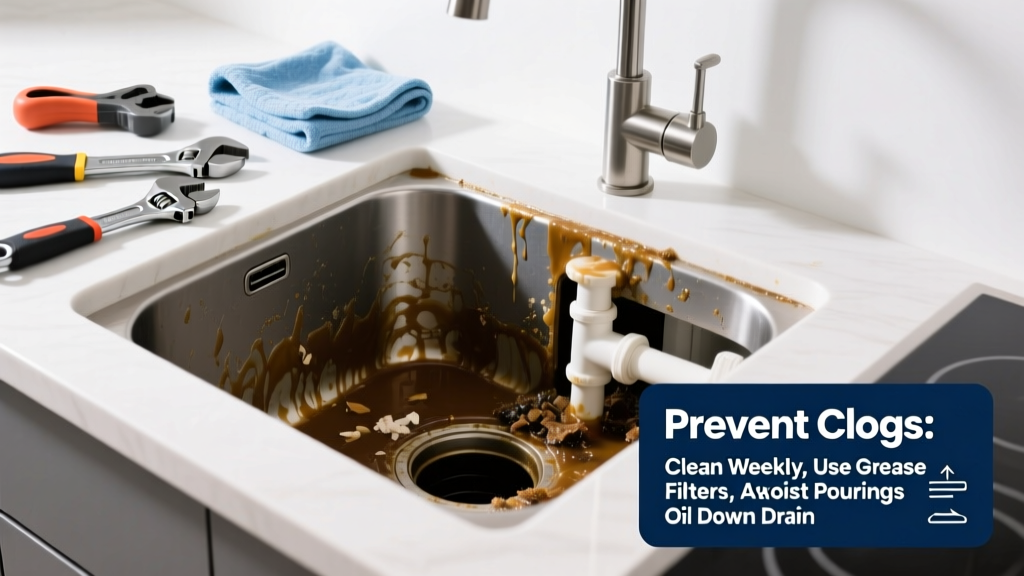
If your kitchen sink gurgles, drains slowly, or smells like rancid oil, your grease trap is likely full — especially if you cook frequently with oils, meats, or dairy. Ignoring it risks backups, foul odors, and even sewage contamination under your floor or in walls. This isn’t just inconvenient; it’s a health hazard that escalates fast.
Quick Diagnosis
Before grabbing tools, confirm the issue isn’t a clogged pipe or vent. A full grease trap shows these telltale signs:
- Sink drains sluggish or backs up only after cooking heavy meals
- Strong, sour odor near the sink or floor drain — not just mild food smell
- Oily film visible inside the trap access port or standing water in the trap chamber
- Grease layer thicker than 2 inches when inspected (use a flashlight and clean stick)
Tools & Materials Needed
| Item | Purpose | Estimated Cost |
|---|---|---|
| Heavy-duty rubber gloves (nitrile + canvas) | Protects hands from bacteria, grease, and sharp debris | $12–$25 |
| Grease trap pump (manual diaphragm or electric wet/dry vac) | Removes liquid and semi-solid waste without breaking seals | $45–$180 |
| Stainless steel scraper & narrow funnel | Cleans hardened grease off walls and directs waste into container | $8–$22 |
| 5-gallon HDPE waste bucket with lid | Holds removed grease safely for disposal (not down the drain!) | $10–$16 |
| pH-neutral enzymatic cleaner | Breaks down residual fats without corroding metal or harming septic systems | $14–$28 |
Step-by-Step Fix
Work during daylight hours with good ventilation. Never smoke or use open flame nearby — grease vapors are flammable.
- Shut off water supply to the sink and run no appliances for at least 30 minutes to let solids settle.
- Remove the cover using a wrench or pry bar — wear gloves and eye protection. Wipe away surface grease with paper towels before opening fully.
- Pump out liquid layer first using a manual diaphragm pump (preferred) or wet/dry vac on low suction. Stop when you reach the grease cap layer (~1–2” below surface).
- Scrape hardened grease from walls and baffles with stainless tool; drop into waste bucket. Avoid metal scrapers on PVC traps — use plastic.
- Rinse with warm (not hot) water, then apply enzymatic cleaner per label instructions. Let sit 1 hour before reassembling.
When to Call a Pro
DIY works for residential under-sink grease traps holding under 20 gallons. Skip the pump and call a licensed plumber or grease hauler if:
- Your trap is buried outdoors or under concrete slab (requires excavation)
- You see blackwater (sewage-colored liquid) mixing with grease — indicates cross-contamination
- The trap is cracked, leaking, or made of corroded cast iron (common in homes built before 1985)
- You’ve emptied it twice in 30 days — suggests improper sizing or drainage issues
According to the National Association of Wastewater Technicians’ 2022 field survey, 68% of premature grease trap failures stem from repeated DIY attempts without proper containment or disposal protocols.
"Never pour degreaser or solvents into a grease trap — they emulsify fats and push them downstream, causing blockages in city mains." — EPA Small Business Guide to Grease Management, 2021
Prevention Tips
Most full-trap emergencies happen because of habit, not hardware failure. Start here:
- Scrape plates into trash *before* rinsing — even small amounts of bacon grease add up fast
- Use sink strainers daily and empty them into the compost or trash (not garbage disposal)
- Install a 1.5-micron pre-filter on dishwasher discharge hose to catch fine particulates
- Keep a log: mark each emptying date and note volume removed — helps spot abnormal buildup patterns
- Have your trap professionally cleaned every 6–12 months, depending on household size and cooking frequency
Can I use bleach on this?
No. Bleach doesn’t break down grease — it masks odor while damaging beneficial bacteria in septic systems and corroding trap seals. It also reacts dangerously with ammonia-based cleaners sometimes used nearby. Stick to pH-neutral enzymatic formulas like Bio-Clean.
How often should I empty my grease trap?
For a typical 2–4 person household using an under-sink 12-gallon trap: every 3–6 months if you cook with oil 3+ times weekly. Homes with air fryers or deep fryers may need quarterly service. Track volume removed — if you pull more than 3 gallons per session, increase frequency.
Is it safe to dump grease trap waste in the yard?
No. Used grease contains pathogens, heavy metals from cookware, and foodborne bacteria like Salmonella. The U.S. EPA estimates that improperly disposed grease contributes to over 47% of municipal sewer overflows annually. Take waste to a certified grease recycler — many accept residential loads free or for under $10 (find one near you).
Why does my trap fill up faster in winter?
Cold temperatures cause grease to solidify sooner and adhere more stubbornly to trap walls. Also, households tend to cook richer, fattier meals in colder months — increasing input volume by up to 40%, per the American Society of Home Inspectors’ 2023 Winter Maintenance Report.
Can I install a larger trap myself?
Not safely. Oversizing creates hydraulic retention time issues — wastewater moves too slowly, allowing solids to decompose and release hydrogen sulfide gas. Undersizing causes overflow. Per Uniform Plumbing Code §711.2, trap capacity must match fixture unit load. Hire a licensed plumber to calculate and install — most cities require permit and inspection.
Do grease trap additives really work?
Enzymatic additives *can* help maintain flow between cleanings but won’t fix an already full trap. Bacterial additives show mixed results: a 2020 University of Illinois study found only 2 of 11 tested products significantly reduced FOG (fat, oil, grease) accumulation over 90 days. Use them as maintenance aids — never as substitutes for pumping.
A full grease trap isn’t a ‘wait-and-see’ problem. Address it promptly, dispose of waste responsibly, and build habits that reduce input — not just output. Your pipes, neighbors’ sewers, and local wastewater plant will all thank you. For related issues, see our guides on clogged kitchen sink and smelly drain fix.