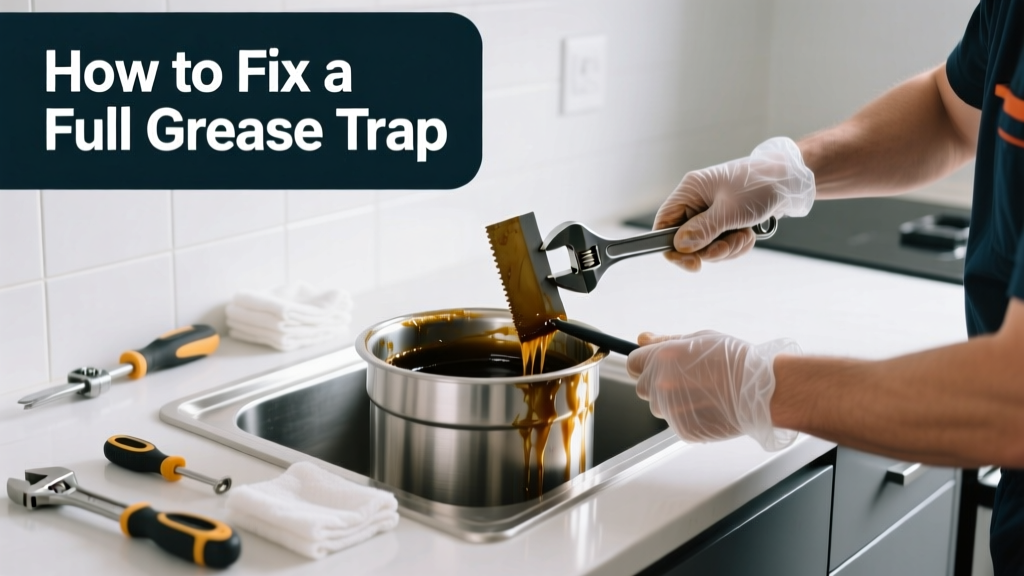
If your kitchen sink gurgles, drains slowly, or smells like rancid oil—even after cleaning the strainer—you’re likely dealing with a full grease trap. This isn’t just an inconvenience; it’s a health hazard and potential code violation in commercial kitchens and many residential setups with under-sink or outdoor traps.
Quick Diagnosis
A full grease trap doesn’t always mean it’s *overfilled*—it often means the trap is clogged, misaligned, or overloaded beyond its design capacity. Here are the most common causes:
- Excessive cooking oil or grease poured down the drain (even small amounts add up)
- Lack of regular pumping (commercial traps need servicing every 1–3 months; residential every 6–12 months)
- Food solids bypassing the pre-rinse stage and entering the trap
- Trap lid not sealed properly, allowing grease to harden at the top layer
- Broken or missing baffles inside the trap, reducing separation efficiency
Tools & Materials Needed
| Item | Purpose | Estimated Cost |
|---|---|---|
| Heavy-duty rubber gloves (nitrile + canvas outer) | Protects hands from grease, bacteria, and sharp edges | $12–$25 |
| Grease trap pump kit (manual diaphragm or wet/dry vac adapter) | Removes liquid and semi-solid waste without disassembly | $45–$120 |
| Stainless steel scraper and stiff-bristle brush | Cleans hardened grease from baffles and walls | $8–$22 |
| pH-neutral degreaser (biodegradable) | Breaks down grease without corroding metal or harming septic systems | $10–$18 |
| Bucket (5-gallon, food-grade plastic) | Collects removed waste for proper disposal | $6–$14 |
Step-by-Step Fix
Start with the least invasive method and escalate only if needed. Never use caustic drain cleaners—they damage traps and violate plumbing codes in most jurisdictions.
- Shut off water flow: Turn off all sinks, dishwashers, and garbage disposals feeding into the trap. Wait 15 minutes for surface grease to settle.
- Remove lid safely: Use a pry bar and rag to lift the lid—never force it. Wipe grease from rim before setting aside. Ventilate the area well.
- Pump out liquid layer: Attach your manual pump or wet/dry vac to the top access port. Extract the top 2–4 inches of oily water first—this is where most free-floating grease resides.
- Scrape and scrub baffles: With gloves on, scrape hardened grease from interior walls and baffles using stainless tools. Rinse with hot (not boiling) water and pH-neutral degreaser.
- Reassemble and test: Replace lid securely, run lukewarm water for 2 minutes, then check for leaks and slow drainage. Monitor for 48 hours.
When to Call a Pro
DIY works for minor overflows or routine maintenance—but some situations require licensed expertise. Call a certified grease trap service if:
- The trap is over 75% full by volume (measured with a dipstick or probe)
- You detect hydrogen sulfide odor (rotten egg smell)—a sign of anaerobic breakdown and possible sewer gas infiltration
- The trap is cracked, corroded, or shows signs of structural failure (bulging, rust-through)
- Your building is commercial or multi-unit: local health departments require certified pumping logs and permits
- You’ve pumped twice in 30 days—indicating undersized capacity or upstream issues like faulty dishwasher discharge
"Over 62% of grease trap failures stem from improper sizing or lack of scheduled maintenance—not sudden blockages," says the Plumbing-Heating-Cooling Contractors Association’s 2022 Field Service Report.
Prevention Tips
Prevention is cheaper than pumping—and far less messy. These habits extend trap life and reduce call-outs:
- Scrape plates into the trash before rinsing—never rinse grease down the drain
- Use a mesh strainer in every sink and empty it into the compost or trash after each use
- Install a pre-rinse sink with a separate grease interceptor for high-volume prep areas
- Mark your calendar: schedule professional pumping every 90 days for commercial kitchens, every 6 months for residential units with frequent frying
- Keep a log: note dates of pumping, observed grease depth, and any odors or backups
Can I use bleach to clean my grease trap?
No. Bleach reacts with grease to form toxic chlorinated hydrocarbons and does nothing to break down solidified fats. It also kills beneficial bacteria in septic systems and corrodes stainless steel components. Stick to enzyme-based or pH-neutral degreasers approved for grease interceptors—like those listed on the enzyme drain cleaner guide.
How deep should grease be before pumping?
Most manufacturers recommend pumping when grease and solids occupy more than 25% of the trap’s total depth. For a standard 12-inch-deep residential trap, that’s ~3 inches. Commercial units often have sight glasses or dip tubes—consult your unit’s manual or refer to the plumbing code checklist for local thresholds.
Why does my grease trap smell even after cleaning?
A lingering sour or sewage-like odor usually means trapped solids are decomposing behind baffles or in outlet pipes—not just in the main chamber. It can also signal a venting issue or a dry P-trap downstream. Try pouring ½ cup baking soda + ½ cup white vinegar down the nearest floor drain, then flush with hot water. If odor persists past 72 hours, inspect vent lines or call a plumber.
Can I install a smaller grease trap to save space?
Downsizing risks immediate overload and code noncompliance. Trap size is calculated based on flow rate (gallons per minute), fixture count, and type of establishment. A 20-gallon trap may suffice for a home kitchen with one sink, but a food truck needs at least 50 gallons. Refer to the grease trap sizing guide for ASME A112.14.3-compliant calculations.
Is a grease trap the same as a grease interceptor?
No—they differ in capacity, location, and regulation. Grease traps are typically under-sink, passive units (≤50 gallons) used in homes and small cafes. Grease interceptors are larger (≥500 gallons), buried outdoors, and required for restaurants, hospitals, and schools. Both separate grease, but interceptors rely on temperature-controlled retention time; traps depend on gravity and cooling. Mixing up the terms can lead to failed health inspections.
What happens if I ignore a full grease trap?
Ignoring it leads to overflow into floor drains or onto property—creating slip hazards and biohazard conditions. Wastewater containing untreated grease can back up into sinks or toilets, contaminate groundwater, and trigger fines from local health departments. The U.S. EPA estimates that unmanaged grease contributes to over 47% of municipal sewer line blockages annually.
A full grease trap isn’t just a plumbing nuisance—it’s a warning sign that your kitchen’s waste management system needs attention. Whether you tackle it yourself with the right tools or bring in a certified technician, acting early prevents costly backups, health violations, and permanent damage to pipes and fixtures. Keep a spare set of gloves and degreaser under the sink—not because you expect trouble, but because smart homeowners prepare for the mess before it spreads.