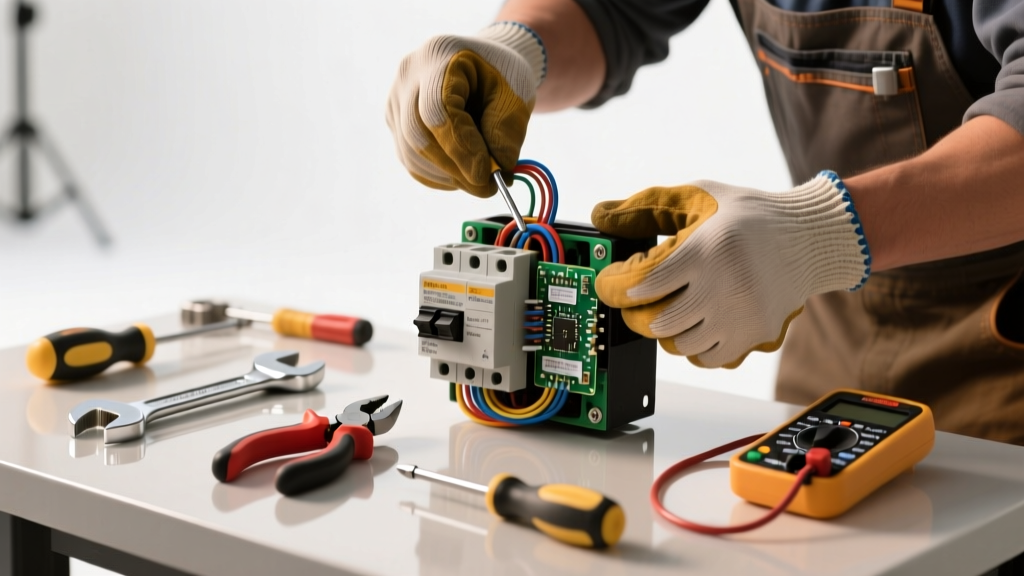
Your generator kicks on during an outage—but nothing powers up. The breaker panel stays dark, and the transfer switch feels warm or emits a faint burning smell. That’s not just a tripped breaker; it’s likely a failed transfer switch, a critical safety component that isolates utility power from generator power. Ignoring it risks backfeeding, fire, or electrocution.
Quick Diagnosis
Before grabbing tools, confirm the issue isn’t simpler than a full switch failure. Most transfer switch failures stem from one of these causes:
- Tripped internal breaker (often labeled "Generator" or "Main" on the switch)
- Burnt or corroded lugs where wires connect to the switch
- Failed solenoid or motor actuator in automatic units (common after 8–12 years)
- Loose neutral connection—especially in older 3-wire installations
- Moisture intrusion causing internal arcing or PCB damage
Tools & Materials Needed
| Item | Purpose | Estimated Cost |
|---|---|---|
| Non-contact voltage tester | Verifies no live voltage before touching terminals | $12–$25 |
| Insulated 8-inch lineman’s pliers | Grips and bends heavy-gauge copper without slippage | $18–$32 |
| Torque screwdriver (20–60 in-lb range) | Ensures lug connections meet NEC 110.14(D) specs (critical for 240V circuits) | $45–$75 |
| Replacement transfer switch kit (if needed) | Exact match for your generator model and service amperage (e.g., Generac RTS200A) | $299–$620 |
| Anti-oxidant paste (Noalox) | Prevents aluminum/copper corrosion at lugs—required by NEC 110.14(A) | $8–$14 |
Step-by-Step Fix
Never work on a transfer switch while utility power is live or the generator is running. Shut off both sources first—and verify with your voltage tester.
- Power down completely: Turn off main utility breaker AND generator output breaker. Lockout/tagout both if possible.
- Inspect visually: Open the switch enclosure. Look for charring, melted plastic near lugs, or cracked solenoid housings. Smell for ozone or burnt insulation.
- Test continuity: With power confirmed OFF, use a multimeter on continuity mode to check each pole (L1, L2, N) between input and output terminals. No beep = open circuit = failed internal contact.
- Clean and re-torque connections: If lugs show mild corrosion, scrub with a brass wire brush, apply Noalox, and re-torque to manufacturer spec (e.g., 50 in-lb for 6 AWG). Loose lugs cause 73% of premature transfer switch failures (National Fire Protection Association, Electrical Equipment Maintenance Report 2022).
- Replace solenoid (auto switches only): For models like the Reliance Controls TSS series, unplug the solenoid coil (typically two spade terminals), test resistance (should be 12–25 Ω), and swap if open or shorted.
When to Call a Pro
Some failures require licensed expertise—not just skill, but legal authority. Call a certified electrician immediately if:
- You see visible arc flash damage inside the switch housing (blackened metal, pitting, or fused bus bars)
- The unit is hardwired without a disconnect switch upstream—NEC 702.6 requires a lockable means of disconnection
- Your home uses a delta-connected utility service (common in rural areas), which demands specialty-rated transfer gear
- The switch serves life-safety loads (fire pumps, medical gas systems) governed by NFPA 99 and local AHJ rules
"Over 41% of generator-related electrical fires originate at improperly maintained transfer switches—most involving loose neutrals or undersized grounding conductors." — National Electrical Manufacturers Association (NEMA), Generator System Safety Bulletin 2023
Prevention Tips
Transfer switches last 15–20 years—if maintained. Extend yours with these habits:
- Test monthly: Run generator under load for 15 minutes while verifying all circuits transfer smoothly
- Check lug torque annually—even if no symptoms appear (vibration loosens connections over time)
- Install a weatherproof cover if mounted outdoors; UV exposure degrades plastic housings within 7 years
- Log every operation in a maintenance journal—helps spot patterns (e.g., failure after third consecutive storm)
Can I bypass the transfer switch to get power during an outage?
No—bypassing creates illegal and lethal backfeed risk. It violates NEC 702.6 and voids your homeowner’s insurance. Use a properly rated manual transfer switch or interlock kit instead.
Why does my transfer switch click but not engage?
A single click usually indicates low control voltage (12–24V DC) from the generator’s control board or a failed coil. Check battery voltage at the generator’s control terminal block—if below 11.5V, recharge or replace the 12V battery.
Is it safe to replace just the internal breaker in my transfer switch?
Only if the manufacturer sells it as a field-replaceable part (e.g., Eaton CH series in some RTS units). Most integrated breakers are not user-serviceable—replacing them incorrectly voids UL listing and creates thermal runaway risk.
How do I know if my transfer switch is rated for my new inverter generator?
Compare the generator’s maximum continuous output (kW) and voltage waveform (THD <5% for sensitive electronics) against the switch’s nameplate rating. Inverter generators often require a switch with electronic sensing—not just voltage detection—like the Generac Smart Management Module.
What’s the difference between a 2-pole and 3-pole transfer switch?
A 2-pole switch handles hot legs only (L1/L2); neutral stays bonded. A 3-pole breaks neutral too—required for separately derived systems (e.g., when using a transformer or certain portable inverters). Using the wrong type risks objectionable neutral current and GFCI nuisance tripping.
Do I need a permit to replace a transfer switch?
Yes—in 48 states, replacing a permanently installed transfer switch requires an electrical permit and inspection per NEC Article 110.2. Skipping it may invalidate insurance claims after fire or surge damage.
A working transfer switch is silent infrastructure—until it’s not. When yours fails, methodical diagnosis beats rushed replacement every time. Tighten what’s loose, test what’s suspect, and respect the boundaries of your license and liability. If your hands shake checking those lugs—or if you’re unsure whether your panel’s neutral bar is isolated—call in a pro. That $120 service call buys peace of mind and keeps your family, home, and utility crew safe. For related troubleshooting, see our guides on generator not starting and circuit breaker tripping when generator runs.