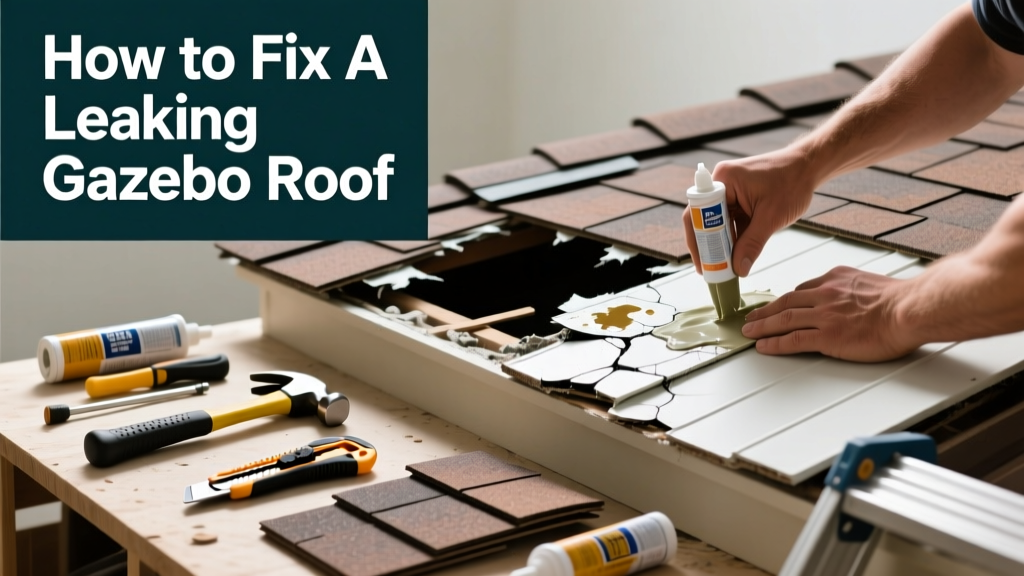
That first drip onto your picnic table or damp spot on the floorboard isn’t just annoying—it’s a red flag. Gazebo roofs leak for predictable reasons, most of which you can tackle in under a day with basic tools and $40 in supplies. Ignoring it invites rot, rusted fasteners, and structural weakening—especially in wood or metal-framed gazebos exposed year-round.
Quick Diagnosis
Before grabbing tools, identify the source. Most leaks trace back to one (or more) of these culprits:
- Cracked, warped, or missing shingles, polycarbonate panels, or asphalt roll roofing
- Failed sealant around screws, ridge caps, or flashing where the roof meets the frame
- Clogged or damaged gutters or downspouts causing water backup
- Rusted or corroded fasteners pulling away from the substrate
- Improper pitch—roofs with less than 3:12 slope struggle to shed rain effectively
Tools & Materials Needed
| Item | Purpose | Estimated Cost |
|---|---|---|
| Roofing cement (trowel-grade) | Seals small cracks and re-adheres lifted edges on asphalt or rubber roofing | $8–$12 |
| Butyl rubber tape (4" wide) | Self-adhesive, UV-resistant seal for seams, screw heads, and flashing joints | $15–$22 |
| Corrosion-resistant screws (stainless steel or coated) | Re-secures loose panels or flashing without rusting out in 6–12 months | $6–$10 |
| Roofing brush & stiff nylon scrubber | Cleans algae, moss, and debris from surfaces before sealing | $5–$9 |
| Extension ladder (24 ft, Type IA rating) | Safe access to most 10–12 ft high gazebo roofs; rated for 300+ lbs | $120–$220 |
Step-by-Step Fix
Match the repair method to your roof type and leak severity:
- For asphalt or built-up roofing: Clean the area with a roof brush and water. Dry thoroughly. Apply roofing cement with a putty knife over cracks or blisters, then embed a 6"x6" patch of fiberglass mesh before a second coat dries.
- For polycarbonate or acrylic panels: Remove old silicone or caulk. Wipe seam with isopropyl alcohol. Apply butyl rubber tape over the seam—press firmly and smooth with a squeegee. Do not use standard silicone; it degrades polycarbonate.
- For screw-hole leaks: Unscrew the fastener, clean corrosion from threads and hole, apply butyl tape around the shaft, then reinstall with a dab of non-corrosive sealant under the washer head.
- For gutter-related overflow: Clear debris from gutters and downspouts. Check slope—gutters must drop ¼" per 10 ft. Add a splash block or extend downspout at least 3 ft from the gazebo base.
When to Call a Pro
Don’t risk injury or make repairs worse if you see any of these:
- More than 30% of roofing material is cracked, blistered, or delaminated
- Structural sagging or visible bowing in rafters or ridge beams
- Leak persists after two rounds of sealing—and you’ve confirmed no clogs or wind-driven entry points
- Your gazebo has a complex multi-tiered or curved roof requiring custom flashing
According to the Insurance Institute for Business & Home Safety's 2023 report, 68% of minor roof leaks escalate to framing damage within 18 months if not addressed within 30 days.
Prevention Tips
Extend your roof’s life with consistent maintenance:
- Inspect seals and fasteners every spring and fall—tighten and reseal as needed
- Trim overhanging branches to reduce debris buildup and moisture retention
- Apply UV-blocking roof coating (e.g., acrylic elastomeric) every 3–4 years on asphalt or metal roofs
- Install gutter guards—micro-mesh types cut leaf clogs by 92%, per the National Association of Home Builders’ 2022 Outdoor Structures Study
Can I use bleach on this?
No. Bleach damages asphalt granules, degrades polycarbonate, and corrodes metal fasteners. Use a 50/50 mix of water and oxygen bleach (sodium percarbonate) instead—it kills algae without harming materials. Rinse thoroughly after 15 minutes.
How long does butyl tape last outdoors?
Properly applied butyl rubber tape lasts 10–15 years in full sun and rain, per manufacturer data from Sika and Henry Company product sheets (2023). Avoid stretching it during application—it loses adhesion if over-tensioned.
Do I need a permit to replace my gazebo roof?
Most jurisdictions exempt detached accessory structures under 120 sq ft and under 10 ft tall—but check with your local building department. In Austin, TX and Portland, OR, even small gazebos require permits if roof replacement changes structural load paths or fire ratings.
Why does my gazebo leak only during wind-driven rain?
This signals failed perimeter flashing or gaps where the roof meets the wall cap—not a roof material issue. Wind forces water sideways into seams that are otherwise watertight in vertical rainfall. Re-seal all horizontal transitions with butyl tape and add a secondary drip edge.
Can I patch a metal roof with duct tape?
Absolutely not. Standard duct tape fails in UV light within weeks and leaves sticky residue that blocks proper adhesion for real repairs. Use aluminum foil tape rated for roofing (UL 723 Class A) only as a temporary fix—replace within 90 days.
What’s the best sealant for wood-framed gazebos?
Use polyurethane-based sealants like Sikaflex-221 or OSI Quad Max. They remain flexible across temperature swings, bond to wet or dry wood, and resist mold—unlike silicone, which shrinks and pulls away from porous substrates over time. Always prime bare wood first with an oil-based primer.
A well-maintained gazebo roof should last 12–20 years depending on material and climate. The key isn’t waiting for disaster—it’s catching that first drip, diagnosing honestly, and acting before moisture reaches the framing. If you’ve sealed screw holes, cleared gutters, and patched seams, grab a friend and do a post-rain test: spray the repaired zone with a hose for 10 minutes while someone watches inside. No drips? You’ve just bought yourself another dry summer. For related help, see our guides on wood gazebo rot repair and gazebo foundation settling.