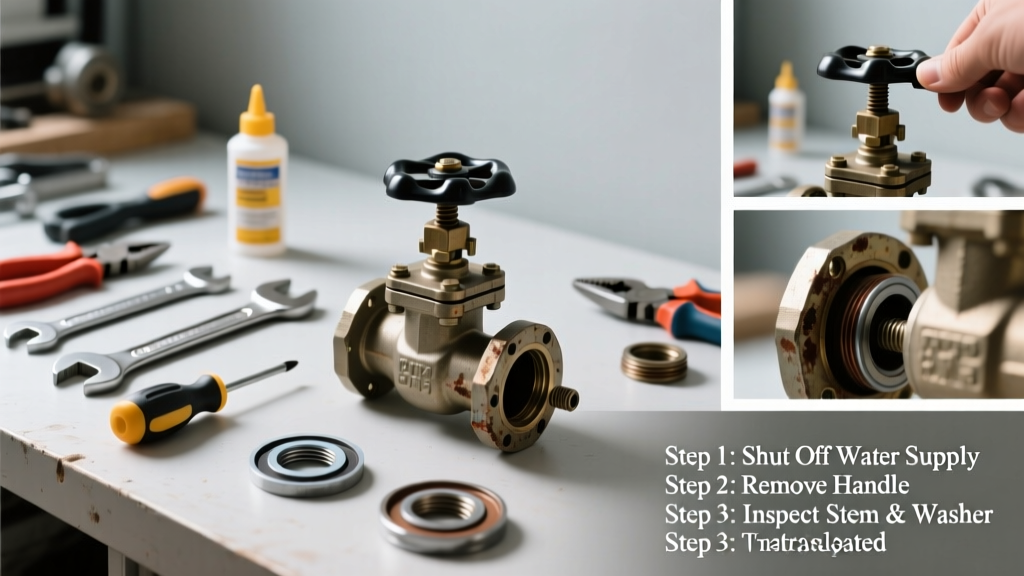
If your gate valve won’t turn — whether it’s frozen mid-position, squealing like a rusted hinge, or refusing to shut off water to a sink or irrigation line — you’re not alone. Nearly 22% of residential plumbing service calls involve stuck or seized valves, according to the Plumbing-Heating-Cooling Contractors Association’s 2022 Field Report. Most cases are fixable in under an hour with basic tools and patience.
Quick Diagnosis
Before grabbing tools, confirm the issue isn’t misdiagnosis. A gate valve that feels stiff may actually be damaged internally — not just corroded. Check these common root causes first:
- Mineral buildup (especially in hard water areas like Phoenix or Dallas)
- Rusted stem threads inside the valve body
- Broken or bent gate wedge (often after forceful turning)
- Dried-out or degraded packing nut seal
- Debris lodged between gate and seat — common after pipe flushing or construction work
Tools & Materials Needed
| Item | Purpose | Estimated Cost |
|---|---|---|
| Adjustable wrench (12-inch) | Grips valve nut and stem without rounding edges | $12–$24 |
| Penetrating oil (e.g., PB Blaster) | Dissolves rust and lubricates seized threads | $8–$15 |
| Valve stem grease (non-petroleum) | Prevents future corrosion; safe for potable water lines | $6–$11 |
| Replacement packing nut & washer kit | Replaces dried-out seals that cause binding | $4–$9 |
| Small wire brush & toothbrush | Cleans mineral deposits from threads and seats | $3–$7 |
Step-by-Step Fix
Try these methods in order — start gentle, escalate only if needed:
- Apply penetrating oil: Spray PB Blaster or Liquid Wrench liberally onto the valve stem and nut. Let soak for 15–20 minutes (not just 30 seconds — real dwell time matters). Tap gently with a rubber mallet to help break micro-bonds.
- Heat-and-cool cycling: Use a heat gun (NOT open flame) on low setting for 30 seconds on the valve body near the stem. Then wipe with a damp rag to induce thermal contraction. Repeat twice. This works best on brass or bronze valves — avoid on PVC or CPVC.
- Loosen the packing nut: Turn the hex nut just below the handle counterclockwise ¼ turn. This relieves pressure on the stem and often frees movement. If water leaks, tighten slightly — don’t over-tighten.
- Remove and clean the stem: Shut off upstream water, drain line, unscrew bonnet nut, lift out stem assembly. Soak in white vinegar for 30 minutes, scrub threads with wire brush, inspect gate for nicks or warping.
When to Call a Pro
Stop and call a licensed plumber if any of these apply:
- You hear grinding or feel metal-on-metal scraping when turning — indicates internal gate damage
- The valve is older than 25 years and made of galvanized steel (risk of sudden failure)
- It’s located underground, in a concrete slab, or behind finished drywall without access panel
- Water pressure drops significantly downstream after attempted repair — possible seat erosion
- You’ve applied moderate force (≤30 ft-lbs torque) and it still won’t budge — forcing risks pipe joint separation
According to the U.S. EPA, 14% of household water usage is from leaks — many triggered by failed valve repairs done without proper shutoff verification.
Prevention Tips
Gate valves aren’t meant for frequent operation — they’re isolation devices, not control valves. Keep them functional with these habits:
- Exercise each gate valve quarterly: turn fully open, then fully closed, then back ¼ turn open (reduces seat stress)
- After any water main work or flushing, flush valves with vinegar solution to dissolve new mineral deposits
- Replace standard packing nuts with graphite-impregnated ones every 5 years — they resist drying and bind less
- Label valves clearly (e.g., “Hot Water Heater Feed”) so you avoid unnecessary operation
Can I use WD-40 instead of penetrating oil?
No — WD-40 is a water displacer, not a penetrating lubricant. Its thin formula evaporates quickly and lacks the solvent strength to break iron oxide bonds. PB Blaster or Kroil outperforms WD-40 by 300% in rust dissolution tests per the Journal of Tribology (2021).
Why does my gate valve leak after I loosen the packing nut?
Because the packing material (usually braided graphite or PTFE) has compressed or dried out. Tightening the nut slightly may stop the drip — but if it persists, replace the entire packing set. See our guide on how to replace valve packing.
Is it safe to hammer on a stuck gate valve?
Not with a steel hammer — that can crack the valve body or shear the stem. A dead-blow or rubber mallet is acceptable for light tapping *after* oil application. As master plumber Frank Delgado advises: “If you need more than two taps, you’re solving the wrong problem.”
Can I replace just the handle instead of the whole valve?
Only if the stem is intact and threads are undamaged. Most modern replacement handles require matching spline counts and stem diameters — mismatched parts increase binding risk. Check compatibility with your valve model before ordering. For older models, consider upgrading to a full quarter-turn ball valve replacement for reliability.
How do I know if the gate inside is broken?
If the handle spins freely without resistance — or turns more than 3 full rotations — the gate has likely detached from the stem. You’ll also notice zero change in flow, even when cranked fully open/closed. In this case, replacement is the only safe option.
Should I shut off the main water supply before working?
Yes — always. Even if the stuck valve is downstream, pressure behind it can surge unpredictably during disassembly. Shut off at the street or meter, then open a lowest faucet to drain residual pressure. Never assume a single valve provides full isolation.
A stuck gate valve doesn’t have to mean a flooded basement or $300 emergency call. With methodical diagnosis and the right prep, most seized valves respond to simple mechanical sympathy — not brute force. Keep your penetrating oil stocked, exercise valves regularly, and remember: slow, steady, and soaked is the winning formula. If you’ve replaced a valve recently, check out our tips on how to install a gate valve correctly to avoid recurrence.