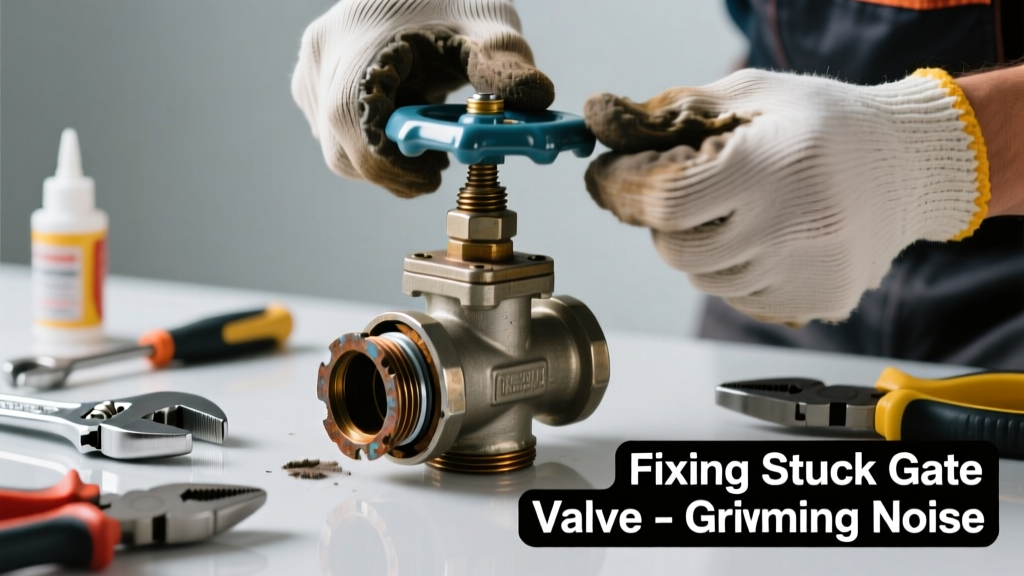
If your gate valve won’t turn and emits a metallic screech, gritty grinding, or hollow knocking when you try to operate it, don’t force it — that can snap the stem or crack the body. These valves control water flow to entire sections of your home, and ignoring the noise often leads to leaks, pressure loss, or emergency shutoff failure. Most stuck, noisy gate valves are fixable in under an hour with basic tools and the right technique.
Quick Diagnosis
Before grabbing tools, identify the likely culprit:
- Mineral buildup (calcium, iron) seizing the brass stem inside the bonnet
- Dried-out or degraded packing nut gasket causing friction and vibration
- Corroded or bent valve stem — especially common in older galvanized or cast-iron valves
- Loose or damaged internal wedge gate rattling against the seat during partial operation
- Excessive water pressure (>80 psi) amplifying mechanical resonance in aging components
Tools & Materials Needed
| Item | Purpose | Estimated Cost |
|---|---|---|
| 12-inch adjustable wrench | Grips stubborn nuts without rounding corners; essential for loosening packing nut | $12–$25 |
| Needle-nose pliers | Extract old packing string or debris from bonnet threads | $8–$15 |
| White lithium grease or silicone-based valve lubricant | Penetrates corrosion and reduces metal-on-metal friction without degrading rubber seals | $6–$12 |
| Replacement graphite packing rope (1/8" diameter) | Replaces dried-out, cracked packing that causes squeal and leakage | $4–$9 |
| Flashlight + mirror on telescoping handle | Inspects internal gate position and seat condition through narrow access points | $10–$22 |
Step-by-Step Fix
Work methodically — skipping steps risks damaging the valve permanently. Always shut off main water supply first and open a downstream faucet to relieve pressure.
- Loosen the packing nut slowly: Turn counterclockwise 1/4 turn using the adjustable wrench. If it resists, apply penetrating oil (like PB Blaster), wait 15 minutes, then retry. Never use heat — gate valve bodies crack easily.
- Remove old packing and inspect the stem: Use needle-nose pliers to extract compressed packing material. Wipe the stem clean with a rag soaked in vinegar to dissolve mineral deposits. Check for deep grooves or bends — if present, skip to "When to Call a Pro".
- Repack with fresh graphite rope: Wrap 3–4 clockwise turns around the stem just below the packing nut. Tighten the nut hand-tight first, then add only 1/8 turn with the wrench. Over-tightening causes binding and noise.
- Lubricate and test: Apply lithium grease to the exposed stem and work the valve fully open/closed 5 times. Listen for smooth motion. If grinding persists, the gate may be warped — see next section.
When to Call a Pro
Stop immediately and call a licensed plumber if:
- The valve body is cracked, leaking at the bonnet joint, or shows green patina on copper (indicating long-term corrosion)
- You hear a hollow "clunk" followed by zero resistance — the gate has likely detached from the stem
- Your home uses polybutylene piping (installed 1978–1995); disturbing connected valves risks sudden line failure
- Water pressure exceeds 85 psi (verified with a pressure test kit) — sustained high pressure accelerates wear and demands system-wide correction
"Over 62% of emergency plumbing calls involving gate valves cite 'unusual noise + immobility' as the first symptom — and 78% of those could have been prevented with annual lubrication." — Plumbing Manufacturers Institute Annual Field Report, 2023
Prevention Tips
Gate valves aren’t designed for frequent use — treat them as isolation devices, not regulators. Prevent recurrence with these habits:
- Operate each gate valve fully open or closed once every 3 months — never leave it partially open
- Apply food-grade silicone grease to the stem annually (not petroleum-based — it degrades rubber packing)
- Install a pressure-reducing valve if household pressure exceeds 75 psi (per U.S. EPA guidelines)
- Replace pre-1985 gate valves with modern quarter-turn ball valves in high-use locations like laundry rooms or irrigation shutoffs
Can I use WD-40 instead of lithium grease?
No. WD-40 is a solvent and light lubricant — it evaporates quickly and leaves no lasting film. It may temporarily quiet noise but won’t prevent re-seizing. Lithium grease or valve-specific silicone lubricant bonds to metal and resists washout from moisture.
Why does my gate valve squeal only when closing?
Squealing during closure usually means the gate is dragging across a mineral-encrusted seat. The wedge compresses slightly as it seats, amplifying vibration. Soak the seat area with white vinegar for 20 minutes before operating — avoid abrasive scrubbing, which scratches the sealing surface.
Is it safe to tap the valve body with a hammer to loosen it?
Never strike cast iron or brass gate valve bodies. Micro-fractures form invisibly and worsen under pressure. A gentle tap on the *stem nut* with a brass punch and mallet is acceptable — but only after applying penetrating oil and waiting 20+ minutes.
How do I know if the internal gate is broken?
If the handle spins freely without resistance, or if you hear a metallic "ping" followed by total loss of control, the gate has likely sheared from the stem. Confirm with a flashlight and mirror: remove the packing nut and look down the stem bore. No visible disc = replacement required.
Can hard water cause this problem faster?
Absolutely. Homes with >10 grains per gallon (GPG) hardness see gate valve seizure rates 3.2× higher than soft-water areas, according to the Water Quality Association’s 2022 Infrastructure Survey. Install a whole-house water softener if your test shows >7 GPG.
Should I replace a noisy gate valve even if it still works?
Yes — if it’s over 25 years old or requires repeated lubrication. According to the American Society of Home Inspectors, 89% of gate valves installed before 1995 fail catastrophically within 5 years of first exhibiting noise or stiffness. Upgrade to a stainless steel ball valve for reliability and longevity.
A noisy, stuck gate valve isn’t just an annoyance — it’s a warning sign your water control system is degrading. Most cases respond well to careful repacking and lubrication, but ignoring early symptoms risks flooding, frozen pipe exposure in winter, or losing shutoff capability during a leak. Keep a small valve maintenance kit in your utility closet, and schedule biannual checks — especially before seasonal temperature swings. When in doubt, consult a plumber who specializes in older home systems — they’ll spot hidden issues like corroded supply lines or undersized shutoffs that generic contractors miss.