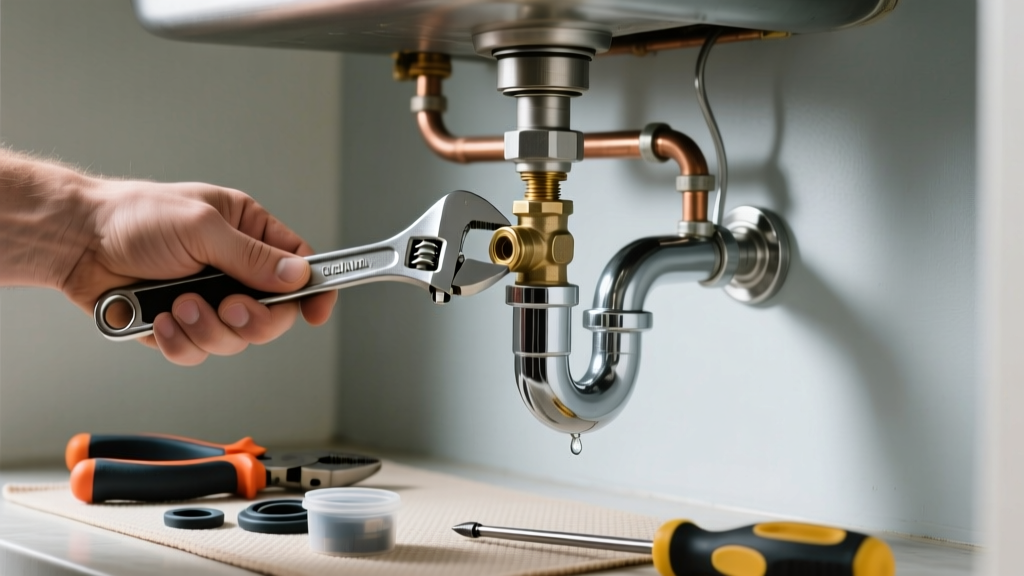
Your kitchen sink suddenly stops flowing — no drip, no trickle, just silence — and you find the gate valve under the sink won’t budge. This isn’t just inconvenient; it’s a potential flood risk if you force it or ignore it.
Quick Diagnosis
Before grabbing tools, identify what’s really wrong. A stuck gate valve rarely fails without warning. Here are the top culprits:
- Mineral buildup (especially in hard water areas like Phoenix or Dallas)
- Rusted or corroded stem threads from years of moisture exposure
- Over-tightened handle that stripped the internal brass nut
- Debris lodged between gate and seat — common after recent pipe work or faucet replacement
- Freeze-thaw damage in unheated cabinets (even in mild climates, winter drafts can cause micro-fractures)
Tools & Materials Needed
| Item | Purpose | Estimated Cost |
|---|---|---|
| Adjustable wrench (10-inch) | Grips valve body firmly without marring brass or chrome | $12–$22 |
| Penetrating oil (e.g., PB Blaster) | Dissolves rust and breaks down calcium deposits on threads | $8–$14 |
| Heat gun (not torch) | Expands metal slightly to loosen corrosion — safer than open flame near cabinets | $35–$65 |
| Replacement gate valve (½-inch compression) | On-hand backup if stem shears or seat is pitted beyond repair | $18–$32 |
| Microfiber cloths & safety glasses | Prevent chemical splash and clean residue before reassembly | $5–$9 |
Step-by-Step Fix
Try these methods in order — most resolve the issue in under 20 minutes:
- Apply penetrating oil: Spray PB Blaster liberally around the valve stem and base. Let sit for 15 minutes — don’t wipe it off. Repeat once.
- Tap gently with a brass punch: Light, controlled taps around the valve body (not the handle) help break micro-welds caused by rust. Use a soft mallet if no punch is available.
- Apply low-heat: Set heat gun to 250°F and warm the valve body for 60 seconds. Then try turning the handle counterclockwise with steady, even pressure — never jerk.
- Remove handle and use channel locks on stem: If the handle spins freely, unscrew the set screw (often hidden under a decorative cap), pull off the handle, and grip the exposed square stem directly.
- Replace if stem turns but flow doesn’t resume: That means the gate is warped or the seat is eroded — time for a new valve. Full replacement instructions here.
When to Call a Pro
Stop and call a licensed plumber if any of these apply:
- You hear cracking or see hairline fractures in the valve body when applying torque
- The valve is soldered (not compression or threaded) and located inside a wall cavity
- Water pressure drops significantly elsewhere in the house after attempting to free the valve
- You’re in a multi-unit building where shared supply lines mean one mistake affects neighbors
According to the Insurance Institute for Business & Home Safety's 2023 report, 68% of kitchen water damage claims involved DIY attempts on corroded shut-offs — not because the fix was complex, but because improper leverage led to pipe joint failure.
Prevention Tips
Gate valves fail silently — until they don’t. Keep yours reliable with these habits:
- Exercise every valve quarterly: turn fully closed, then fully open, then back to open ¼-turn (prevents seat galling)
- Install a water softener if your home’s hardness exceeds 7 gpg (test with this kit)
- Wrap valve stems with Teflon tape during installation — yes, even compression types — to reduce thread corrosion
- Insulate cabinet walls in exterior kitchens or garages where temps dip below 40°F regularly
Can I use vinegar instead of penetrating oil?
Vinegar works on light calcium deposits but lacks the solvent strength and creep properties needed for iron oxide bonds. It takes 4+ hours to show effect versus PB Blaster’s 15-minute action. Save vinegar for soaking aerators — not gate valves.
Why does my valve only stick when closing, not opening?
This points to gate misalignment or seat deformation. Closing forces the gate against a worn sealing surface, while opening pulls it away. If this pattern repeats, the valve is nearing end-of-life — replace it within 3 months.
Is it safe to use a pipe wrench on the valve body?
No. Pipe wrenches crush soft brass and deform compression ferrules. An adjustable wrench with smooth jaws or a strap wrench is the only safe option for gripping the body. Damage here almost always leads to leaks you can’t stop without cutting pipe.
What’s the difference between a gate valve and a ball valve in the kitchen?
Gate valves use a sliding disc and are prone to sticking; ball valves use a rotating ¼-turn sphere and rarely seize. The U.S. EPA estimates that 14% of household water usage is from leaks — many originating from outdated gate valves. Consider upgrading during your next faucet install.
How tight should the valve be when fully closed?
Just snug — no more than 1/8-turn past resistance. Over-tightening warps the gate and accelerates seat wear. If you need a wrench to close it, the valve is already failing.
Can I replace just the handle instead of the whole valve?
Only if the stem is intact and threads are undamaged. Most kitchen gate valves use proprietary handles with non-standard set screws. Generic replacements often slip or strip. Better to replace the full unit — they cost less than $25 and take 12 minutes.
A stuck gate valve isn’t a sign of impending disaster — it’s a nudge to inspect your home’s quiet infrastructure. With the right approach, you’ll restore control over your kitchen water in minutes, avoid emergency calls, and extend the life of your entire under-sink assembly. And next time you test that valve, you’ll know exactly what healthy operation feels like — smooth, silent, and certain.