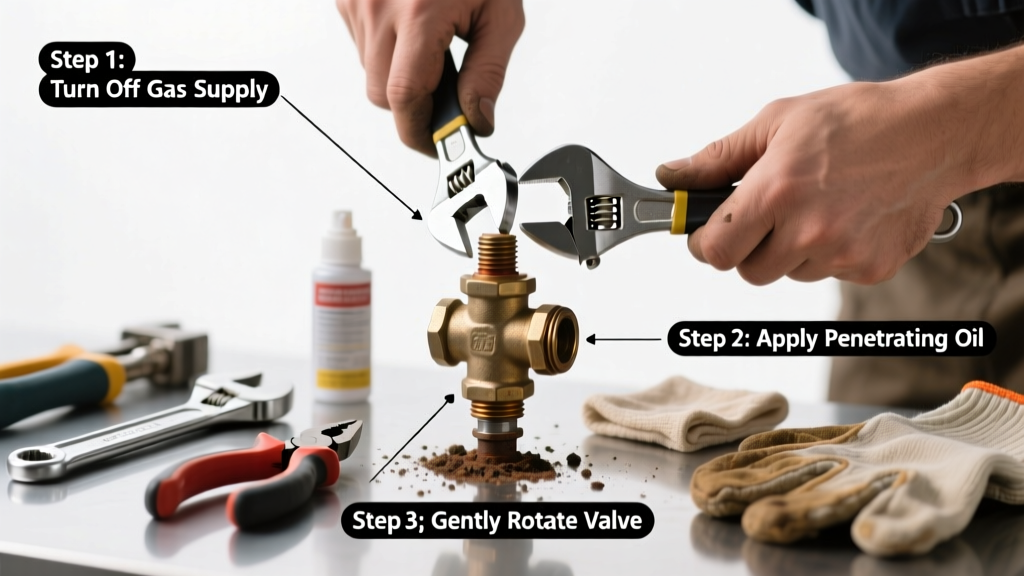
If your gas valve won’t turn, clicks but doesn’t open, or feels frozen in place, you’re not just dealing with an inconvenience—you’re facing a potential safety hazard. Gas valves control fuel flow to appliances like furnaces, water heaters, and stoves, and a malfunction can lead to no heat, pilot light failure, or even gas leaks. Don’t force it—most stuck valves have simple, repairable causes if caught early.
Quick Diagnosis
Before grabbing tools, rule out the obvious:
- The valve handle is physically obstructed by dust, rust, or debris buildup
- Corrosion has seized internal brass or steel components (common in humid basements or older homes)
- The valve was accidentally turned off during cleaning or maintenance
- Internal O-rings or packing nuts are dried out or cracked
- A nearby appliance shut-off lever (e.g., on a water heater) is mistaken for the main valve
Tools & Materials Needed
| Item | Purpose | Estimated Cost |
|---|---|---|
| Adjustable wrench (12-inch) | Grips valve body without marring metal; provides torque for stubborn nuts | $12–$25 |
| Penetrating oil (e.g., PB Blaster) | Dissolves rust and lubricates seized threads without damaging rubber seals | $8–$14 |
| Gas leak detector solution (soapy water mix) | Verifies seal integrity after adjustment—never use flame or electronic testers alone | $3–$7 |
| Replacement valve stem kit (if needed) | Includes new O-rings, packing nut, and graphite grease for reassembly | $15–$28 |
Step-by-Step Fix
Work only in a well-ventilated area. Shut off the main gas supply upstream before starting any work. Confirm shutoff with a gas detector or soapy water test at the meter.
- Apply penetrating oil: Spray PB Blaster liberally around the valve handle base and stem. Let sit for 15–20 minutes—do not heat or hammer the valve.
- Gently cycle the handle: Using gloves and an adjustable wrench, apply slow, steady pressure counterclockwise (to open) and clockwise (to close). Stop immediately if resistance spikes or metal groans.
- Clean and inspect the stem: If the valve loosens enough to remove, wipe away corrosion with a brass brush (never steel wool—it sheds particles). Check for pitting or bent threads.
- Repack the stem: Replace worn O-rings and packing nut using a manufacturer-approved kit. Lubricate with graphite-based grease—not petroleum jelly, which degrades rubber seals.
When to Call a Pro
Stop and call a licensed gas fitter if:
- You smell gas (rotten egg odor) before, during, or after attempted repair
- The valve body shows visible cracks, bulges, or green corrosion (indicating copper pipe stress)
- You’ve applied penetrating oil twice and the valve still won’t budge—even with gentle torque
- Your home uses CSST (corrugated stainless steel tubing), which requires bonding verification after any valve work
According to the National Fire Protection Association’s NFPA 54: National Fuel Gas Code 2023, “any valve replacement or disassembly involving gas line pressure must be performed by a certified professional to prevent ignition risk or improper seating.”
Prevention Tips
- Exercise all gas shutoff valves quarterly—turn each fully open, then fully closed, then back to open
- Keep valve areas dry and free of insulation, paint, or stored items that trap moisture
- Install dielectric unions where copper meets steel or iron piping to reduce galvanic corrosion
- Label every valve clearly (e.g., “Water Heater”, “Furnace”) with weather-resistant tape or engraved tags
Can I use WD-40 instead of penetrating oil?
No. WD-40 is a water displacer—not a true penetrating lubricant—and lacks the solvent strength to break down iron oxide bonds in gas valves. It also leaves a thin film that attracts dust and may degrade elastomer seals over time. Stick with PB Blaster or Liquid Wrench, both tested for ferrous metal applications per ASTM D665 standards.
How do I know if my gas valve is defective or just stuck?
A defective valve often fails to hold position (e.g., drifts open or closed), emits hissing sounds, or shows inconsistent response across multiple cycles. A stuck valve resists movement initially but may loosen after lubrication and gentle cycling. If the valve moves smoothly once freed but later seizes again within weeks, internal wear—not just corrosion—is likely.
Is it safe to replace a gas valve myself?
Only if you’re certified and equipped. The U.S. Consumer Product Safety Commission reports that 22% of residential gas-related incidents between 2020–2023 involved improper DIY valve replacement. Replacing a valve requires pressure testing, leak verification, and compliance with local code amendments—tasks best left to licensed professionals.
What’s the difference between a service valve and a main shutoff?
A service valve controls gas to one appliance (e.g., behind your stove); it’s typically 1/2-inch and located near the unit. The main shutoff sits between the gas meter and house piping, usually 3/4-inch or larger, and cuts supply to the entire structure. Confusing them leads to incomplete troubleshooting—and potentially leaving a leaking appliance live.
How often should gas valves be serviced?
Manufacturers like Honeywell and Robertshaw recommend annual inspection by a qualified technician. However, the American Gas Association notes that 68% of valve failures occur in units over 12 years old—especially those exposed to high humidity or salt air. If your home is coastal or built before 2005, consider biannual checks.
Can cold weather cause a gas valve to stick?
Yes—especially in uninsulated garages or crawl spaces. Below 32°F, moisture trapped in valve packing freezes, expanding and jamming the stem. This is why the Insurance Institute for Business & Home Safety’s 2023 Winter Preparedness Guide advises insulating exposed valve bodies with fiberglass wrap (not foam tape, which traps condensation).
A stuck gas valve isn’t always a sign of imminent failure—but ignoring it invites bigger problems. Most cases respond well to careful lubrication and maintenance, but never sacrifice safety for speed. If you’re unsure whether a valve is salvageable, remember: a $120 service call beats a $12,000 fire insurance deductible. For more on related issues, see our guides on gas leak smell with no leak and furnace pilot light won’t stay lit.