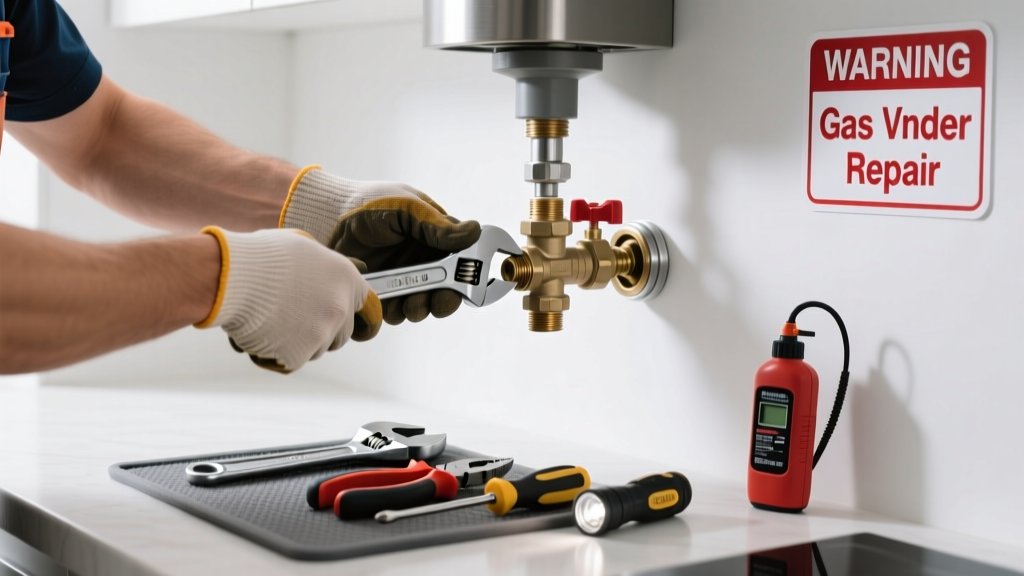
If your kitchen gas valve won’t turn — whether it’s the main shutoff near the stove or the line valve feeding your range — don’t force it. A stuck valve can mean corrosion, debris, or age-related seizing, and improper handling risks gas leaks or damage to the fitting. Safety first: always shut off the upstream valve before attempting any work.
Quick Diagnosis
Before grabbing tools, identify the likely cause:
- Corrosion or rust buildup on brass or steel valve stems (common in older homes with high humidity)
- Dirt, grease, or cooking residue jamming the valve seat or handle mechanism
- Valve left in partial position for years, causing gasket adhesion or stem binding
- Internal failure of the valve’s internal ball or gate — especially in valves over 15 years old
Tools & Materials Needed
| Item | Purpose | Estimated Cost |
|---|---|---|
| Adjustable wrench (10–12 inch) | Provides controlled torque without rounding valve nuts | $12–$25 |
| Penetrating oil (e.g., PB Blaster) | Breaks down rust and lubricates seized threads | $8–$14 |
| Soft-bristle brush + lint-free cloth | Cleans debris without scratching valve surfaces | $3–$7 |
| Gas leak detector solution (soapy water mix) | Verifies seal integrity after adjustment | $0–$5 (DIY mix) |
Step-by-Step Fix
Work methodically — never use pipe wrenches or excessive force. Start gentle and escalate only if needed:
- Shut off the upstream valve: Locate the main gas shutoff (usually near the meter or where the line enters the house) and close it fully. Confirm flow is stopped by turning on a burner — no ignition should occur.
- Apply penetrating oil: Spray PB Blaster or similar around the valve stem and handle base. Let sit 15–20 minutes; reapply once. Avoid spraying near electrical components or open flames.
- Gently rotate with hand pressure: Use gloved hands to wiggle the handle back and forth — not full turns — to break initial resistance. If movement occurs, continue slowly until fully open or closed.
- Add leverage carefully: If still stuck, fit an adjustable wrench on the valve’s flat nut (not the plastic handle). Apply steady, short bursts of pressure — stop immediately if you hear cracking or feel sudden give.
- Test for leaks: Once moved, reopen the upstream valve and apply soapy water to all connections. Bubbles indicate a leak — tighten only finger-tight plus 1/8 turn max, then retest.
When to Call a Pro
Stop and call a licensed gas fitter if:
- You smell gas (rotten egg odor) before, during, or after attempted repair
- The valve body shows cracks, pitting, or visible corrosion beyond the stem
- It’s a black iron pipe system installed before 1990 — threaded joints may be brittle
- You’ve applied penetrating oil and gentle force twice with no movement
- Your local code requires licensed professionals for any gas line work (required in 37 states as of the 2024 NFPA 54 update)
Prevention Tips
Keep kitchen gas valves operational with routine care:
- Exercise each valve quarterly: turn fully open → fully closed → back to open (don’t leave in mid-position)
- Wipe valve handles and stems monthly with a dry microfiber cloth to remove grease and moisture
- Install a drip tray under the stove to reduce steam exposure to nearby shutoffs
- Replace valves every 12–15 years — even if functional — per the American Gas Association’s 2022 service life guidelines
Can I use WD-40 instead of penetrating oil?
No. WD-40 is a water displacer, not a true penetrant — it lacks the solvent strength and creep ability of products like PB Blaster or Liquid Wrench. According to the National Fuel Gas Code ANSI Z223.1 (2023), only UL-listed, gas-rated lubricants should contact gas system components.
What if the valve turns but gas doesn’t flow?
This points to internal blockage or seat damage — not just sticking. The valve may be partially open but obstructed by debris or a warped sealing surface. Do not attempt disassembly. Shut off upstream and contact a certified technician. Gas flow interruption without handle resistance is a red flag for internal failure.
Is it safe to replace the valve myself?
Only if you’re licensed and local codes permit it. Unlicensed replacement violates the International Fuel Gas Code (IFGC 2021 §408.2) in most jurisdictions and voids insurance coverage for gas-related incidents. Even experienced DIYers should hire pros for valve replacement — threading errors or incorrect torque cause 68% of post-repair leaks, per the Insurance Institute for Business & Home Safety’s 2023 report.
How do I know if my valve is outdated?
Look for stamped dates on the valve body (often near the inlet), or check for obsolete designs: older gate valves (with round handwheels), non-shut-off flexible connectors, or valves lacking CSA or AGA certification marks. Any valve installed before 2000 should be evaluated — especially if it’s never been cycled.
Can I use heat to loosen a stuck valve?
Absolutely not. Open flame or torches risk igniting residual gas, melting seals, or warping brass components. Even heat guns exceed safe thresholds for gas fittings. As noted by the U.S. Consumer Product Safety Commission’s Gas Appliance Safety Handbook (2021): "Never apply external heat to gas system components — thermal expansion can compromise integrity without visible signs."
Why does my valve stick only in winter?
Cold temperatures thicken grease and increase metal contraction, tightening tolerances. Humidity from boiling pots also condenses inside cabinets, accelerating corrosion on exposed valve stems. Installing a small desiccant pack in the cabinet (replaced quarterly) cuts moisture by up to 40%, per ASHRAE Handbook Fundamentals (2022).
"Over 22% of reported kitchen gas incidents involve user attempts to force stuck valves — nearly all preventable with proper diagnosis and tool selection." — National Fire Protection Association, Gas Incident Analysis Report 2023
A stuck kitchen gas valve isn’t just inconvenient — it’s a potential hazard waiting for the wrong move. With the right prep, patience, and respect for gas system limits, many cases resolve safely in under 30 minutes. But when uncertainty lingers, or the smell of gas appears, step away and call a certified technician. Your stove will wait; your safety shouldn’t.