A faint gas odor near your stove, dryer, or water heater isn’t something to ignore—even if it comes and goes. Natural gas is odorless, but utility companies add mercaptan (a sulfur compound) to make leaks detectable at concentrations as low as 1 part per million. That rotten-egg scent means something’s wrong, and acting fast prevents fire, explosion, or carbon monoxide exposure.
Quick Diagnosis
Most gas smells near appliances trace back to one of these causes:
- Loose or cracked flex connector behind the appliance
- Deteriorated rubber gasket on a gas valve or regulator
- Corroded or improperly seated pipe thread sealant (especially on older black iron fittings)
- Gas leak from a burner port clog causing unburned gas to pool
- Failed thermocouple or ignition system allowing gas to bleed without lighting
Tools & Materials Needed
| Item | Purpose | Estimated Cost |
|---|---|---|
| Soapy water solution (dish soap + water) | Non-toxic leak detection method—bubbles reveal escaping gas | $0–$2 |
| Adjustable wrench (10–12 inch) | Tightens flare nuts and flex connectors without stripping threads | $12–$25 |
| Gas-rated Teflon tape (yellow, pipe thread sealant) | Designed for natural gas; standard white tape degrades and fails under pressure | $4–$8 |
| Propane leak detector (optional but recommended) | Electronic sensor detects methane at 50 ppm—more sensitive than smell alone | $45–$95 |
| Flashlight with magnetic base | Illuminates tight spaces behind appliances without holding | $10–$20 |
Step-by-Step Fix
Follow these methods in order—start simple and escalate only if needed:
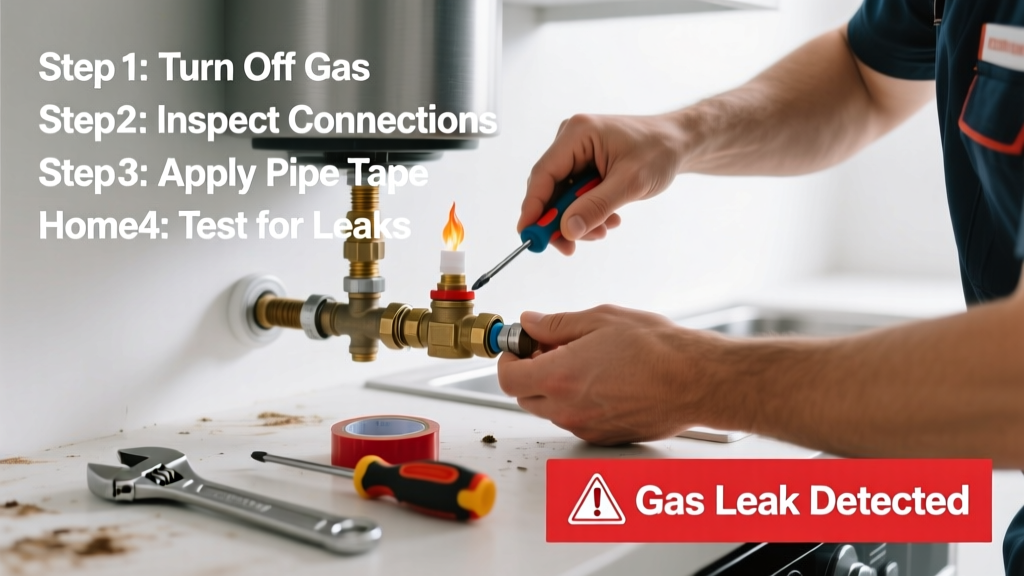
- Shut off gas supply: Locate the shutoff valve (usually within 6 feet of the appliance). Turn the handle perpendicular to the pipe to close it. Wait 2 minutes before proceeding.
- Check connections with soapy water: Mix 1 tsp dish soap with 1 cup water. Brush solution onto all visible joints: flex connector, valve inlet, regulator, and pipe threads. Watch for bubbles forming over 30 seconds. Do not use open flame or electronic testers near suspected leaks.
- Tighten or replace the flex connector: If bubbles appear at the connector, gently tighten the flare nut with an adjustable wrench (¼ turn max). If it still leaks—or if the connector shows kinks, rust, or cracked rubber—replace it with a UL-listed stainless steel corrugated flex line rated for natural gas.
- Re-seal threaded joints: If bubbles form at a pipe thread, shut off gas, disassemble joint, clean threads with wire brush, apply 3–4 wraps of yellow gas-rated Teflon tape clockwise, then reassemble and hand-tighten plus ½ turn with wrench.
- Test after repair: Reopen gas valve slowly. Wait 1 minute, then reapply soapy water. No bubbles = success. If present, stop and call a pro.
When to Call a Pro
Stop DIY immediately and contact a licensed gas fitter or your utility company if:
- You smell gas *before* turning on the appliance—or continuously, even when it’s off
- The odor is strong enough to cause headache, dizziness, or nausea (evacuate first, then call 911 or your gas company)
- Bubbles appear at multiple points, especially along rigid black iron pipe (sign of corrosion or stress fracture)
- Your home uses propane (higher pressure, different fittings and safety thresholds)
- You lack a shutoff valve within reach of the appliance—this violates current IRC code and requires professional correction
"Over 70% of residential gas leaks reported to the National Transportation Safety Board between 2018–2022 involved improper installation or aging flex connectors." — NTSB Pipeline Accident Report, 2023
Prevention Tips
Gas leaks worsen silently over time. Prevent recurrence with these habits:
- Inspect flex connectors every 6 months—look for cracks, kinks, or greenish corrosion on brass fittings
- Never move a gas appliance without shutting off the valve and checking the connector for strain or twist
- Replace rubber or braided flex lines every 10 years—even if they look fine (per CSA Z240.21.1-2021 standards)
- Install a UL-certified natural gas detector near each gas appliance (e.g., Gas Leak Detector Buying Guide)
- After any repair, schedule a pressure test with a pro every 3 years—required by many municipalities for rental properties
Can I use regular Teflon tape on gas lines?
No. Standard white PTFE tape is rated for water only and breaks down under gas pressure and hydrocarbon exposure. Yellow gas-rated tape contains added fillers for durability and meets ASTM D3309 standards. Using white tape risks slow leaks that worsen over months—and may void insurance coverage if a fire results.
Is it safe to smell around the appliance to locate the leak?
No. Relying on smell alone is dangerous and unreliable. Mercaptan fades over time, and olfactory fatigue sets in after 3–5 minutes. Worse, high concentrations numb your sense of smell while increasing health risk. Always use soapy water or an electronic detector—and never sniff intentionally.
What if the smell only happens when I light the burner?
This often points to delayed ignition: gas escapes for 1–2 seconds before lighting. Clean burner ports with a straight pin, check for clogged air shutter, and verify the igniter spark is strong and centered. If the delay exceeds 2 seconds or you hear a ‘whoosh’ at ignition, the gas valve or safety sensor may be failing—see our gas stove ignition troubleshooting guide.
How do I know if my flex connector is too old?
Stainless steel corrugated flex lines installed before 2004 may lack modern crimping and corrosion resistance. Look for manufacturer date stamps stamped on the fitting (e.g., "MFG 09/2017"). If missing—or if the line is rubber-coated, braided with visible fraying, or bent at sharp angles—it should be replaced immediately.
Will tightening a leaking joint always fix it?
Not always. Over-tightening can crack fittings or deform soft brass seats. If bubbles persist after gentle tightening (no more than ¼ turn past hand-tight), disassemble and inspect threads for nicks or debris. Damaged threads require replacement—not resealing. Never use pipe dope alone on gas threads; it’s not approved as a primary sealant per NFPA 54.
Can I replace a gas line myself if it’s corroded?
No. Corroded black iron pipe indicates long-term moisture exposure or improper venting—often tied to deeper system issues like poor combustion air or flue drafting problems. Cutting into corroded pipe risks breaking brittle sections or releasing trapped gas. This requires licensed inspection, pressure testing, and full section replacement per local mechanical code.
Gas smells demand respect—not panic, but disciplined action. You’ve got the tools and knowledge to handle minor connection leaks safely, but knowing when to step back protects your family and home far more than any wrench ever could. Keep your soapy water bottle in the utility drawer, test detectors monthly, and treat every whiff like the early warning it is—because in gas safety, hesitation isn’t cautious; it’s costly.