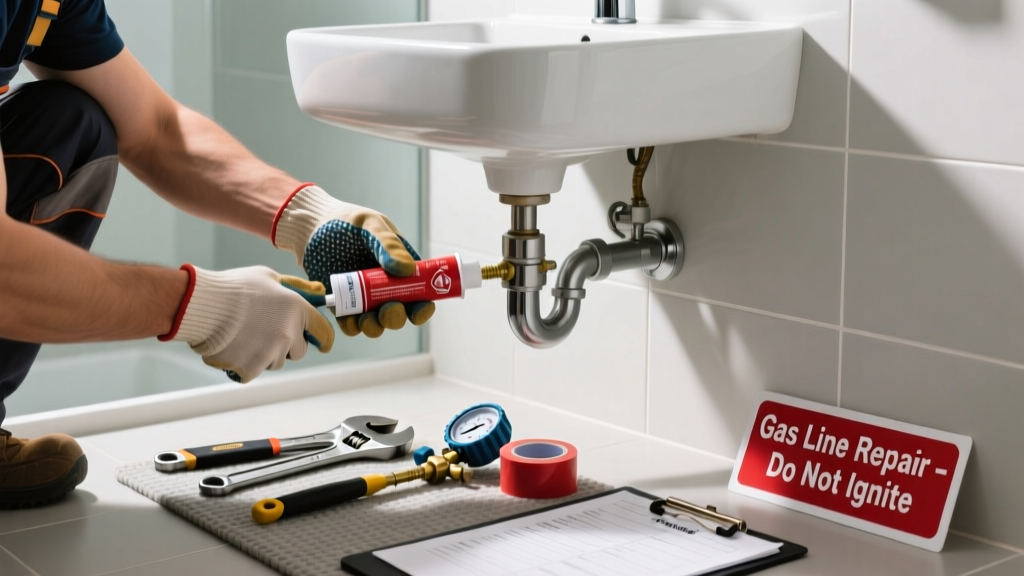
If you smell rotten eggs, hear hissing near your bathroom’s water heater or gas-powered vent fan, or see bubbling soap solution at a fitting—stop everything. A gas line leak in the bathroom is rare but dangerous: even small leaks can accumulate in enclosed spaces and ignite with a spark from a light switch or exhaust fan.
Quick Diagnosis
Gas lines in bathrooms are uncommon but possible—usually feeding tankless water heaters, gas-powered exhaust systems, or older radiant floor heating. Common causes include:
- Corrosion on brass or galvanized steel connectors near humid conditions
- Loose compression fittings on flexible CSST (corrugated stainless steel tubing)
- Cracked or improperly seated flare nuts on shut-off valves
- Damage from recent tile or vanity installation (e.g., drill bit nicking tubing)
- Aging rubber gaskets in older gas-rated flex connectors (banned after 2009 in most codes)
Tools & Materials Needed
| Item | Purpose | Estimated Cost |
|---|---|---|
| Soapy water solution (dish soap + water) | Non-destructive leak detection without igniting gas | $0.50 |
| Adjustable wrench (10-inch) | Tightening flare or compression fittings without rounding nuts | $12–$22 |
| Gas-rated Teflon tape (yellow, pipe thread sealant) | Seals tapered NPT threads on shut-off valves and unions | $3–$7 |
| CSST bonding clamp & 6 AWG copper wire | Required by NEC 2023 for grounding CSST to prevent arcing ignition | $8–$15 |
| Propane leak detector (combustible gas meter) | Quantifies ppm levels; confirms repair success beyond soap bubbles | $85–$220 |
Step-by-Step Fix
Never attempt repairs if gas concentration exceeds 10% LEL (Lower Explosive Limit) or if you feel lightheaded. If safe to proceed:
- Shut off gas at the main valve—located near your meter or gas appliance inlet—then open bathroom windows and turn off all electrical switches.
- Locate the leak using soapy water: apply liberally to joints, valves, and flex connectors; watch for sustained bubbles (not momentary ones).
- Tighten only once: Use an adjustable wrench to snug—not over-torque—a loose flare nut (¼-turn max). Over-tightening cracks brass or deforms CSST ferrules.
- Replace compromised parts: Swap out cracked flex connectors with UL-listed, gas-rated corrugated stainless steel (CSST) or black iron pipe sections. Never use PVC, PEX, or standard Teflon tape (white) on gas lines.
- Re-test rigorously: After reassembly, pressurize line (if permitted by local code), then reapply soapy water and monitor for 10 minutes. Confirm with a calibrated combustible gas meter reading <100 ppm.
When to Call a Pro
Stop and call a licensed gas fitter immediately if:
- The leak is at the main shutoff valve, meter connection, or buried supply line
- You detect gas odor but can’t locate the source—even after thorough soapy water testing
- The line uses outdated CSST without proper bonding (a known ignition risk per NFPA 54 2023)
- You’re unsure whether your local code permits DIY gas work (e.g., California and Massachusetts prohibit unlicensed gas line repairs entirely)
- The leak involves aluminum or plastic-coated tubing—these require specialized crimp tools and certification
Prevention Tips
Bathroom gas lines face unique challenges: humidity, cramped access, and infrequent inspection. Reduce risk with these proven habits:
- Inspect visible gas connections every 6 months using soapy water—not your nose—as early-stage leaks may be odorless (mercaptan fades over time)
- Install a hardwired combustible gas alarm (UL 1484 listed) within 6 inches of the ceiling near gas appliances; replace sensors every 5 years
- Use only gas-rated, dielectric union fittings where copper meets steel or CSST to prevent galvanic corrosion
- After any bathroom remodel, have a certified technician pressure-test the entire gas system at 3× operating pressure for 15 minutes
Can I use duct tape to temporarily seal a gas leak?
No—duct tape, electrical tape, or epoxy creates a false sense of security. These materials degrade under gas pressure and temperature fluctuations, and can trap gas behind the tape, increasing explosion risk. According to the National Fuel Gas Code (NFPA 54, 2023), temporary field repairs on gas lines are prohibited unless performed by licensed personnel using approved methods.
Is the rotten egg smell always present with a gas leak?
Not always. Mercaptan—the odorant added to natural gas—can fade due to soil absorption, filter media, or age. The U.S. EPA estimates that up to 12% of residential gas leaks go undetected by smell alone. That’s why visual bubble tests and electronic detectors are essential.
Why does my gas leak only happen when the bathroom fan runs?
This suggests negative pressure drawing gas from a loose or corroded joint. Exhaust fans create suction that pulls air—and leaking gas—from poorly sealed connections, especially near ceiling-mounted gas vents or attic-penetrating lines. Check for gaps around conduit entries and ensure all penetrations are fire-caulked and gas-tight.
Can I replace CSST myself if I follow YouTube tutorials?
No. CSST installation requires bonding to the home’s grounding electrode system with 6 AWG copper wire per NEC Article 250.104(B), and improper bonding has caused over 200 structure fires since 2000 (National Fire Protection Association, 2022 report). Only licensed professionals may install or modify CSST.
How long do gas line shut-off valves last in humid bathrooms?
Brass shut-off valves typically last 15–20 years in dry locations—but humidity cuts lifespan by 40% or more. Corrosion often starts inside the valve body, not at the handle. Replace valves every 12 years in bathrooms, and always use quarter-turn ball valves rated for gas service (ASTM A105 or ASTM B62).
What’s the safest way to ventilate while investigating?
Open exterior doors and windows—never operate bathroom fans, lights, or outlets. A single spark can ignite accumulated gas. The Insurance Institute for Business & Home Safety’s 2023 Gas Safety Field Guide states: 'If odor is strong, evacuate immediately and call 911 from outside.'
"Over 70% of gas-related home incidents involve improper DIY repairs or aging components installed before 2005." — NFPA Gas Incident Database, 2022 Annual Report
A gas line leak in the bathroom demands respect—not panic. Most issues stem from overlooked fittings or moisture damage, not catastrophic failure. By combining methodical diagnosis, code-compliant materials, and knowing your limits, you protect both your home and your family. If in doubt, shut it off and call a licensed gas fitter: their $150–$300 service call is far less than the cost of fire damage—or worse. For related safety upgrades, see our guides on installing a gas leak detector and replacing bathroom shut-off valves.