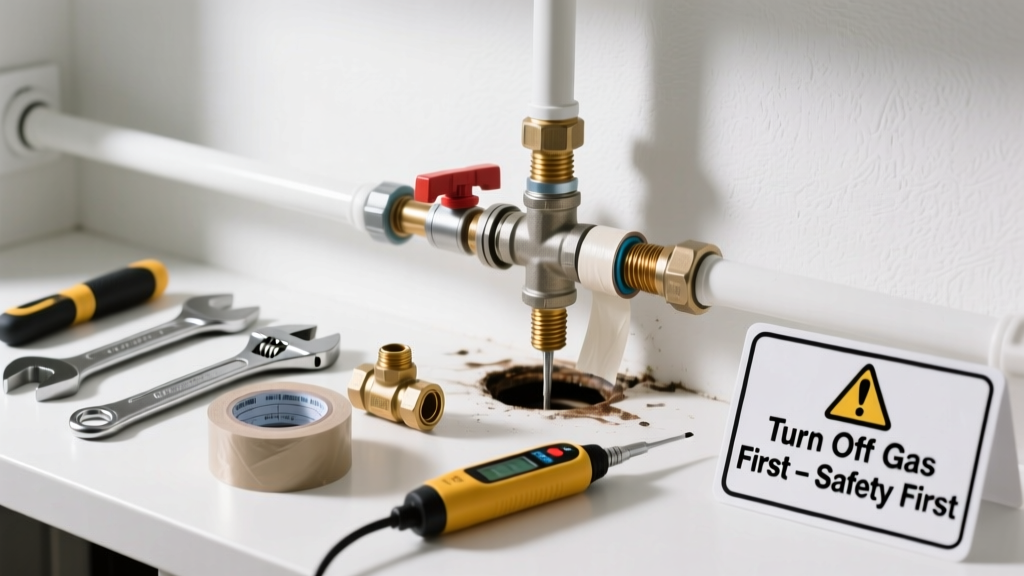
If you smell rotten eggs, hear a hissing sound near a gas appliance, or see bubbling in soapy water applied to a pipe joint, you may have a gas line leak. This isn’t just an inconvenience—it’s a potential fire, explosion, or carbon monoxide hazard. Act fast, but never rush into repairs without understanding the risks.
Quick Diagnosis
Gas line leaks most often occur at these points:
- Fittings and threaded connections (especially where pipes meet appliances)
- Corroded or damaged flexible gas connectors (common on older ranges and dryers)
- Cracked or punctured black iron pipe (often from shifting foundations or accidental impact)
- Failed rubber or plastic tubing used in DIY conversions (not code-compliant)
- Loose compression nuts on CSST (Corrugated Stainless Steel Tubing) systems
Tools & Materials Needed
| Item | Purpose | Estimated Cost |
|---|---|---|
| Soapy water solution (dish soap + water) | Non-invasive leak detection—bubbles reveal escaping gas | $0–$2 |
| Adjustable wrench or pipe wrench | Tighten fittings without stripping threads; essential for black iron pipe work | $12–$25 |
| Teflon tape (gas-rated, yellow) | Seals threaded joints; standard white tape is unsafe for gas lines | $3–$6 |
| Replacement flexible gas connector (CSST or stainless braided) | Code-compliant replacement for corroded or cracked connectors | $18–$45 |
| Gas leak detector (optional but recommended) | Electronic sensor for trace methane—more reliable than smell alone | $45–$120 |
Step-by-Step Fix
Never attempt permanent repairs on gas lines unless you’re licensed and trained. These are safe, temporary measures only—followed by professional verification:
- Shut off the gas supply: Locate the main shutoff valve (usually near the meter) and turn it clockwise until fully closed. Confirm flow stops by checking pilot lights or using your soapy water test.
- Locate the leak: Apply soapy water to all joints, valves, and connectors. Bubbling indicates the leak source. Do not use flames or electrical switches during testing.
- Tighten threaded fittings: With an adjustable wrench, gently snug (not over-torque) the fitting. If it’s a new installation, wrap 3–4 layers of yellow Teflon tape clockwise onto male threads before reassembling.
- Replace damaged flex connectors: Turn off gas, disconnect old connector, verify new connector meets local code (e.g., UL-listed, 3/4" length max for ranges), and hand-tighten plus 1/4 turn with a wrench.
- Re-test: Reapply soapy water and check for bubbles. If any remain, stop and call a pro immediately.
When to Call a Pro
Gas line work falls under strict local plumbing and fuel gas codes. Call a licensed gas fitter if:
- The leak is on a rigid black iron pipe with visible corrosion, cracks, or pitting
- You suspect damage to CSST that requires bonding or grounding verification
- The leak occurs within a wall, floor, or ceiling cavity
- Your home uses propane and the regulator or tank connection is involved
- You’ve tightened a fitting twice and it still leaks—or the pipe spins instead of tightening
"Over 70% of residential gas-related fires involve improper DIY repairs or outdated connectors," according to the National Fire Protection Association's Fire Loss Statistics 2023.
Prevention Tips
Extend the life and safety of your gas system with these habits:
- Inspect flexible connectors annually for kinks, cracks, or rust—replace every 10 years regardless of appearance
- Ensure all gas appliances are level and properly vented to prevent strain on connections
- Install a natural gas detector near furnaces, water heaters, and stoves (UL 1484 certified)
- Keep records of all gas line work—including permits, inspection dates, and technician licenses
- Avoid using pipe dope on gas threads unless explicitly rated for fuel gas; many contain solvents that degrade seals
Can I use regular Teflon tape on gas lines?
No. Standard white PTFE tape is too thin and can shred, causing debris in valves or regulators. Only yellow gas-rated tape (meeting ASTM D3309) provides proper density and thread fill for fuel gas applications.
Is smelling gas always a sign of a leak?
Not always—but never ignore it. Utility companies add mercaptan (a sulfur compound) to natural gas for odor. However, some people lose sensitivity with age or illness, and propane smells slightly different. A gas detector adds critical redundancy.
What should I do if I smell gas but find no visible leak?
Evacuate immediately. Don’t flip switches, use phones, or create sparks. From a safe distance (outside or neighbor’s house), call 911 and your gas utility. They’ll send a crew with infrared cameras and combustible gas analyzers.
Can I repair a leak on CSST myself?
No. CSST requires specialized clamping tools, proper grounding per NFPA 54, and bonding verification. Improper handling has caused multiple documented ignition events. Always hire a CSST-certified technician.
How long does a gas line repair take?
A simple connector replacement takes 20–40 minutes for a pro. Repairs involving pipe replacement, wall access, or permit inspections can take 2–6 hours—and require a post-repair pressure test (typically 3–24 hours at 10 psi minimum).
Do I need a permit for gas line repairs?
Yes, in nearly all U.S. jurisdictions. Even connector replacements often require a permit and inspection. Unpermitted work voids insurance coverage and can delay home sales. Check with your local building department before starting.
Gas line integrity isn’t something to gamble with—your safety, your family’s health, and your home’s structural insurance all depend on correct, code-compliant work. When in doubt, shut it off, step away, and call a licensed professional. For related concerns, see our guides on water heater leak troubleshooting and furnace won’t ignite. Regular maintenance beats emergency response every time.