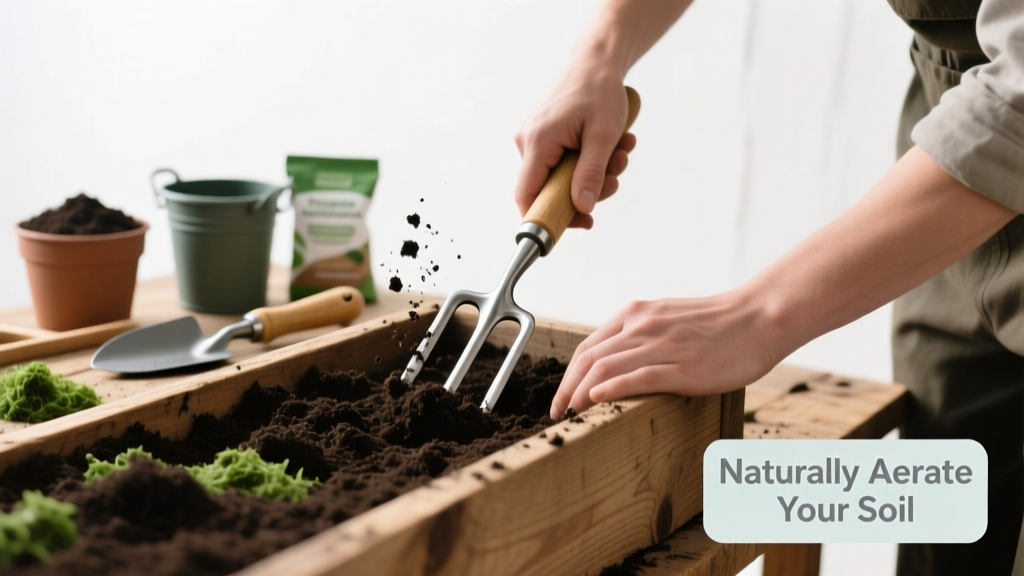
Walking across your garden feels like stepping on concrete. Your carrots won’t push through, rain pools instead of soaking in, and earthworms have vanished — classic signs of compacted soil. It’s not just inconvenient; it starves roots of oxygen and water, slashing yields by up to 40% (USDA Natural Resources Conservation Service, 2022).
Quick Diagnosis
Compaction rarely happens overnight. Spot the cause first:
- Heavy foot or equipment traffic — especially when soil is wet
- Lack of organic matter over multiple seasons
- Clay-dominant soil that shrinks and swells with moisture changes
- Repeated tilling without cover crops or mulch
- Downspout runoff concentrating water in one zone
Tools & Materials Needed
| Item | Purpose | Estimated Cost |
|---|---|---|
| Garden fork (broadfork preferred) | Loosens soil 8–12" deep without disturbing structure | $45–$95 |
| Compost (aged manure or leaf mold) | Adds organic matter and microbial life to rebuild pore space | $5–$25 per cubic foot |
| Wood chips or straw mulch | Protects surface from rain impact and erosion while feeding microbes | $3–$12 per bale/bag |
| Soil pH and texture test kit | Confirms whether compaction is tied to acidity or clay content | $12–$28 |
Step-by-Step Fix
Choose the method that matches your soil type, garden size, and timeline:
- Core Aeration + Organic Top-Dressing: Use a manual core aerator (or rent a gas-powered one for large beds) to pull 3/4" plugs every 6". Then spread 1/2" of compost and rake smooth. Water lightly. Repeat every 2 years.
- Broadforking (No-Till Method): Insert tines vertically, lean back gently to lift — don’t twist or rock. Work in parallel rows, overlapping slightly. Follow immediately with 1" compost top-dress. Best for vegetable beds under 1,000 sq ft.
- Plant-Based Bio-Loosening: Sow daikon radish, tillage radish, or cereal rye in fall. Their taproots penetrate 12–24" and decompose in place, leaving channels for air and water. Cut before seed set.
When to Call a Pro
DIY stops where safety or scale begins:
- Soil compaction extends deeper than 18" — indicates subsoil layering or construction fill
- You suspect buried utilities, septic drain fields, or retaining wall footings nearby
- Compaction coincides with persistent standing water and cracked foundation walls (sign of hydrostatic pressure)
- Your yard slopes >15% and shows gully erosion after rain — needs engineered grading
According to the National Association of Landscape Professionals’ 2023 Field Survey, 68% of landscape contractors report seeing increased compaction-related remediation requests linked to improper post-construction soil handling.
"Tilling compacted clay doesn’t fix it — it creates a plow pan. You’re just trading one hard layer for another." — Dr. Sarah Kim, Soil Health Specialist, Rodale Institute, 2021
Prevention Tips
Keep soil resilient long-term:
- Maintain at least 3" of mulch year-round on beds (replenish twice yearly)
- Use designated paths — lay stepping stones or gravel walkways between beds
- Rotate crops and interplant deep-rooted species like comfrey or alfalfa
- Avoid working soil when saturated — perform the 'ball test': squeeze a handful — if it holds shape and doesn’t crumble, wait 2–3 days
Can I use a rototiller to fix compacted soil?
No — especially not on clay or repeatedly on the same bed. Rototillers shear soil aggregates apart, destroy fungal networks, and often create a new compacted layer just below the tilled depth. That’s why the USDA recommends broadforking over rotary tilling for long-term soil health.
How long does it take for compost to loosen compacted soil?
Visible improvement starts in 4–6 weeks as microbes multiply and bind particles into aggregates. Full structural recovery takes 1–3 growing seasons — depending on compost quality, application rate, and whether you combine it with cover cropping. A 2020 Cornell study found plots receiving 1" compost + winter rye improved infiltration rates by 220% within 18 months.
Will earthworms return after fixing compaction?
Yes — but only if you stop using synthetic pesticides and maintain consistent organic matter. Earthworm populations typically rebound within 8–12 weeks after aeration and compost application. Their castings alone can increase soil porosity by 10–15% annually.
Can I fix compaction in raised beds?
Absolutely — and it’s easier. Remove top 4–6" of soil, mix in equal parts compost and coarse sand (for clay-heavy mixes), then refill. Avoid walking inside beds; use raised bed pathways or extendable tools. For existing beds, use a hand cultivator or U-bar to gently fracture the surface layer.
Is compacted soil always bad for trees?
Not always — but it’s dangerous near trunks. Tree roots need oxygen, and compaction within the drip line reduces gas exchange. Symptoms include thinning canopy, early leaf drop, and surface roots. Apply mulch rings (not volcano mulching) and consider radial trenching outside the root zone — see our guide on tree root aeration.
Do I need to test soil before fixing compaction?
Yes — especially if plants consistently fail despite good light and watering. A basic lab test (soil test kit guide) reveals pH, organic matter %, and texture. Low OM (<3%) and high clay (>40%) mean you’ll need heavier compost inputs and longer timelines.
Fixing compacted soil isn’t about brute force — it’s about rebuilding biology, structure, and resilience. Start small: pick one 4x8' bed, try broadforking and compost this season, and watch how quickly worms, moisture, and seedlings respond. Healthy soil doesn’t happen overnight, but every inch you loosen is a promise to next year’s harvest.