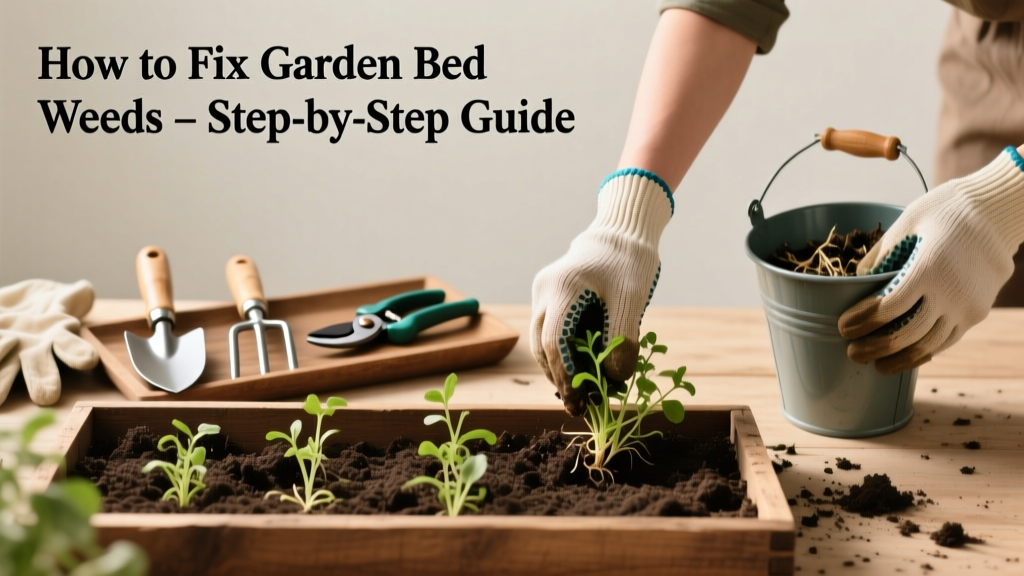
Weeds in garden beds aren’t just unsightly—they choke out perennials, steal nutrients, and signal deeper soil or mulch issues. Left unchecked, a few dandelions can become a full-blown invasion in under three weeks. The good news? Most cases are fixable in a single weekend with the right approach.
Quick Diagnosis
Before grabbing tools, identify the root cause. Most persistent weed problems stem from one or more of these:
- Thin or degraded mulch layer (less than 2 inches)
- Cracks in landscape fabric allowing roots through
- Wind-blown or bird-dropped seeds from nearby untreated areas
- Overwatering that creates ideal germination conditions for annuals like crabgrass and chickweed
- Soil disturbance during planting that exposed dormant weed seeds
Tools & Materials Needed
| Item | Purpose | Estimated Cost |
|---|---|---|
| Garden fork or Hori-Hori knife | Removes taproots (like dandelions) without breaking them | $12–$28 |
| 3-inch thick organic mulch (shredded bark or cocoa hulls) | Blocks light and suppresses new seedlings | $3–$7 per bag |
| Landscape fabric (woven, UV-stabilized) | Barrier under mulch for long-term suppression | $0.25–$0.45 per sq ft |
| Vinegar-based herbicide (20% acetic acid) | Kills surface growth on contact; safe near established shrubs | $14–$22 per quart |
| Gloves + knee pad | Protects skin from irritants and joint strain during hand-weeding | $8–$16 |
Step-by-Step Fix
Use this sequence based on infestation level:
- Small patch (<10 sq ft): Hand-pull after rain or deep watering—grasp at soil line and wiggle gently to extract entire root. Discard in yard-waste bin (not compost).
- Moderate infestation (10–50 sq ft): Cut weeds at soil level with sharp shears, then apply vinegar herbicide directly to cut stems using a spray bottle with adjustable nozzle. Wait 48 hours, then remove dead material.
- Heavy or perennial-heavy beds: Smother with overlapping layers of cardboard (no tape or glue), 3 inches of mulch, and wait 4–6 weeks before replanting. This kills bindweed and nutsedge without chemicals.
- Post-cleanup refresh: Reinstall landscape fabric only where bare soil remains—cut X-slits for plants, avoid overlapping seams, and anchor edges with U-nails.
When to Call a Pro
DIY stops being practical—or safe—when:
- You spot invasive species like Japanese knotweed or purple loosestrife (regulated in 32 states; removal requires permits per USDA APHIS 2022 guidelines)
- Weeds return within 7 days of treatment, indicating underground rhizome networks or contaminated topsoil
- The bed borders a septic drain field or municipal right-of-way—chemical use may violate local codes
- You’re managing over 200 sq ft of weedy beds with irrigation lines or hardscape beneath
Prevention Tips
Consistent prevention cuts future weeding time by up to 70%, according to Cornell Cooperative Extension’s 2023 Home Gardening Survey. Start here:
- Refresh mulch to 3 inches every spring—and rake lightly before topping off to disrupt seedlings
- Install drip irrigation instead of overhead sprinklers to keep surface soil dry and less hospitable to weeds
- Plant groundcovers like creeping thyme or ajuga between perennials to crowd out invaders
- Inspect new nursery stock for hitchhiking weed seedlings—especially in root balls of hostas or ornamental grasses
Can I use bleach on garden bed weeds?
No. Bleach (sodium hypochlorite) kills soil microbes, raises pH to toxic levels, and persists for months—damaging future plantings and leaching into groundwater. The U.S. EPA explicitly warns against using household bleach as a herbicide (EPA Pesticide Registration Notice 2021-1).
Will boiling water kill weeds permanently?
It kills above-ground tissue instantly—but won’t touch deep roots of perennials like Canada thistle or horsetail. Repeated applications can compact soil and harm beneficial nematodes. Reserve it for isolated cracks in pathways, not planted beds.
Is pulling weeds after rain really better?
Yes—moist soil reduces root breakage by 60% compared to dry conditions, according to University of California Agriculture & Natural Resources trials (2022). Wait until top 2 inches are damp but not muddy for clean extractions.
Do landscape fabrics actually work long-term?
Woven, UV-stabilized fabric lasts 5–7 years and blocks 92% of light-dependent germination—but only if installed correctly.
"The biggest failure point isn't the fabric—it's gaps at edges or holes cut too large around plants. One ½-inch gap lets in 400+ annual weed seedlings per season." — Dr. Linda Chalker-Scott, Washington State University Extension, 2023
Can mulch attract termites or fungus?
Wood-based mulches *can* support subterranean termites if piled against home foundations—but not in open garden beds. Fungus (like artillery fungus) appears only in overly wet, poorly aerated hardwood mulch. Use pine bark or shredded cedar, keep mulch 6 inches from stems, and turn it once per season.
How soon can I replant after vinegar treatment?
Vinegar (acetic acid) breaks down in soil within 3–5 days and doesn’t persist like glyphosate. You can safely replant annuals or perennials after 72 hours—just rinse treated soil surface with water first to neutralize residual acidity.
Healthy garden beds earn back your time—not just in fewer weeds, but in stronger blooms and calmer weekends. A 3-inch mulch layer applied each spring, paired with early-season hand-weeding, keeps most beds under control with less than two hours of maintenance per month. For stubborn patches, revisit the smother method—it’s slow, but it works while you’re away on vacation. And remember: the best tool in your shed isn’t steel or spray—it’s consistency.