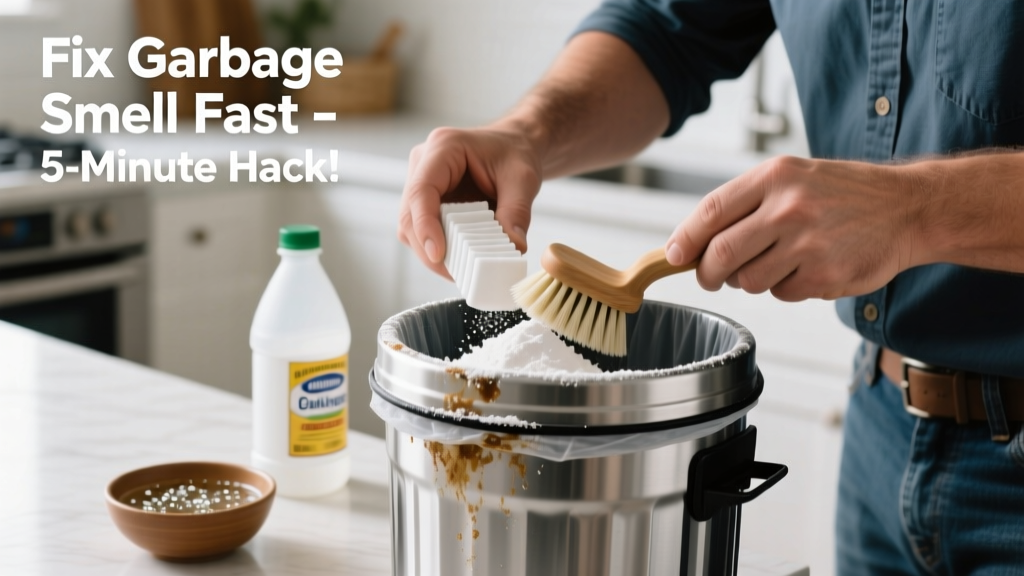
That sour, sweet-rotten whiff clinging to your kitchen cabinets? It’s not just unpleasant—it’s a sign something’s wrong with your waste system, drain, or disposal. Ignoring it invites bacteria, fruit flies, and potentially costly plumbing damage. Let’s track down and eliminate the source—not cover it up.
Quick Diagnosis
Before grabbing supplies, rule out these five most common culprits:
- Rotten food trapped under or inside the garbage disposal
- Decomposing debris in the P-trap or drainpipe
- Mold or mildew buildup in the rubber splash guard or disposal flange
- A cracked or loose garbage disposal mounting ring allowing leaks
- Sewer gas entering through a dry or faulty P-trap or vent line
Tools & Materials Needed
| Item | Purpose | Estimated Cost |
|---|---|---|
| Vinegar (white, 5% acidity) | Dissolves organic gunk and neutralizes odors without corroding pipes | $2–$4 |
| Baking soda | Acts as a mild abrasive and deodorizer when combined with vinegar | $1–$3 |
| Plumber’s wrench or basin wrench | Tightens disposal mounting assembly or removes unit if leaking | $12–$25 |
| Flashlight + mirror on stick | Inspects dark, tight spaces under sink and inside disposal chamber | $8–$15 |
| Zip-it drain cleaning tool | Removes hair, grease, and biofilm from trap and tailpiece | $3–$6 |
Step-by-Step Fix
Try these methods in order—most issues resolve with the first two:
- Clean the disposal chamber: Turn off power at the breaker. Remove the rubber splash guard. Use a stiff bottle brush dipped in vinegar to scrub the underside of the flange and inner walls. Drop ½ cup baking soda followed by ½ cup white vinegar into the drain; let fizz for 10 minutes, then flush with boiling water (not if PVC pipes are present—use hot tap water instead).
- Clear the P-trap: Place a bucket beneath the U-shaped pipe under the sink. Loosen slip nuts with a wrench, remove the trap, and empty contents into the toilet. Scrub interior with a bottle brush and vinegar solution. Reinstall tightly—hand-tight plus ¼ turn with wrench.
- Sanitize the drain line: Pour 1 cup diluted bleach (1:10 with water) down the drain only if pipes are metal and you’ve confirmed no ammonia-based cleaners were recently used. Wait 15 minutes, then flush with cold water. Never mix bleach with vinegar or ammonia.
- Check for leaks: Run water while watching the disposal mounting ring and discharge pipe. A drip behind the unit means the mounting gasket is compromised—replace it or the entire disposal if over 8 years old.
When to Call a Pro
DIY stops where safety and code compliance begin. Call a licensed plumber if:
- You detect sewer gas (rotten egg smell) near floor drains or toilets—not just the sink—and other fixtures are affected
- The P-trap re-fills with standing water but odor persists after cleaning, suggesting a blocked vent stack or collapsed drain line
- You suspect a cracked sewer pipe under the slab—indicated by persistent odor plus wet spots or mold on basement walls
- Your home has a septic system and the smell coincides with sluggish drains or gurgling sounds
According to the Insurance Institute for Business & Home Safety's 2023 report, 68% of homeowners who delay addressing persistent drain odors experience a major clog or leak within 90 days.
Prevention Tips
Odor prevention is simpler—and cheaper—than repeated fixes:
- Rinse the disposal with cold water for 15 seconds after every use (cold solidifies grease so blades can chop it)
- Run ice cubes + citrus peels weekly to sharpen blades and freshen the chamber
- Wipe the rubber splash guard weekly with vinegar-dampened cloth
- Keep sink strainers clean daily—never let coffee grounds or fibrous scraps (celery, onion skins) go down
- Ensure floor drains in basements or utility rooms have water in their traps (pour ½ cup water monthly)
Can I use bleach on this?
No—unless you’re certain your pipes are cast iron or copper and haven’t used vinegar or ammonia in the last 72 hours. Bleach reacts violently with those substances, releasing toxic chlorine gas. For routine maintenance, stick with vinegar and baking soda. If you must disinfect, use hydrogen peroxide (3%) instead—it breaks down into water and oxygen.
Why does the smell come and go?
Intermittent odor usually points to a dry P-trap (water evaporates in infrequently used sinks), a partial blockage that releases gases under pressure changes, or seasonal sewer vent issues. Check all nearby drains—including island sinks and dishwasher air gaps—for dry traps. The U.S. EPA estimates that 14% of household water usage is from leaks, many of which start as minor evaporation in unused traps.
Will a garbage disposal cleaner tablet work?
Most commercial tablets contain citric acid and sodium carbonate—they help *temporarily* deodorize but don’t remove biofilm or trapped debris. They’re fine for light maintenance, but won’t fix root causes like a failing gasket or clogged trap. Think of them like mouthwash: useful between deep cleanings, not a substitute for brushing.
Is the smell coming from my dishwasher?
Yes—especially if odor peaks during or right after cycles. Check the filter (usually at the bottom of the tub), the drain hose loop (must be secured at least 18” above the floor to prevent backflow), and the connection to the disposal or air gap. A kinked or improperly sloped hose traps food slurry and breeds bacteria.
What if the smell is strongest near the cabinet base?
This often signals a slow leak from the disposal discharge pipe or P-trap that’s soaking into particleboard or subflooring. Pull out the cabinet, inspect with flashlight and sniff test. If wood feels spongy or smells musty, cut out damaged sections and replace with marine-grade plywood. Then seal seams with silicone rated for wet areas—kitchen cabinet repair may be needed before reinstalling.
Can a clogged garbage disposal cause sewer gas?
Not directly—but a severely clogged disposal can create backpressure that forces gases past a compromised P-trap seal or forces air through a dry trap elsewhere. That’s why persistent odor across multiple fixtures warrants checking your main vent stack or septic tank’s baffles—septic system maintenance could be overdue.
Garbage smells rarely vanish on their own—and they almost never mean ‘just throw out the trash.’ Most originate in places you can’t see but can fix with basic tools and 20 focused minutes. Tackle the source, not the symptom, and your kitchen will stay fresh without air fresheners, candles, or expensive enzyme sprays. And if you’ve tried everything and still catch that telltale whiff? It’s not failure—it’s time to bring in someone who carries a sewer camera and knows what a properly pitched vent line looks like.