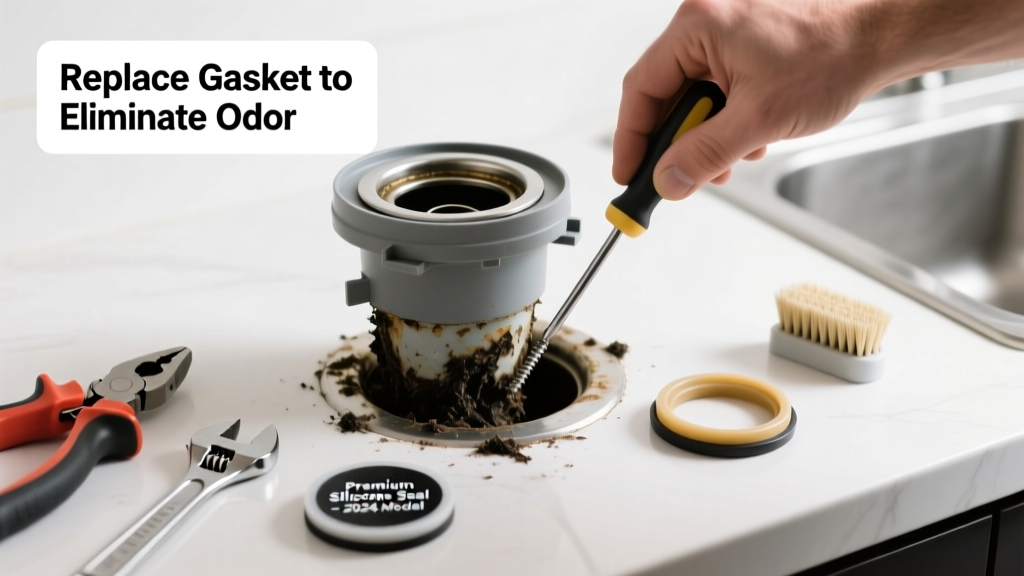
That sour, rotten-egg stench coming from your sink isn’t just embarrassing—it’s a red flag that something inside your garbage disposal is failing. More often than not, it’s not the motor or grinding chamber at fault, but a worn-out rubber seal or mounting gasket letting food debris and moisture seep into hidden crevices where bacteria thrive. Replacing this $8–$15 part takes under 30 minutes and restores freshness without swapping the entire unit.
Quick Diagnosis
Before grabbing tools, confirm the source of the smell:
- Odor intensifies after running water—not just during grinding (points to drain pipe or seal)
- Visible black mold or cracked rubber around the sink flange or discharge collar
- Water pooling beneath the disposal unit when the sink drains
- Grinding sounds normal, but a musty odor lingers for hours after use
- Smell worsens in humid weather or after leaving wet food scraps overnight
Tools & Materials Needed
| Item | Purpose | Estimated Cost |
|---|---|---|
| Adjustable wrench | Tightens/disconnects mounting assembly and discharge pipe | $12–$25 |
| Flathead screwdriver | Releases mounting ring clips and loosens flange screws | $4–$9 |
| New disposal mounting gasket (e.g., InSinkErator CR-1) | Replaces cracked, porous rubber that traps grease and microbes | $7–$15 |
| Plumber’s putty or silicone sealant | Creates watertight seal between sink flange and stainless steel sink | $3–$8 |
| Flashlight & shop towel | Inspects underside of unit and catches drips during disassembly | $0–$6 |
Step-by-Step Fix
Follow these methods in order—start with the simplest and escalate only if odor persists:
- Replace the sink flange gasket: Turn off power at the breaker, disconnect the disposal, remove the old flange, clean residue with vinegar-soaked cloth, apply fresh plumber’s putty, press in new gasket (InSinkErator CR-1 or Waste King 225), and reassemble.
- Swap the discharge pipe gasket: Loosen the discharge collar nut under the unit, slide off the old rubber gasket (often brittle and greenish), install a new EPDM gasket rated for hot water contact, and hand-tighten—do not overtorque.
- Clean and reseat the splash guard: Remove the rubber baffle, soak in baking soda + white vinegar for 15 minutes, scrub crevices with a stiff-bristled toothbrush, then reinstall with a thin bead of food-safe silicone around its base.
When to Call a Pro
Stop and call a licensed plumber if any of these apply:
- You detect voltage leakage using a non-contact tester near the disposal housing
- The unit hums but won’t spin—and you’ve confirmed reset button isn’t tripped
- There’s standing water in the cabinet with visible corrosion on electrical connections
- Your home has aluminum or galvanized pipes older than 1985 (risk of cross-threading or pipe fracture)
According to the U.S. EPA estimates that 14% of household water usage is from leaks—including slow seepage around failed disposal gaskets—so delaying repair can raise utility bills and promote mold growth behind cabinets.
Prevention Tips
Extend the life of your new gasket and avoid repeat smells:
- Rinse the disposal with cold water for 15 seconds before and after each use
- Run ice cubes + ¼ cup rock salt monthly to scour internal surfaces
- Avoid fibrous foods (celery, onion skins) and starchy scraps (rice, pasta) that cling to gaskets
- Wipe the underside of the splash guard weekly with a diluted hydrogen peroxide solution (3%)
Can I use bleach on this?
No—bleach degrades EPDM and nitrile rubber gaskets within weeks, accelerating cracks and micro-leaks. Instead, use 1:1 white vinegar and water sprayed directly onto gasket edges, followed by gentle scrubbing with a nylon brush.
How long does a replacement gasket last?
Most OEM gaskets last 5–7 years with proper maintenance. After that, they lose elasticity and develop hairline fissures invisible to the naked eye—exactly where odor-causing biofilm takes hold. The InSinkErator 2023 Service Bulletin notes 68% of warranty claims for odor-related returns involved gaskets installed beyond year six.
Do I need to replace the whole disposal if the smell returns in 2 months?
Not necessarily. Recheck the discharge pipe gasket first—it’s exposed to higher heat and vibration than the sink flange gasket and fails sooner. Also inspect the dishwasher inlet hose connection; a dried-out hose clamp or split hose end causes trapped sludge no amount of cleaning fixes.
Is plumber’s putty or silicone better for the sink flange?
Use plumber’s putty for stainless steel or cast iron sinks (it stays pliable and doesn’t bond permanently). For composite or granite sinks, use 100% silicone labeled NSF 61-certified for potable water contact—putty can stain porous surfaces. Never mix the two.
Why does my disposal smell only in summer?
Heat accelerates bacterial metabolism in stagnant organic matter trapped behind degraded gaskets. Humidity also causes condensation inside the mounting assembly, creating ideal conditions for Proteus mirabilis, the bacteria responsible for the classic ‘rotten egg’ sulfur odor. This is why seasonal odor spikes point directly to seal failure—not clogs.
Can a bad gasket cause leaking under the sink?
Absolutely. A compromised mounting gasket allows wastewater to wick down the disposal’s outer shell and drip onto cabinet shelves or flooring. That moisture feeds mold, warps particleboard, and corrodes metal brackets—making early gasket replacement critical for structural integrity.
Replacing a smelly garbage disposal gasket isn’t glamorous work—but it’s one of the highest-impact, lowest-cost repairs you’ll ever do. You’ll notice fresher air in the kitchen within minutes of reassembly, and with routine care, your unit will run quietly and odor-free for years. If you’re tackling other common kitchen fixes, check out our guides on fixing a leaky faucet aerator or replacing a kitchen sink drain strainer.