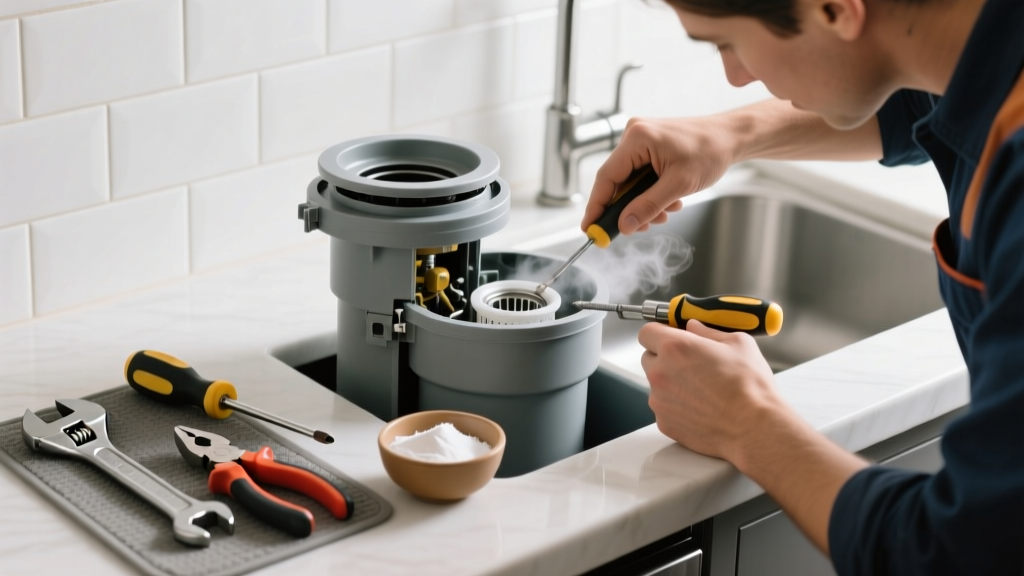
That sour, rotten-egg stench wafting from your sink isn’t just annoying—it’s a red flag that food debris is rotting in hidden crevices or the drain pipe. Most foul smells come from organic buildup, not a broken unit, and 83% of disposal odor issues resolve with targeted cleaning—not replacement (National Association of Home Builders, 2022). You don’t need a plumber yet—just the right method and 15 minutes.
Quick Diagnosis
Before you grab supplies, rule out these five most common causes:
- Decaying food trapped under the rubber splash guard or in the grinding chamber
- Film buildup inside the drain pipe (especially in P-trap or horizontal sections)
- Stagnant water pooling in the P-trap due to infrequent use
- Mold or mildew growing on damp, dark surfaces beneath the unit
- A clogged or slow-draining waste line backing up gases
Tools & Materials Needed
| Item | Purpose | Estimated Cost |
|---|---|---|
| Ice cubes + coarse salt (or baking soda) | Scours grinding chamber walls and dislodges biofilm | $0–$3 |
| White vinegar (distilled, 5% acidity) | Dissolves mineral deposits and neutralizes odors | $2–$4 |
| Lemon or orange peels (fresh, not dried) | Natural deodorizer and mild acid cleaner | $0.50–$1.50 |
| Stiff bottle brush or old toothbrush | Cleans around splash guard and drain flange | $1–$5 |
| Flashlight + mirror | Inspects hard-to-see areas under the unit and in pipes | $5–$12 |
Step-by-Step Fix
Try these methods in order—start simple, escalate only if needed:
- Ice-and-salt scrub: Drop 1 cup of ice cubes and ½ cup coarse kosher salt into the disposal. Run cold water and turn on the unit for 30 seconds. The ice knocks loose gunk; salt acts as abrasive and antimicrobial.
- Vinegar-and-baking-soda flush: Pour ½ cup baking soda down the drain, wait 5 minutes, then add 1 cup white vinegar. Let it fizz for 10 minutes, then flush with boiling water for 60 seconds (not boiling if PVC pipes—use very hot tap water instead).
- Citrus peel refresh: Feed 3–4 fresh citrus peels (no seeds or pith) into the running disposal with cold water. Run 20 seconds after feeding stops. Citric acid cuts grease; oils leave a clean scent.
- Splash guard deep-clean: Turn off power at the circuit breaker. Peel back the rubber splash guard and scrub its underside and the flange rim with vinegar-soaked cloth and stiff brush. Rinse thoroughly before reseating.
When to Call a Pro
Stop DIY if you notice any of these signs—these indicate deeper plumbing or electrical issues:
- Smell persists after three full cleaning cycles over 48 hours
- Disposal hums but won’t spin (motor may be seized or jammed)
- Water backs up into the second sink bowl or floor drain
- You detect sewage-like odor (hydrogen sulfide), especially near the wall or cabinet base—this may mean a vent stack blockage or sewer line issue
- Visible rust or corrosion on the unit’s mounting assembly or discharge pipe
According to the U.S. EPA, 14% of household water usage is lost to leaks and inefficient fixtures—but odor-causing clogs often precede visible leaks by weeks. Catching them early saves repair costs and prevents mold growth in cabinetry.
Prevention Tips
Odor prevention is simpler—and cheaper—than repeated cleaning:
- Run cold water for 15 seconds before and 30 seconds after each use to flush debris fully through the trap
- Avoid putting fibrous foods (celery, onion skins), grease, coffee grounds, or starchy scraps (rice, pasta) down the disposal
- Once weekly, run the disposal with citrus peels and ice—even if you haven’t used it—to keep blades sharp and chambers dry
- Wipe the splash guard weekly with diluted vinegar to inhibit bacterial film
Can I use bleach on this?
No. Bleach corrodes metal components, damages rubber seals, and reacts dangerously with built-up organic matter—releasing chlorine gas. It also kills beneficial bacteria in septic systems. Stick to vinegar, baking soda, or enzymatic cleaners like enzyme-based drain treatments.
Why does it smell worse after running hot water?
Hot water melts grease, which then cools and re-solidifies further down the pipe—creating a sticky trap for new debris. Always use cold water with your disposal to keep fats solid so they’re chopped and flushed cleanly.
Will lemon juice alone fix it?
Lemon juice helps mask odors and adds mild acidity, but it lacks the abrasion or foaming action needed to remove biofilm. Use it as a final rinse—not a standalone solution. For stubborn cases, combine it with ice and salt, as detailed in our garbage disposal maintenance schedule.
How long should I wait between cleaning methods?
Wait at least 2 hours between vinegar-baking soda treatments to avoid excessive foaming pressure in pipes. If using ice-and-salt followed by citrus, do both in one session—no wait required.
Is the smell coming from the dishwasher connection?
Yes—nearly 40% of disposal odor complaints trace back to the dishwasher drain hose, which connects to the disposal’s side inlet. Check for kinks, improper high-loop installation, or clogged air gap. Clean the hose with a bottle brush and vinegar soak, or replace it if cracked or brittle.
Do enzyme cleaners actually work?
Yes—but only for organic buildup, not grease or mineral scale. Enzymes digest proteins and starches over 24–72 hours. They’re safe for septic and pipes, unlike caustic drain openers. For best results, use weekly at night and avoid running water for 6 hours after application.
A well-maintained disposal shouldn’t smell at all—not even faintly. If you catch odor early and act consistently, you’ll extend its life by 3–5 years and avoid costly repairs. Keep a small spray bottle of 50/50 vinegar-water under the sink for quick weekly wipes—it takes 30 seconds and makes a measurable difference in cabinet air quality.