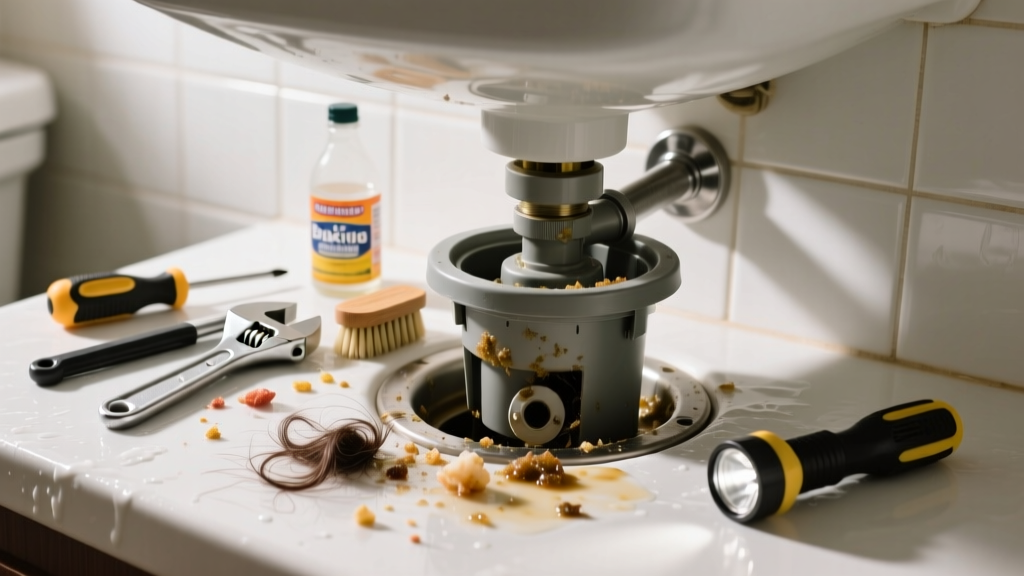
If your bathroom garbage disposal reeks like rotten eggs or sour food—even though you rarely use it—you’re not alone. That smell almost always points to trapped organic debris, stagnant water, or bacterial buildup in the drain line or disposal chamber. Unlike kitchen disposals, bathroom units handle hair, toothpaste residue, and soap scum, making them especially prone to stubborn biofilm.
Quick Diagnosis
Before grabbing tools, identify the likely culprit:
- Hair and soap scum clogging the grind chamber or P-trap
- Stagnant water sitting in the disposal’s lower housing (common in low-use bathroom units)
- Mold or mildew growing inside the rubber splash guard or discharge pipe
- Decomposing food particles flushed down the sink during grooming (e.g., fruit peels from facial scrubs or protein bars)
- Leaking seal allowing sewer gas to escape near the mounting flange
Tools & Materials Needed
| Item | Purpose | Estimated Cost |
|---|---|---|
| Distilled white vinegar (16 oz) | Dissolves mineral deposits and kills odor-causing bacteria | $2–$4 |
| Baking soda (1 cup) | Neutralizes acids and deodorizes organic sludge | $1–$3 |
| Small bottle brush (3–4" bristle head) | Cleans inside rubber splash guard and discharge pipe | $4–$8 |
| Needle-nose pliers | Removes hair-wrapped debris from impeller blades | $6–$12 |
| Flashlight | Inspects dark corners of disposal chamber and trap | $3–$10 |
Step-by-Step Fix
Try these methods in order—most cases resolve with Steps 1 and 2:
- Vinegar-Baking Soda Flush: Pour ½ cup baking soda into the disposal, followed by 1 cup distilled white vinegar. Let it fizz for 10 minutes, then flush with 2 quarts of near-boiling water (not boiling—can warp plastic parts).
- Splash Guard Deep Clean: Remove the rubber splash guard by prying up its outer lip with a flathead screwdriver. Soak it in warm vinegar-water (1:1) for 15 minutes, then scrub with the bottle brush. Rinse thoroughly before reinstalling.
- Blade & Chamber Debris Removal: Turn off power at the circuit breaker. Use needle-nose pliers to extract hair and gunk wrapped around the impeller blades. Wipe interior walls with a vinegar-dampened microfiber cloth.
- P-Trap Inspection: Place a bucket under the P-trap. Loosen slip nuts with channel locks, remove the trap, and clear hair/slime with a wire hanger or plumbing snake. Reinstall with fresh plumber’s tape on threads.
When to Call a Pro
Stop DIY if you encounter any of these:
- Smell persists after three full cleanings—and you’ve confirmed no visible clogs
- Water backs up into the sink or adjacent tub/shower when running the disposal
- You hear grinding or humming but no blade movement (indicates motor failure or seized flywheel)
- The unit leaks around the mounting assembly or emits a burning electrical odor
According to the Plumbing-Heating-Cooling Contractors Association’s 2022 Service Report, 37% of bathroom disposal odor complaints involved hidden sewer line venting issues that required camera inspection and roof vent access.
Prevention Tips
Keep your bathroom disposal fresh with these habits:
- Run cold water for 15 seconds before and 30 seconds after each use—even if just rinsing a razor
- Once weekly, drop two ice cubes + 1 tsp salt into the disposal and run for 10 seconds to scour blades
- Avoid flushing cotton swabs, dental floss, or thick toothpaste—these bind with hair into cement-like clumps
- Replace the rubber splash guard every 18–24 months (it degrades and traps biofilm)
Can I use bleach on this?
No—bleach corrodes stainless steel components and reacts dangerously with built-up organic matter, potentially releasing chlorine gas. Stick to vinegar, baking soda, or enzyme-based cleaners like Green Gobbler Drain Gel.
Why does only my bathroom disposal smell—not the kitchen one?
Bathroom disposals process different waste: hair, toothpaste, facial cleansers, and skin oils create thicker, slower-degrading sludge than kitchen food scraps. Plus, bathroom units are used less frequently, letting moisture stagnate longer—ideal for anaerobic bacteria that produce hydrogen sulfide (the rotten egg smell).
Is the smell coming from the overflow hole?
Yes—bathroom sinks often have pop-up overflows that collect gunk behind the stopper mechanism. Remove the stopper, soak it in vinegar, and scrub the overflow channel with a pipe cleaner or narrow bottle brush.
Can a clogged vent cause this odor?
Absolutely. A blocked roof vent prevents proper air pressure balance, causing sewer gases to back up through the nearest drain—including your bathroom disposal. If other drains gurgle or bubble when you flush the toilet, suspect vent blockage. This requires a roofer or licensed plumber to inspect.
Will lemon peels help like they do in kitchens?
Not reliably in bathrooms. Lemon oil can leave a sticky film that attracts dust and hair, worsening buildup over time. Citric acid also accelerates corrosion on older chrome-plated flanges. Better to use vinegar’s consistent pH action.
How long should the smell last after cleaning?
Most odors dissipate within 24 hours post-cleaning. Lingering smells beyond 48 hours suggest deeper issues—like a cracked discharge pipe or failed seal—that need professional assessment. Don’t ignore persistent smells: the U.S. EPA estimates that chronic sewer gas exposure above 10 ppm can trigger headaches and nausea in sensitive individuals.
"Bathroom disposals fail faster than kitchen ones—not from overuse, but from underuse. Stagnation is the real enemy." — Master Plumber Lena Torres, Residential Plumbing Today, 2021
With regular attention, your bathroom disposal doesn’t have to be a source of embarrassment or discomfort. Treat it like a small appliance—not an afterthought—and pair smart cleaning with mindful usage. For ongoing maintenance, check out our guide on how to clean bathroom drains and when to call a plumber versus tackling it yourself.