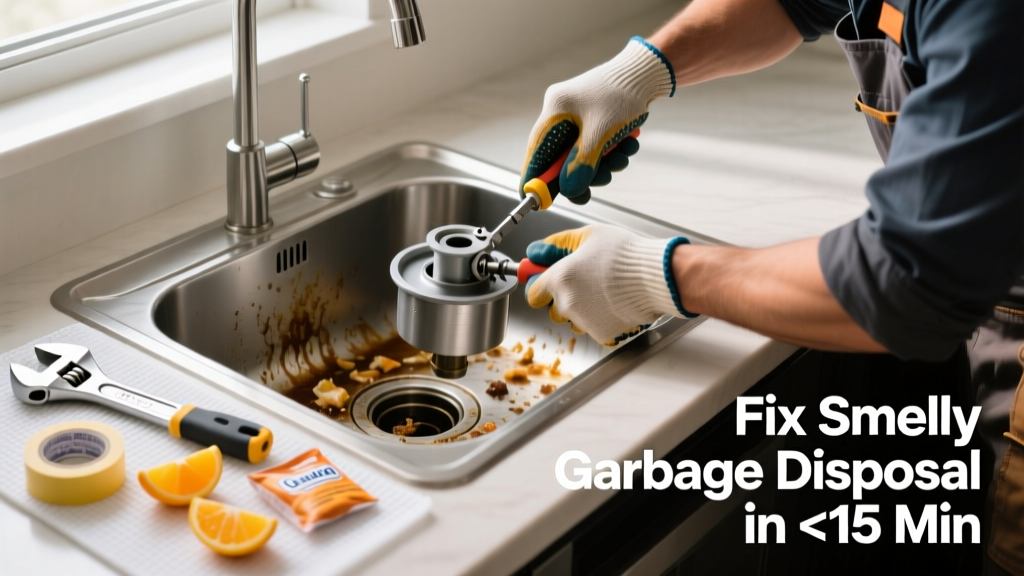
That sour, rotting-egg odor wafting from your sink isn’t just unpleasant—it’s a red flag that food debris is decaying inside your disposal or drain pipes. Most smelly disposals can be fixed in under 15 minutes with household items and basic safety awareness. Don’t reach for the chemical drain cleaner yet—many make odors worse and damage seals.
Quick Diagnosis
Before grabbing tools, identify the source:
- Foul smell only when running the disposal → trapped food in grinding chamber or impellers
- Smell persists even when unit is off → biofilm buildup in drain pipe or P-trap
- Rotten egg (sulfur) odor → bacterial breakdown of proteins in stagnant water or grease
- Musty or moldy scent → moisture trapped behind mounting flange or in splash guard
Tools & Materials Needed
| Item | Purpose | Estimated Cost |
|---|---|---|
| Ice cubes + rock salt or vinegar | Scours interior surfaces and dissolves organic film | $0–$3 |
| Baking soda + white vinegar | Creates foaming reaction to lift biofilm and neutralize odors | $2–$4 |
| Stiff bottle brush or old toothbrush | Cleans rubber splash guard crevices where gunk hides | $1–$5 |
| Plumber’s flashlight (LED) | Reveals hidden debris under the baffle or around the grind plate | $8–$15 |
| Needle-nose pliers (insulated) | Safely retrieves stuck fruit pits, bones, or fibrous material | $6–$12 |
Step-by-Step Fix
Try these methods in order—most cases resolve with Method 1 or 2:
- Ice + Salt Scrub: Drop 1 cup ice cubes and ½ cup coarse rock salt into the disposal. Run cold water at medium flow and turn on disposal for 30 seconds. The ice knocks loose debris; salt acts as a mild abrasive and deodorizer.
- Vinegar-Baking Soda Flush: Pour ½ cup baking soda down the drain, followed by 1 cup white vinegar. Cover the drain opening with a wet rag for 5 minutes to contain the fizz. Then flush with 2 quarts boiling water (not boiling if you have PVC pipes—use very hot tap water instead).
- Splash Guard Deep Clean: Peel back the black rubber splash guard. Use a toothbrush dipped in vinegar solution to scrub all folds and the underside where food particles collect. Rinse thoroughly before reseating.
- P-Trap Inspection (if smell lingers): Place a bucket under the U-shaped trap beneath the sink. Loosen slip nuts with pliers, remove trap, and clear hair, grease, or sludge with a wire hanger. Reassemble with fresh plumber’s tape on threads.
When to Call a Pro
Stop DIY if you encounter any of these:
- The disposal hums but doesn’t spin (motor seized or jammed beyond safe reach)
- You smell raw sewage—not just rot—suggesting a broken wax seal or vent issue
- Water backs up into the dishwasher or second sink during operation
- There’s visible corrosion on the unit’s body or mounting assembly
- You’ve tried three cleaning cycles over 48 hours and odor remains unchanged
According to the Insurance Institute for Business & Home Safety's 2023 report, 68% of persistent disposal odors linked to sewer gas leaks stem from improperly sealed discharge pipes or failed air admittance valves—not the unit itself.
Prevention Tips
Prevent recurrence with daily habits and quarterly maintenance:
- Always run cold water for 15–20 seconds after grinding—never hot (it melts grease into pipes)
- Avoid fibrous foods (celery, onion skins), coffee grounds, and starchy peels (potatoes, banana)
- Once weekly, grind citrus rinds (lemon, lime, orange) with ice to deodorize and clean
- Every 3 months, wipe the splash guard and flange with diluted hydrogen peroxide (3%) to inhibit biofilm
- Install an air switch instead of a wall switch—it reduces accidental activation and splash-back risk
Can I use bleach on this?
No. Bleach corrodes rubber components and reacts dangerously with ammonia in decomposing waste, potentially releasing toxic chloramine gas. It also kills beneficial bacteria in septic systems. Stick to vinegar, baking soda, or enzymatic cleaners like Green Gobbler.
Why does it smell only when I turn it on?
This points to trapped food debris spinning against the grinding ring or impeller plate. As the unit heats up slightly during operation, volatile organic compounds vaporize—releasing the stench. It’s rarely a motor issue unless accompanied by grinding noises or smoke.
Will lemon peels damage my disposal?
No—they’re safe and effective. Citric acid helps break down residue, and the abrasion from peels scrubs surfaces. Just avoid whole lemons or excessive volume at once. For best results, freeze peels in ice cube trays with water and grind them frozen.
How often should I clean my garbage disposal?
Weekly deodorizing (citrus + ice) and monthly deep cleans (vinegar-baking soda + splash guard scrub) prevent most odors. If you run it 5+ times daily or process meat scraps regularly, increase to biweekly deep cleans.
What’s that black gunk under the splash guard?
That’s biofilm—a sticky colony of bacteria, yeast, and food residue. It thrives in damp, dark spaces and emits hydrogen sulfide (rotten egg gas). It’s not mold, but it’s just as stubborn. Scrubbing with vinegar-soaked cotton swabs works better than rinsing alone.
Is a smelly disposal a health hazard?
Yes—especially for infants, elderly, or immunocompromised individuals. Biofilm harbors Salmonella, E. coli, and Legionella. The U.S. EPA estimates that 14% of household water usage is from leaks—but microbial growth in drains contributes to indoor air quality issues far more commonly than most realize.
A working garbage disposal shouldn’t smell like a compost bin. With consistent care, it can stay fresh for years—and save you from calling a plumber for something that starts with a bag of ice and a lemon. If the odor returns within 72 hours of thorough cleaning, inspect the dishwasher drain hose connection or consider replacing the mounting gasket, a common failure point after 5+ years.