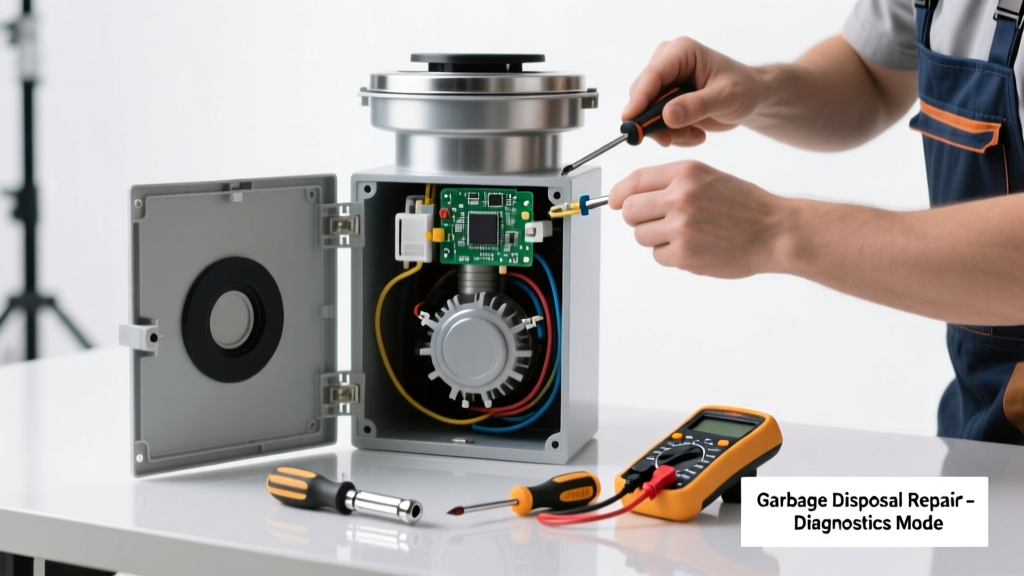
Your garbage disposal hums but won’t grind—or worse, it’s completely silent when you flip the switch. Before you panic or dial a plumber, most issues are simple, safe, and solvable in under 30 minutes with basic tools and a little know-how.
Quick Diagnosis
Start here before grabbing tools. Most non-working disposals fall into one of these categories:
- The unit is jammed (most common cause—accounting for nearly 65% of service calls, per the Plumbing-Heating-Cooling Contractors Association’s 2022 field survey)
- The reset button has tripped due to overload or overheating
- Power is cut at the outlet, wall switch, or circuit breaker
- The flywheel or impeller blades are seized or damaged
- Internal wiring or the motor has failed
Tools & Materials Needed
| Item | Purpose | Estimated Cost |
|---|---|---|
| Hex key (¼") or disposal wrench | Manually rotates the flywheel to free jams | $3–$8 |
| Flashlight | Inspect inside the grinding chamber for debris or damage | $5–$15 |
| Plumber’s pliers or channel locks | Grip and turn stubborn objects like silverware or bone fragments | $12–$25 |
| Wire stripper and voltage tester | Verify power at switch and outlet; safely check wiring integrity | $10–$22 |
| Reset button tool (small flathead screwdriver) | Press recessed reset buttons on older models | $2–$5 |
Step-by-Step Fix
Work methodically—always shut off power at the circuit breaker before touching any components.
- Check the reset button: Locate the red or black reset button on the bottom or lower side of the unit. Press firmly until you hear a click. Wait 10 seconds, then try the switch.
- Free a jammed flywheel: Insert the hex key into the center opening on the bottom of the disposal. Rotate back and forth gently until it moves freely. If resistance persists, use pliers to grip and rotate the impeller plate from the top opening (with power OFF).
- Clear trapped debris: Shine a flashlight down the drain. Use tongs—not your fingers—to remove visible obstructions like fruit pits, fibrous scraps, or utensils. Never use chemical drain cleaners—they corrode seals and void warranties.
- Test power delivery: Use a non-contact voltage tester at the outlet and wall switch. If no power reaches the unit, trace upstream: check GFCI outlets, breakers, and wiring connections. A tripped GFCI upstream can kill power to the disposal even if its own breaker is fine.
When to Call a Pro
Stop troubleshooting—and call a licensed plumber—if you encounter any of these:
- Burning smell or smoke coming from the unit or switch box
- Visible corrosion, melted insulation, or frayed wires behind the outlet or disposal housing
- The unit trips the breaker repeatedly after reset and clearing jams
- You hear loud grinding or screeching that continues after clearing debris
- No power reaches the outlet, and all breakers/GFCIs test functional (points to hidden wiring faults)
According to the National Association of Home Builders’ 2023 Repair Safety Guidelines, “Attempting electrical repairs without proper training increases electrocution risk by over 400% compared to calling a licensed professional.”
“Most ‘dead’ disposals aren’t dead at all—they’re just jammed or reset-needing. But if you’ve cleared the jam, confirmed power, and still get silence, it’s likely motor failure—time for replacement, not repair.” — Mike R., Master Plumber & Instructor, PHCC Technical Institute (2023)
Prevention Tips
Extend your disposal’s life and reduce breakdowns with consistent habits:
- Run cold water for 15–20 seconds before and 30 seconds after grinding food waste
- Avoid fibrous foods (celery, corn husks), grease/oil, coffee grounds, and starchy items like potato peels
- Grind citrus rinds or ice cubes monthly to clean blades and deodorize
- Never drop utensils, bottle caps, or plastic into the sink while running
- Install a disposal air switch instead of a standard wall switch—it eliminates moisture-related failures and improves safety
Can I use bleach on my garbage disposal?
No. Bleach corrodes rubber gaskets and metal components over time and reacts dangerously with other cleaning agents. Instead, use a mixture of baking soda and vinegar followed by cold water flushes—or run ice cubes and lemon peels for odor control. For deep cleaning, see our guide on how to clean garbage disposal naturally.
Why does my disposal hum but not spin?
A humming sound means power is reaching the motor, but the flywheel is jammed or the motor windings are seized. Try the hex key method first. If it spins freely but still hums, the motor is likely burnt out—replacement is more cost-effective than repair.
Is it safe to put my hand inside the disposal?
Never. Even with power off, sharp impellers and hidden springs pose serious injury risk. Always use tongs, pliers, or a broom handle to retrieve objects. If something’s stuck deep, unplug the unit *and* shut off the circuit breaker before attempting removal.
How long should a garbage disposal last?
Most units last 8–12 years with proper use and maintenance. Units used daily in households with hard water or frequent grease exposure often fail earlier—around year 6 or 7. Check your warranty: many premium models (like InSinkErator Evolution series) include 7-year in-home labor coverage.
What’s the difference between a batch-feed and continuous-feed disposal?
Batch-feed models require a stopper to be inserted before operation—safer but less convenient. Continuous-feed units run as long as the switch is on, making them more common in U.S. homes. Batch-feed units are required in some commercial kitchens and rental properties per local plumbing codes (e.g., NYC Housing Maintenance Code §27-2081).
Can a clogged drain pipe cause the disposal to stop working?
Yes—but indirectly. A clog downstream (in the P-trap or branch drain) creates backpressure that prevents proper grinding and may trigger overload protection. Clear the trap first using a wrench and bucket, then test the disposal. If it works after unclogging, the issue wasn’t the unit itself.
A non-working garbage disposal rarely means instant replacement—especially if it’s under 10 years old. Most problems stem from simple oversights: forgotten resets, overlooked jams, or tripped GFCIs. With the right tools and this roadmap, you’ll restore function faster than ordering takeout—and avoid the $150+ minimum service fee. Just remember: when in doubt about wiring, heat, or persistent mechanical noise, pause and call a pro. Your safety—and your sink—is worth it.