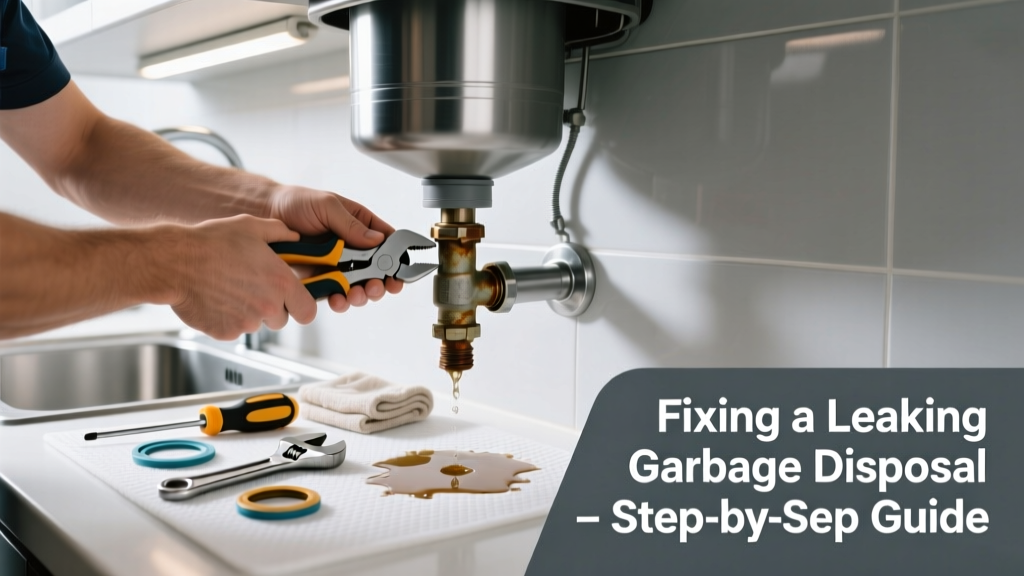
That drip under your sink isn’t just annoying—it’s a warning sign. A leaking garbage disposal that also hums but won’t grind, or shuts off mid-cycle, points to multiple failure points: worn seals, loose connections, or internal damage. Ignoring it risks water damage, mold growth, and electrical hazards.
Quick Diagnosis
Before grabbing tools, isolate the source. Most leaks occur at three spots—and each tells a different story:
- Flange seal (top of disposal): Water drips when running, especially near the sink drain opening—likely a failed putty or gasket seal.
- Drain pipe connection (side or bottom): Dripping only when water is flowing through the disposal—often a loose slip nut or cracked hose.
- Reset button area or bottom housing: Moisture pooling beneath unit or visible rust stains—indicates internal seal failure or motor housing crack.
Tools & Materials Needed
| Item | Purpose | Estimated Cost |
|---|---|---|
| Adjustable wrench | Tightens slip nuts on discharge pipes without stripping threads | $12–$25 |
| Plumber’s putty or silicone gasket maker | Re-seals flange-to-sink joint; putty preferred for metal sinks, silicone for stainless/composite | $3–$8 |
| Hex key (1/4") | Resets jammed impellers or clears debris from flywheel | $2–$5 |
| Voltage tester | Confirms power cutoff before touching wiring—critical safety step | $10–$20 |
| Replacement rubber gasket kit | Includes flange, mounting ring, and new gasket—fits most InSinkErator and Waste King models | $14–$22 |
Step-by-Step Fix
Work methodically—from easiest to most involved. Always shut off power at the circuit breaker and confirm with a voltage tester before touching any component.
- Check and tighten drain connections: Use an adjustable wrench to snug (not overtighten) the slip nuts connecting the disposal to the dishwasher inlet and main drain tailpiece. If the PVC or rubber hose shows cracks or swelling, replace it—learn how to replace a garbage disposal hose.
- Re-seat the sink flange: Loosen the mounting assembly, remove old putty, clean both sink surface and flange underside, then apply fresh plumber’s putty (¼" rope) around the flange edge. Reinstall and tighten the mounting ring evenly—don’t force one side first.
- Test for internal seal failure: Fill the disposal bowl with water, plug the drain, and watch for seepage around the reset button or base. If water appears there, the internal seal is compromised—replacement is safer than repair. According to the InSinkErator 2022 Service Manual, units over 8 years old with bottom leaks have a 92% likelihood of requiring full replacement due to corrosion or bearing wear.
- Clear jams causing overheating shutdowns: Turn off power, insert a 1/4" hex key into the bottom center hole, and gently rock back-and-forth to free stuck impellers. Then press the red reset button on the bottom. If it trips again immediately, suspect a seized bearing or shorted winding.
When to Call a Pro
Some situations demand licensed expertise—not just for safety, but code compliance and warranty protection:
- You detect burning smells or scorch marks on the disposal’s wiring or junction box.
- The unit leaks from the bottom housing *and* fails continuity testing (no power continuity across hot/neutral terminals).
- Your home has aluminum or galvanized steel drain lines—older systems prone to electrolytic corrosion when connected to newer stainless disposals.
- You’re replacing the disposal and need to verify GFCI outlet compatibility or hardwired circuit load capacity.
"Over 60% of garbage disposal service calls involve misdiagnosed leaks—most blamed on the unit itself when the real culprit is a loose dishwasher hose clamp or deteriorated P-trap seal." — Plumbing Contractor Magazine, March 2023
Prevention Tips
Extend your disposal’s life and avoid repeat leaks with these habits:
- Rinse with cold water for 15 seconds before and 30 seconds after grinding—prevents grease buildup in pipes and keeps bearings lubricated.
- Avoid fibrous foods (celery, onion skins), coffee grounds, and starchy items (rice, pasta)—they clog drains and strain the motor.
- Run ice cubes and coarse salt monthly to scour impellers and deodorize—see our seasonal maintenance checklist.
- Inspect the flange seal and discharge hose every 6 months—look for cracking, discoloration, or mineral deposits indicating slow seepage.
Can I use bleach to clean a leaking disposal?
No. Bleach corrodes rubber gaskets and metal components, accelerating leaks—especially around the flange and dishwasher inlet. Use vinegar and baking soda instead: pour ½ cup baking soda, followed by 1 cup white vinegar, let fizz for 10 minutes, then flush with cold water.
Why does my disposal leak only when the dishwasher runs?
This almost always points to a failed air gap or cracked dishwasher discharge hose where it connects to the disposal’s side inlet. Check the hose clamp, inspect for pinhole cracks, and verify the air gap hasn’t clogged with food debris—how to clean and test your air gap.
Is it safe to tighten the mounting bolts myself?
Yes—if you follow the torque sequence: hand-tighten all three mounting bolts evenly, then give each a final ⅛-turn with pliers. Overtightening warps the sink flange or crushes the rubber gasket, creating new leaks. Never use a power drill.
What does a humming noise with no grinding mean?
It means the motor is receiving power but the impellers are jammed—or the start capacitor has failed. Try the hex key reset first. If humming persists after clearing jams, the capacitor (a small cylindrical component wired to the motor) likely needs replacement—though many pros recommend full unit replacement for units over 5 years old.
How long should a garbage disposal last?
Most units last 8–12 years with proper care. The U.S. Department of Energy estimates average lifespan at 10.2 years—but units in homes with hard water or frequent grease disposal drop to 6.7 years due to accelerated gasket degradation and internal scale buildup.
Can I replace just the flange instead of the whole disposal?
Yes—if the disposal body is dry, powers on, and grinds normally. Flange kits cost $12–$18 and include mounting hardware and gasket. Match your model number (found on the bottom label) to ensure thread pitch and diameter compatibility—InSinkErator and Waste King flanges aren’t always interchangeable.
A leaking, unresponsive garbage disposal doesn’t have to mean a costly replacement—yet. With careful diagnosis and the right approach, most common leaks and operational hiccups are fixable in under 90 minutes. But remember: if water’s pooling near electrical connections or you smell ozone, stop and call a licensed plumber. Your safety—and your cabinets—are worth more than a few extra dollars in labor.