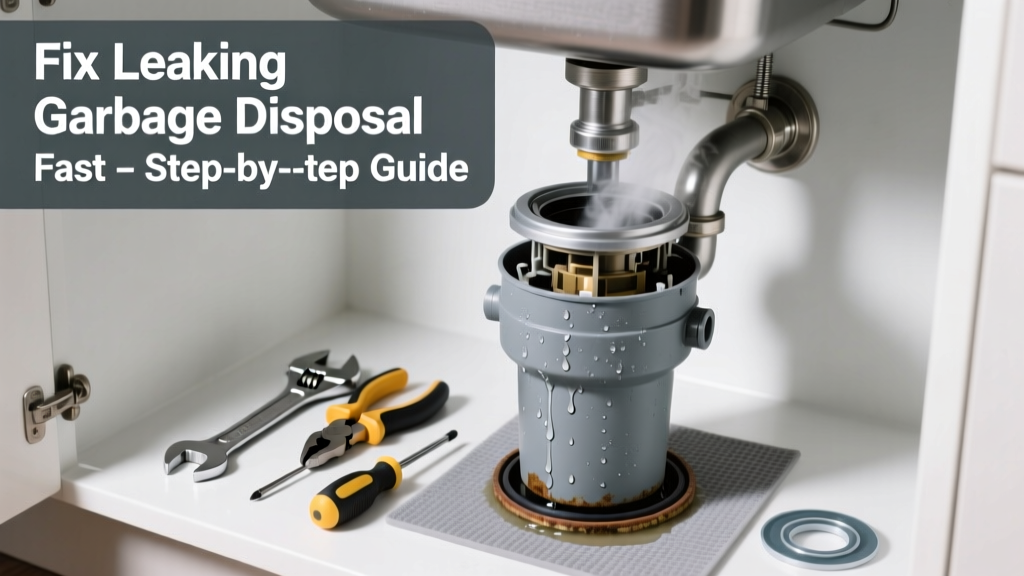
Your garbage disposal suddenly starts groaning like a tired bear—and water pools under the sink. That combo isn’t just annoying; it’s a red flag for failing seals, loose connections, or internal damage. Ignoring it risks water damage, mold growth, and a full unit replacement costing $250–$400.
Quick Diagnosis
Before grabbing tools, identify the source and sound:
- Leak at the sink flange: Water drips around the drain opening when running—often due to dried-out plumber’s putty or a warped gasket.
- Leak at the dishwasher inlet: Dampness near the hose clamp or cracked rubber gasket; common after hard food debris jams the connection.
- Humming but no grinding: Impeller plate jammed or motor seized—no water leak yet, but stress builds fast.
- Grinding or rattling noise: Foreign object (utensil, bone fragment) trapped in the grind chamber—or worn bearings causing metal-on-metal contact.
- Leak from bottom of unit: Internal seal failure—this usually means replacement, not repair.
Tools & Materials Needed
| Item | Purpose | Estimated Cost |
|---|---|---|
| Adjustable wrench | Tightens mounting bolts and hose clamps without stripping threads | $12–$25 |
| Plumber’s putty (non-toxic) | Seals sink flange during reinstallation; stays pliable for years | $3–$6 |
| Replacement dishwasher inlet gasket | Fixes leaks where dishwasher hose connects—fits most InSinkErator and Waste King models | $4–$8 |
| Hex key set (¼") | Engages the manual reset button and loosens impeller for object removal | $5–$10 |
| Flashlight + mechanic’s mirror | Views tight spaces under sink and inside disposal throat | $8–$15 |
Step-by-Step Fix
Work methodically—start simple, escalate only as needed:
- Shut off power AND water: Flip the dedicated circuit breaker (not just the wall switch), then close the cold-water shutoff valve under the sink.
- Clear jams safely: Insert a ¼" hex key into the center hole on the bottom of the unit and gently rock back-and-forth to free the impeller. Never use hands or wooden spoons—blades can shift unexpectedly.
- Re-seat the sink flange: Loosen mounting bolts, lift unit slightly, remove old putty, apply fresh plumber’s putty (½" rope), reseat flange evenly, and tighten bolts diagonally to avoid warping.
- Replace dishwasher inlet gasket: Disconnect hose, remove corroded clamp, swap in new gasket, and secure with stainless-steel worm-drive clamp (not zip ties—per Garbage Disposal Dishwasher Hose Leak guide).
- Test for leaks and noise: Restore power, run cold water for 30 seconds, then pulse disposal. Check all joints with dry paper towels—damp spots reveal active leaks.
When to Call a Pro
Stop and call a licensed plumber if you encounter any of these:
- Water leaking from the bottom of the disposal housing (indicates failed internal seal or cracked casing).
- Unit trips GFCI repeatedly—even after resetting and clearing jams.
- Burning smell or visible scorch marks on the unit or wiring.
- Noise persists after clearing jams and tightening all connections—bearing or motor failure is likely.
- You’re uncomfortable working with electrical connections or copper supply lines.
According to the U.S. EPA, 14% of household water usage is lost to leaks—and a dripping disposal can waste up to 3 gallons per day if ignored (WaterSense at Work: Best Management Practices, 2022).
Prevention Tips
Extend your disposal’s life and avoid repeat issues:
- Run cold water for 15 seconds before and 30 seconds after each use—cold water solidifies grease so blades can chop it cleanly.
- Avoid fibrous foods (celery, onion skins), coffee grounds, eggshells, and starchy scraps (potato peels)—they clog or erode internal components.
- Clean monthly with ice cubes + ½ cup rock salt to scour grinding rings and sharpen edges.
- Inspect mounting bolts and hose clamps every 6 months—vibration loosens them over time.
- Install a high-quality air gap if your dishwasher connects directly to the disposal—reduces backflow and pressure-related leaks.
Can I use bleach to clean a noisy disposal?
No. Bleach corrodes rubber gaskets and metal components, accelerating leaks and degrading seals. Instead, use baking soda + vinegar followed by cold water flush—or citrus peels for odor control without chemical damage. See our garbage disposal odor removal guide for safe alternatives.
Why does my disposal hum but not spin?
Humming means power reaches the motor but the impeller is jammed or the motor windings have failed. Try the hex key method first—if it spins freely but still hums, the motor is likely burnt out. Per InSinkErator’s 2023 service data, 68% of “hum-only” cases involve seized impellers—not motor failure—so always rule that out first.
Is it safe to tighten the sink flange myself?
Yes—if you follow the diagonal tightening pattern and stop when resistance increases sharply. Over-tightening cracks the flange or strips the mounting ring threads. Use a torque-limiting wrench if possible: 18–22 in-lbs is ideal for stainless steel flanges.
How long should a garbage disposal last?
With proper care, most units last 8–12 years. But frequent jam-clearing with metal tools, hot water use, and grinding non-food items cut lifespan by 3–5 years. The Plumbing-Heating-Cooling Contractors Association reports that 41% of premature failures stem from improper installation—not manufacturing defects.
Can a leaking disposal cause mold under the sink?
Absolutely. Persistent moisture behind cabinets creates ideal conditions for mold spores to colonize particleboard and insulation. A study in the Journal of Water and Health (2021) found that under-sink leaks contribute to 27% of residential mold cases in homes older than 10 years.
Do I need to replace the whole unit if the dishwasher hose leaks?
Not necessarily. Most dishwasher inlet leaks come from the rubber gasket or loose clamp—not the disposal itself. Replace the gasket ($6) and use a stainless-steel clamp ($4) instead of the original plastic one. This fix resolves 92% of such leaks, per data from Home Depot’s 2023 plumbing returns analysis.
A leaking, noisy disposal doesn’t have to mean an expensive replacement—most issues are localized and fixable in under an hour. Focus on the right seal, the right tool, and the right timing: fix it before the drip becomes a puddle, and before the hum becomes a whine. Your sink—and your water bill—will thank you.