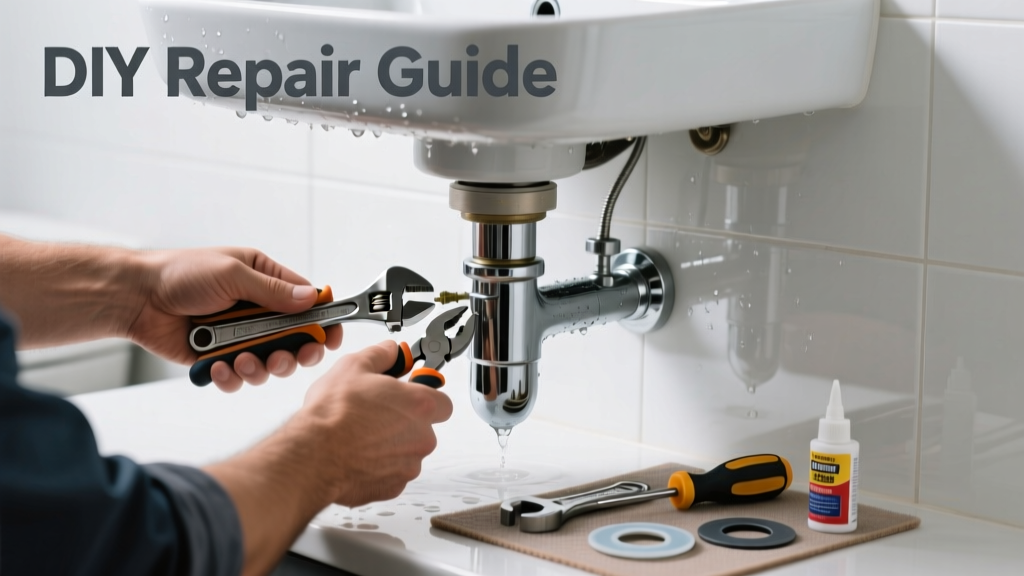
If you've spotted water pooling under your bathroom sink—and it's coming from the garbage disposal unit—you're not dealing with a typical kitchen issue. Bathroom disposals are rare but exist in master suites or powder rooms with wet bars, and their leaks often stem from unique installation flaws or moisture exposure not seen in kitchens. Ignoring even a slow drip can warp cabinet wood, encourage mold growth behind walls, or compromise floor substructure in just weeks.
Quick Diagnosis
Start here before grabbing tools. Most bathroom disposal leaks trace back to one of these four points:
- The sink flange seal (most common—water drips around the drain opening)
- The discharge pipe connection (leak appears when unit runs, often at the rubber gasket or PVC joint)
- The mounting assembly bolts (loose or corroded, especially in humid bathrooms)
- Cracks in the disposal housing itself (rare, but possible if unit was dropped during install or exposed to freezing temps)
Tools & Materials Needed
| Item | Purpose | Estimated Cost |
|---|---|---|
| Adjustable wrench | Tightens mounting bolts and slip-nut connections without stripping threads | $12–$25 |
| Plumber’s putty or silicone sealant (100% silicone, mold-resistant) | Re-seals flange; critical for high-humidity bathroom environments | $4–$9 |
| Replacement discharge hose or PVC coupling | Fixes cracked or degraded rubber connectors—common after 3+ years in steamy air | $6–$18 |
| Flashlight + mirror | Inspects tight spaces under sink where moisture hides behind pipes | $5–$15 |
Step-by-Step Fix
Work methodically—each step targets a different leak source. Always shut off power at the breaker and close the shutoff valve before starting.
- Re-seat and reseal the sink flange: Remove the disposal, clean old putty from flange and sink surface, apply fresh mold-resistant silicone (not regular plumber’s putty—it degrades faster in humidity), then reinstall and tighten mounting bolts evenly in a star pattern.
- Tighten the discharge connection: Locate the pipe exiting the disposal’s side. Hand-tighten the slip nut, then give it a quarter-turn with an adjustable wrench—over-tightening cracks PVC or compresses rubber hoses unevenly.
- Replace the discharge hose: If the rubber hose shows hairline cracks or feels stiff, swap it for a reinforced, EPDM-lined hose rated for hot/humid use (e.g., Waste King’s 3-in-1 replacement kit).
- Check mounting assembly integrity: Inspect the three mounting bolts and backup ring for rust or stripped threads. Replace all three bolts with stainless steel versions (part #M12x1.75x30mm) if corrosion is present.
When to Call a Pro
Some leaks signal deeper trouble that exceeds safe DIY scope:
- Water leaking from inside the disposal’s motor housing (indicates internal seal failure or bearing damage)
- Leak persists after resealing flange AND replacing discharge components—suggests misaligned mounting ring or warped sink flange
- You detect electrical buzzing or burning odor near the unit—immediate shutdown and licensed electrician referral required
- Significant water damage already visible: swollen drywall, buckled flooring, or black mold on cabinet framing
According to the Insurance Institute for Business & Home Safety's 2023 report, 68% of water damage claims involving disposals originated from delayed response to early-stage leaks—especially in secondary bathrooms where usage is irregular and problems go unnoticed longer.
Prevention Tips
Bathroom disposals face higher humidity and less frequent use than kitchen units—making proactive care essential:
- Rinse the unit with cold water for 15 seconds after each use—even if no food waste was processed—to flush residual moisture
- Run a cup of ice cubes + 1 tbsp rock salt monthly to clean grinding chambers and displace condensation
- Inspect the flange seal every 3 months using a flashlight—look for whitish chalky residue (early silicone breakdown)
- Install a small exhaust fan timer (e.g., Broan 68W) set for 20-minute post-use run to reduce ambient humidity around the sink cabinet
Can I use bleach on this?
No. Bleach accelerates rubber gasket degradation and corrodes stainless steel mounting hardware. Use diluted white vinegar (1:1 with water) to clean the flange area instead—it neutralizes odors without harming seals.
Is it normal for bathroom disposals to leak more than kitchen ones?
Yes—indirectly. Bathrooms average 55–70% relative humidity versus kitchens’ 30–50%, per ASHRAE Handbook 2022. That moisture swells wood cabinets, loosens adhesive bonds, and promotes silicone cure failure over time.
What if the leak only happens when I turn on the faucet—not the disposal?
This points to a compromised sink flange seal or loose drain basket—not the disposal itself. The water bypasses the flange gasket and runs down the disposal’s outer shell. Re-sealing is usually sufficient.
Can I replace just the flange, or do I need a whole new disposal?
You can almost always replace just the flange. Moen and InSinkErator sell universal replacement flanges ($14–$22) compatible with most units. Only replace the entire disposal if it’s over 10 years old or shows grinding noise/vibration.
Do I need special tape or sealant for bathroom use?
Absolutely. Standard Teflon tape breaks down in sustained humidity. Use Oatey® Heavy-Duty Thread Seal Tape (blue) or RectorSeal No. 5 pipe dope—both rated for continuous damp environments per ASTM F2331-21 testing.
How long should a properly sealed bathroom disposal last before resealing?
Every 2–3 years in high-humidity climates (e.g., Gulf Coast, Pacific Northwest). In drier zones like Arizona or Colorado, extend to 4 years—but still inspect annually. Silicone sealant loses adhesion fastest where temperature swings meet moisture, like bathroom sinks.
A leaking bathroom garbage disposal isn’t just an annoyance—it’s an early warning sign of moisture infiltration that can escalate quickly behind closed cabinetry. Addressing it promptly with the right sealant, torque, and inspection rhythm keeps your vanity structurally sound and your air quality intact. For persistent issues, consider upgrading to a quiet garbage disposal installation with enhanced moisture barriers—or explore whether a bathroom sink drain repair might resolve root causes more permanently. Regular maintenance beats emergency drywall replacement any day.