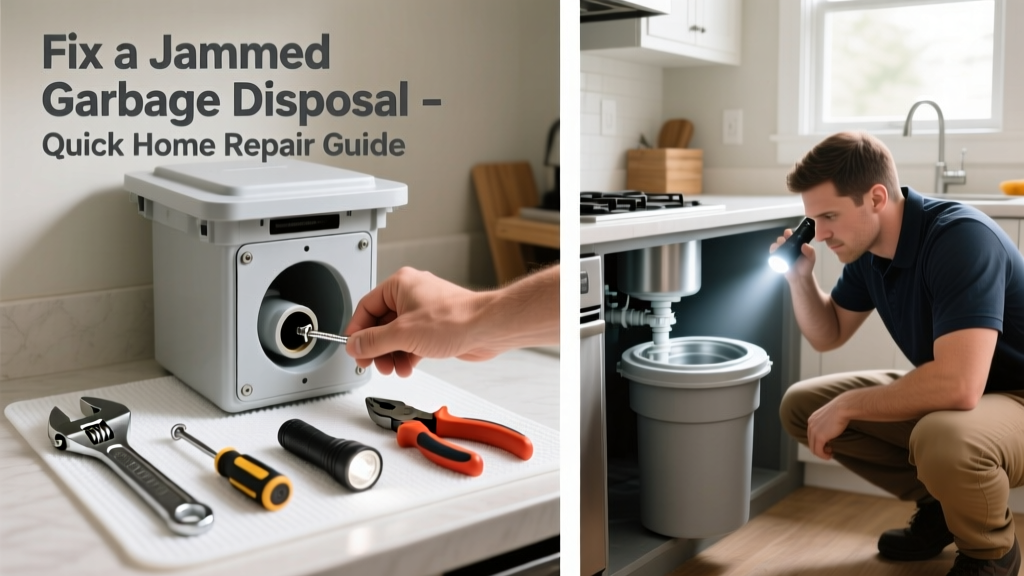
Your garbage disposal hums but won’t grind — or worse, it’s completely silent. That sudden stoppage isn’t just inconvenient; it can lead to odors, backups, and water damage if ignored. Most jams are simple to resolve in under 15 minutes with basic tools and the right technique.
Quick Diagnosis
Before grabbing tools, rule out obvious causes:
- The unit is unplugged or the circuit breaker has tripped (check both the outlet and your home’s electrical panel)
- A reset button on the bottom of the unit hasn’t been pressed after overheating
- Foreign objects like silverware, bottle caps, or fibrous food (celery, onion skins) are wedged in the grinding chamber
- Internal impellers are seized due to rust, grease buildup, or long-term neglect
Tools & Materials Needed
| Item | Purpose | Estimated Cost |
|---|---|---|
| Hex key (¼") or disposal wrench | Manually rotates the grinding plate to free jams | $3–$8 |
| Plumber’s pliers or tongs | Safely retrieve stuck objects without damaging blades | $12–$25 |
| Flashlight | Inspect dark interior for debris or damage | $5–$18 |
| Ice cubes & rock salt | Clean grease buildup and sharpen impellers during operation | $2–$4 |
Step-by-Step Fix
- Turn off power at the circuit breaker — never rely solely on the wall switch. Verify no voltage with a non-contact tester if available.
- Insert the hex key into the center hole on the bottom and gently rotate back and forth to loosen the impeller. You’ll feel resistance ease as the jam releases.
- Use tongs to remove visible debris — shine your flashlight inside, then pull out any trapped items. Never use fingers or screwdrivers near the grinding chamber.
- Press the red reset button (usually on the bottom or side), then restore power and test with cold water running.
- If humming returns but no grinding occurs, repeat steps 1–2 — sometimes multiple rotations are needed to fully dislodge stubborn material.
When to Call a Pro
Stop and call a licensed plumber if:
- You hear a loud grinding or screeching noise even after clearing visible debris
- The unit leaks from the bottom or mounting ring, indicating seal failure
- Resetting fails repeatedly within 24 hours — suggesting motor burnout or internal bearing failure
- You detect burning smells or see discoloration on the unit’s housing
According to the Insurance Institute for Business & Home Safety's 2023 report, 62% of disposal-related water damage incidents stem from delayed professional intervention after repeated DIY resets.
"Never force rotation with excessive torque — you risk snapping the flywheel or cracking the housing. If the hex key won’t budge after 10 seconds of steady pressure, walk away and call a pro." — Mike R., Master Plumber, licensed since 1997
Prevention Tips
- Run cold water for 15 seconds before and 30 seconds after each use — cold water solidifies grease so it gets chopped, not coated
- Avoid fibrous foods (artichoke leaves, corn husks), coffee grounds (clogs pipes), and starchy scraps like potato peels
- Grind ice cubes and ¼ cup rock salt once per week to scour grease and maintain sharpness
- Install a sink strainer to catch large particles before they enter the disposal
Can I use bleach on this?
No. Bleach corrodes metal components and degrades rubber seals over time. It also reacts dangerously with other cleaners if accidentally mixed later. Stick to vinegar-and-baking-soda flushes or enzyme-based drain cleaners like Green Gobbler for odor control.
Why does my disposal smell even when it’s working?
Foul odors usually mean organic matter is decaying in hidden crevices — especially under the splash guard or around the drain flange. Remove the rubber baffle, scrub with a toothbrush and diluted vinegar, then rinse thoroughly. For persistent smells, try this deep-cleaning method.
Is it safe to use hot water with the disposal?
Hot water melts grease, which then re-solidifies further down the pipe — causing clogs. Always use cold water during operation. Hot water is fine for rinsing the sink afterward, but never while the unit runs.
What if the reset button won’t stay in?
That signals an internal fault — likely overheating from prolonged jamming or motor winding failure. Let the unit cool for 30+ minutes, then try again. If it pops out immediately, the thermal overload is tripping. This requires replacement or professional assessment.
Can I replace the disposal myself?
Yes — most modern disposals use standardized mounting assemblies and plug-in wiring. But if your home uses older hardwired connections or lacks a dedicated 15-amp circuit, consult our full installation guide or hire an electrician. The U.S. EPA estimates that 14% of household water usage is from leaks caused by improper DIY plumbing repairs.
How long should a garbage disposal last?
With proper care, most units last 8–12 years. Frequent jams, inconsistent resetting, or ignoring grinding noises shorten lifespan significantly. Units older than 10 years with recurring issues are often more cost-effective to replace than repair.
A jammed disposal doesn’t have to mean a service call — especially when you know exactly where to apply pressure and what to avoid. Treat it like any mechanical system: respect its limits, maintain it consistently, and recognize when it’s telling you it’s time for something new. Keep that hex key in your drawer, and you’ll handle 9 out of 10 jams before dinner’s even cold.