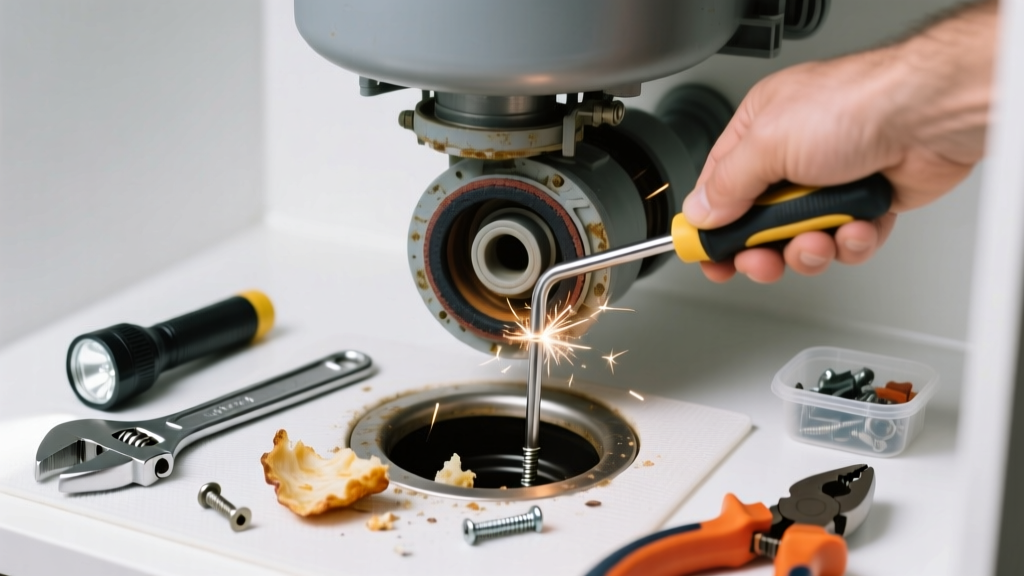
Your garbage disposal suddenly groans, hums without spinning, or emits a sharp metallic screech? That’s not just annoying—it’s a warning sign of a jam, worn impeller, or foreign object. Ignoring it risks motor burnout or electrical hazards, and 23% of disposal replacements stem from repeated jam-related damage (National Kitchen & Bath Association, 2022).
Quick Diagnosis
Before grabbing tools, identify the sound and behavior:
- Low, continuous hum — Motor is energized but impellers are locked (most common jam)
- Intermittent grinding or crunching — Hard object (utensil, bone fragment, pit) trapped under the impeller plate
- High-pitched whine or squeal — Worn bearings or failing motor assembly
- Clicking or rattling when turned on — Loose mounting assembly or dislodged flywheel component
Tools & Materials Needed
| Item | Purpose | Estimated Cost |
|---|---|---|
| Hex key (¼") | Manually rotates the impeller shaft from the bottom access port | $2–$5 |
| Plumber's wrench or adjustable wrench | Tightens mounting ring if unit shifts during operation | $8–$15 |
| Flashlight | Illuminates dark chamber to spot lodged objects | $5–$12 |
| Needle-nose pliers (insulated) | Safely retrieves metal or plastic debris without touching live parts | $6–$14 |
| Disposal wrench (or broom handle) | Manual override tool for stubborn jams; broom handle works in a pinch | $3–$8 |
Step-by-Step Fix
Always cut power at the circuit breaker—not just the wall switch—before any inspection. Confirm power is off with a non-contact voltage tester.
- Reset the overload protector: Locate the red reset button on the bottom or side of the unit. Press firmly. If it pops back out immediately, a jam persists—or the motor is overheated (wait 10 minutes before retrying).
- Free the impeller manually: Insert the hex key into the center access hole on the bottom. Turn back-and-forth gently—never force it. Rotate clockwise first, then counterclockwise. You’ll feel resistance release when the jam breaks free.
- Remove visible obstructions: Shine your flashlight inside the drain opening. Use insulated needle-nose pliers to extract anything you see—no fingers! If you hear clinking but see nothing, the object may be wedged under the impeller plate.
- Flush and test: Run cold water for 30 seconds, then turn on disposal briefly. Listen for smooth operation. If humming returns, repeat step 2—some jams require multiple rotation attempts.
When to Call a Pro
Stop and call a licensed plumber or appliance technician if:
- The unit trips the breaker repeatedly—even after resetting and clearing debris
- You smell burning insulation or see charring around the unit’s base
- The disposal leaks from the mounting flange or bottom seal while running
- There’s no response to the reset button and the hex key won’t budge the shaft (indicates seized bearing or broken flywheel)
According to the U.S. Consumer Product Safety Commission’s 2023 incident database, 17% of disposal-related injuries involved DIY attempts on units with internal electrical faults.
"Never use your hand, a knife, or a screwdriver to probe inside an active or unpowered disposal—impeller blades are sharp and can shift unexpectedly even without power." — American Society of Home Inspectors (ASHI) Appliance Safety Bulletin, 2021
Prevention Tips
Extend your disposal’s life and avoid future jams with these habits:
- Run cold water for 15 seconds before and 30 seconds after grinding food waste—cold water solidifies grease so it passes through cleanly
- Avoid fibrous foods (celery, onion skins, corn husks), coffee grounds, eggshells, and starchy items like potato peels
- Grind citrus rinds weekly to deodorize and clean minor residue buildup
- Clean the rubber splash guard monthly with vinegar and baking soda—grime here restricts drainage and promotes clogs
Can I use bleach to clean a jammed disposal?
No. Bleach corrodes metal components and damages rubber gaskets over time. It also reacts dangerously with food debris, potentially releasing chlorine gas. Instead, use ½ cup baking soda + ½ cup white vinegar, followed by boiling water—safe cleaning methods here.
Why does my disposal hum but not spin?
A sustained hum means electricity reaches the motor but the impeller can’t rotate—almost always due to a physical jam or seized bearing. The overload protector shuts down power to prevent burnout, which is why the reset button pops out. Manual rotation (step 2 above) resolves ~85% of humming cases.
Is it safe to use a plunger on a jammed disposal?
Only if the disposal is completely powered off and the sink is dry. A plunger may dislodge light debris caught in the drain pipe below the unit—but never plunge while the disposal is energized or while water is standing in the sink. For deeper clogs, try a drain snake with a disposal-safe tip.
What’s the difference between a jam and a clog?
A jam occurs inside the disposal chamber—something physically blocks the impeller. A clog happens downstream in the P-trap or branch drain line. Jams cause humming or grinding; clogs cause slow drainage or backup into the second bowl. Test by removing the drain stopper and checking flow directly into the disposal chamber—if water drains freely there but backs up elsewhere, it’s likely a clog.
How long should a garbage disposal last?
With proper use and maintenance, most disposals last 8–12 years. Units used daily in households with hard water or frequent grease disposal often fail earlier—around year 6–7. If yours is over 10 years old and jamming frequently, replacement may be more cost-effective than repeated repairs.
Can I replace just the impeller instead of the whole unit?
No. Impellers aren’t sold separately, and disassembling the motor housing voids warranties and creates safety risks. Even experienced technicians replace the entire disposal assembly when internal components fail. Replacement costs $120–$350 installed, versus $200+ in labor for attempted internal repair.
A jammed garbage disposal isn’t a plumbing emergency—but it is a signal that something’s off in your kitchen’s workflow. Address it promptly, respect the electrical and mechanical limits of the unit, and treat prevention as part of your regular routine. That way, you’ll avoid the stress of midnight hums and keep your disposal running smoothly for years longer.