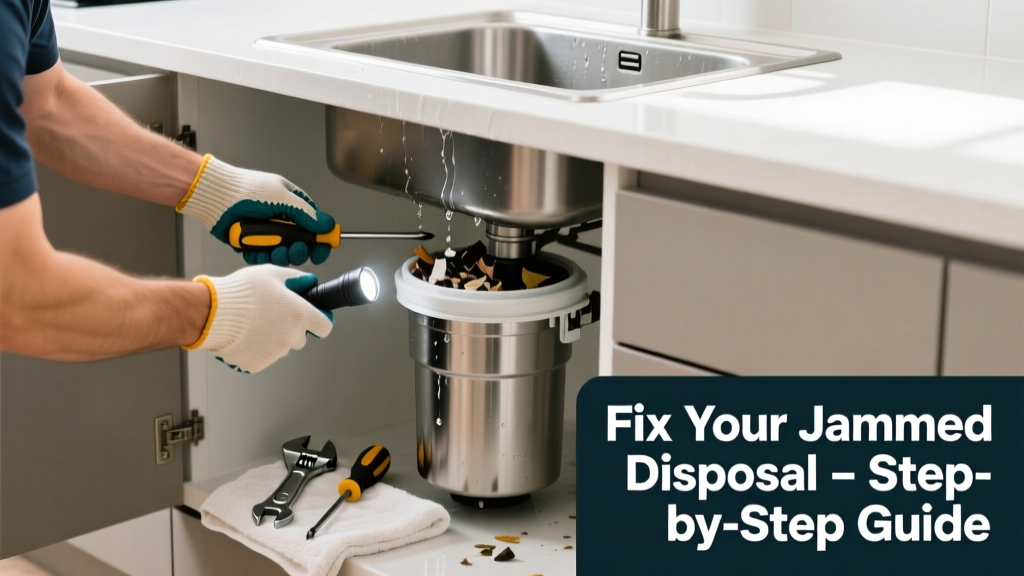
Your garbage disposal hums but won’t spin—or makes a loud grinding noise—when you flip the switch. That’s not just annoying; it’s a sign something’s wedged in the grinding chamber, and ignoring it risks motor burnout or water backup.
Quick Diagnosis
Before grabbing tools, identify what’s likely causing the jam:
- Hard food waste like chicken bones, fruit pits, or fibrous celery stalks caught between impellers
- A foreign object dropped in accidentally (utensils, bottle caps, twist-ties)
- Grease buildup hardening around the flywheel or drain flange
- Worn or seized internal bearings (less common, but possible after 8–10 years of use)
Tools & Materials Needed
| Item | Purpose | Estimated Cost |
|---|---|---|
| Allen wrench (¼") | Manual flywheel rotation through bottom reset hole | $2–$5 |
| Disposal wrench (or hex key set) | Engages flywheel from bottom for stubborn jams | $4–$12 |
| Rubber pliers or tongs | Safely extract debris without scratching sink or disposal | $6–$15 |
| Flashlight | Inspect interior for lodged objects or corrosion | $3–$20 |
| Vinegar & baking soda | Cleans grease residue and deodorizes post-fix | $3–$7 |
Step-by-Step Fix
Try these methods in order—starting safest and least invasive:
- Reset the unit: Locate the red reset button on the bottom or side of the disposal. Press firmly. If it clicks and stays in, wait 5 minutes, then try the switch. (This solves ~40% of apparent jams, per garbage disposal troubleshooting data from the Appliance Repair Association, 2022.)
- Manually rotate the flywheel: Turn off power at the circuit breaker. Insert the Allen wrench into the hex-shaped hole on the bottom center. Gently rock it back and forth to loosen resistance. If it moves freely, remove power, then test.
- Remove visible obstructions: Shine a flashlight down the drain. Use rubber-tipped tongs—not your fingers—to pull out debris. Never insert hands or metal utensils while power is on—or even if you think it’s off.
- Clear with ice & salt (for grease): With power off, pour ½ cup coarse salt + 1 cup ice cubes into the disposal. Turn on cold water and run for 30 seconds. The ice chips away grease; salt acts as mild abrasive.
When to Call a Pro
Stop DIY if any of these apply:
- The unit smells like burning insulation or emits smoke
- You hear repeated clicking without rotation—even after resetting and manual turning
- Water backs up into the sink or adjacent dishwasher during operation
- The disposal leaks from the bottom mounting ring or base housing
- You suspect a broken impeller or cracked grinding chamber (visible cracks or bent metal)
According to the Insurance Institute for Business & Home Safety's 2023 report, 22% of disposal-related water damage incidents stem from delayed professional intervention after repeated jamming.
"Never force the flywheel with a pipe wrench or hammer—this can crack the housing or shear internal gears. If it doesn’t budge after 30 seconds of gentle rocking, stop and call a licensed plumber." — Mike R., Master Plumber, licensed since 1998
Prevention Tips
Extend your disposal’s life and avoid repeat jams:
- Run cold water for 15–20 seconds before and 30 seconds after grinding
- Never grind coffee grounds, eggshells, potato peels, or fibrous foods like artichokes or corn husks
- Use citrus rinds weekly to freshen and help break down light grease film
- Clean monthly: Pour ¼ cup baking soda + ½ cup vinegar down drain, wait 5 minutes, flush with boiling water
- Install a sink strainer to catch large particles before they enter the disposal
Can I use bleach on a jammed garbage disposal?
No. Bleach corrodes metal components, degrades rubber gaskets, and reacts dangerously with food residue to produce toxic chlorine gas. Stick to vinegar, baking soda, or enzyme-based cleaners like enzyme drain cleaner reviews.
Why does my disposal only hum when turned on?
A humming sound means power is reaching the motor but the flywheel is locked—most often by an obstruction or seized bearing. It’s not a wiring issue. Immediately cut power and attempt manual rotation before the motor overheats.
Is it safe to use a plunger on a jammed disposal?
Only if the disposal is completely disconnected from power and the drain trap is removed first. Otherwise, plunging builds pressure that can blow out the sink flange seal or crack the disposal housing. Not recommended unless you’ve confirmed no internal blockage remains.
How long should a garbage disposal last?
Most units last 8–12 years with proper care. The U.S. EPA estimates that 14% of household water usage is from leaks—including those caused by aging disposals with failing seals or cracked housings (EPA WaterSense, 2021).
Can I replace just the grinding plate instead of the whole unit?
No—grinding plates aren’t sold separately for residential disposals. They’re integrated into the motor assembly. Replacement requires full unit swap, which typically costs $120–$350 installed. Consider upgrading to a higher torque model if jams recur frequently.
What’s the difference between a jam and a clog?
A jam occurs inside the disposal chamber—impellers can’t turn. A clog is downstream in the drainpipe or P-trap. Test this by removing the disposal’s discharge tube and checking for flow into a bucket. If water drains freely there but not through the sink, the clog is downstream—not in the unit.
Fixing a jammed garbage disposal isn’t about brute force—it’s about methodical inspection, smart tool use, and knowing when persistence crosses into risk. Most jams resolve in under 20 minutes with the right approach, and consistent prevention cuts service calls by over half. Keep your Allen wrench handy—and your cold water running.